My final post: A few (okay, more like several dozen) of my favorite pics from our trip — some soulful, some soaring, some silly:
First day, and a bracing start to our trip — great decision to kick off with exotic and difficult India:
Qutub Minar!
Beautiful building, beautiful relationship:
Blissful afternoon reading, phoning home, and napping at the surprisingly remote and un-touristy “Best Exotic Marigold Hotel”:
Village wedding and walk. Is groom saying “who are you?” or “help!”?
On top of the world in Nepal. Last photo, with upward glance from porter, is genius.
But the story is different in Kathmandu. These photos sum up the tragedy and malaise of a country that suffered a devastating earthquake three years ago but lacks the resources to do anything about all of the architectural treasures that lie in ruin.
Athens, including a view up to the Parthenon from the incomparable Acropolis Museum:
Naxos: Yes, but is the seafood fresh?
Spectacular Santorini (though we hated it at first):
Mom-son moment, gazing out over the Aegean:
Dad-son moment, night-fishing at 11:00 p.m. in Naxos harbor:
Home-schooling under the minarets on Crete:
Roaming Rome (and buy stock in the last guy immediately; never has a street performer induced more spontaneous dancing):
Way in over our heads — biking up hills like these — in Tuscany:
(Cousin) Mary the Magnificent in Florence:
My gorgeous peeps in Venice (at the Scuola Grande di San Rocco) and world’s coolest glass installation in random Venetian church:
Our beloved Orvieto:
Where else in the world can you do all of these things in a single day (answer = Tokyo):
These two beautifully sum up the complicated Japanese relationship to nature, with trees up on struts and workers using small scissors to clip individual blades of grass:
The ups and downs of rural Japanese homestays: bamboo whittlin’, makin’ mochi, lovely people, but may also feature murderous clown directly above bed:
Obliga-torii gate shots:
Soulful, soggy, and onsen-filled Kumano Kodo pilgrimage route:
Leafiest glade (in Yamanaka) ever:
Transcendent (but pricey) sushi, in process:
Ramen!
A gifted teacher wherever she goes:
Sweet selfie:
Stag party!
Cozy with kindle in our Kyoto house:
Kyoto crew:
Afternoon stroll:
The big guys:
WWII bookends: Pearl Harbor (at end of our trip) and, below that, Hiroshima:
Bakso in Bali:
Borneo by boat:
Borobudur, Buddha:
Jogja, Java: The old and the vibrantly modern:
Gili Meno sunset, moonscape:
Gorgeous Gilis:
Divemasters (including our newly certified 11 year old):
Sunset shell-skipping session:
Heading out for an end-of-trip sunset surf in southern Lombok at the aptly named “Heaven on the Planet”:
The trip has now (gulp) drawn to a close, and I am feverishly unpacking, supervising kid play dates, and preparing for school, which starts in just a few days. But, before that, in the trip’s final hours, I interviewed the family about highs and lows. Below, find a slightly edited transcript, with occasional illustrations.
Favorite country:
David, Elliot, and Connor vote Japan. Connor explains: Japan was my favorite because the culture was so different but there were still all of the creature comforts we’re used to.
The boys leaning in to all Japan had to offer.
Nora: Indonesia – It was the perfect mix of interesting, physically challenging, relaxing, gorgeous, and soulful, AND I liked the food. Also, we had so many days in Indonesia that are my very favorite kind of days – where you wake up knowing EXACTLY what the day holds and you have to make zero decisions even though you don’t feel the slightest bit handled (i.e., “today we will travel down the river and look at orangutans, and you will eat what I put in front of you, and after the sun sets, you will sleep in that bed there”). Also, maybe this is no coincidence, but when we were in Indonesia, we were mostly off the grid with no internet or email access whatsoever. That, to me = Heaven. Beyond that, we all went about two weeks without ever putting on shoes. And, last but not least, Connor had a really triumphant SCUBA experience, where he had a blast, picked up a new skill, and got a powerful confidence boost, which may be helpful as he starts middle school this fall.
Our last night in Gili Meno
Biggest surprise
Nora: Traveling with kids is better than traveling sans kids. I say this because, as many know, David and I took a very similar around-the-world trip in 2003-2004, when we were newlyweds and I was between jobs while David was finishing his dissertation. (Then, we went to China, Fiji, Vietnam, Sri Lanka, South Africa, Cambodia, and New Zealand.) At the conclusion of that grand adventure, we vowed to have kids, then wait for them to grow up enough in order to be travel-ready, and, we further vowed that we’d get those readily available, super-flexible-but-still-lucrative-enough jobs, and then, with said children, travel around the world again. So, we did all that. And, I would have guessed that this trip would have been basically a redux of our 2003-2004 adventure — but with adjoining rooms and extra whining. Not so. It eclipsed that trip along nearly every dimension, including, even how much fun David and I had together. Cannot wait to see what our 2028 around-the-world trip holds (which, for the record, both boys promise they’ll join).
My second biggest surprise is that Elliot is some kind of genetically engineered travel ninja. David has of course blogged about this, but it bears emphasis: The kid is a travel wizard. He needs basically zero sleep; will eat anything, with relish; cares not a whit about clothing or personal hygiene (a liability at home but not on the road); is small enough to scoot through crowds or to the front of virtually every line; has a finely-tuned sense of direction; is strong as a freakin’ ox (I made him carry my backpack on the Annapurna trail, and even once he was weighted down with my belongings, the porters still had trouble keeping up with him); save for some nosebleeds, he never gets sick (even though one day, while I wasn’t paying attention, he drank from a Delhi water fountain(!)); he has a knack for breaking the tension with well-timed jokes and dance moves; he’s extremely curious and asks astute, probing questions of guides and others; and, last but not least, he is endlessly optimistic, able to put a positive spin on virtually every place and situation: “I love Waikiki! There are so many people!” He’s altogether groovy.
Elliot: My biggest surprise was waking up to a big earthquake in Gili Meno.
Connor: Yep, that earthquake was surprising! I was going to say: How well we solved problems as a family. For example, one day in Japan, all train service was suspended due to record flooding, and we had to travel anyway. We had a difficult day full of delays, but we handled it.
Or, in Italy, the bike trip was really challenging and nearly beyond our physical abilities. But, we didn’t give up, and we soldiered on.
Also, we took a ton of flights, and we never missed a single one, even when we didn’t have visas to visit Australia and cut it really close!
Worst moments:
David: Nettle face-plant while on the Annapurna trail: Extremely scary, extremely painful, extremely humiliating. Runner up worst moment goes to any of two-dozen vomiting sessions in India. I hadn’t thrown up in something like twenty years, and it was miserable.
Making light of the debacle.
Nora: Similar to Elliot’s surprising moment, just about 8 days ago in Gili Meno (tiny, gorgeous, but pancake flat island, right off the coast of Lombok), waking up to a large earthquake (6.4 on the Richter scale), rushing to the boys’ room and finding that Connor was calmly advising Elliot to stay under the comforter and to keep his head and neck covered by a pillow. Then, fearing a tsunami, telling both boys to put on running shoes and to fill up all our water bottles, as David and I exchanged few words as we matter-of-factly donned our running shoes and packed a backpack with the essentials (all our cash, Snicker’s bars, sunscreen, bug spray, and passports), while preparing to race to higher ground (not that there was any, as the island contained no hills, but we were RIGHT on the beach and running inland might have been helpful). This feels particularly raw right now, as, a few days ago, we woke up to a NY Times alert to another, larger earthquake, with the epicenter EXACTLY where we were. It’s a vivid reminder that life is a game of inches, and luck plays a deciding role.
Elliot: My worst moment was the bike ride in Delhi, India. Fortunately, mom pulled the plug for me when traffic whizzed by from every direction, my bike didn’t fit (I couldn’t reach the ground even on my tip toes), and we were biking by a slaughterhouse over large smears of blood, and then she biked right over a hypodermic needle. Mom and I just walked away from the bikes and went instead to the Delhi zoo, which was much better. (Here’s a picture taken before the wheels came off.)
Connor: My worst was seeing a truly endless flight of “stairs” after hiking straight up for 6 hours on the Annapurna trail. (Stairs in quotes because they weren’t really stairs, but rather crooked stones, each with a rise of 14 or 15 inches. And they really were so endless.) (Here’s a picture of Connor catching his breath.)
Runner up: Getting “a good talking to” at the Lagos Mare in Naxos, after Elliot and I were bickering way too much, and mom and dad had had enough. After that, we tried to clean up our acts, and I think we did.
Biggest regret:
David: In Nepal, there was an opportunity to take a helicopter to Everest Base Camp and then fly over Everest’s peak for something like $2000. We didn’t do it at the time, as the price seemed too steep. But I wish we had done it now.
Nora: Mine is also in Nepal, I think which is high on the regret list because I kind of hated it (can I say that?) and will never go back. But there was an opportunity to go on safari while riding an elephant. Now, that would have been super cool (safari on an elephant = a pony on your boat), and I wish we had carved out the extra two or three days to make it happen.
Connor: I was sick the day you guys went to the Acropolis so I missed it entirely. That’s a huge regret for me. Runner up regret: Not spending more time in Pompei. I wasn’t feeling great that day, so I don’t think I took it all in.
Elliot: Agreeing to go on the Delhi bike ride in the fist place. (See above.) (Eds.’ Note: Elliot REALLY hated that bike trip.)
Most transcendent moment:
Nora: Seeing the Taj Mahal. I was so ready to think, “Yep, nice. Looks like the picture of the Taj Mahal,” particularly since Agra, where the Taj Mahal is located, is no great shakes. But the Taj Mahal is not that at all. It just really truly takes your breath away.
David: I’ve written about this, but reading the final chapter of The Little History of the World aloud during our first night in Bali. From the Minoans to the Greeks to the Romans, to the Dark Ages and then the Renaissance and Enlightenment, to the building and toppling of Empires, to Pearl Harbor and concluding in Hiroshima, it knitted together so much we had learned and seen and underscored our trip’s breadth and scope.
Connor: First SCUBA dive in Gili Meno. I was transported to a whole new world.
Giving us a thumbs up on the way to SCUBA certification
Connor’s Runner up transcendent moment: Walking to town in Naxos, Greece with mom, where we picked our way along the sand from beach to beach for four or five miles and chatted the whole time. Runner, runner up: Seeing the Pieta in St. Peters.
Elliot: Our first day exploring Tokyo. It was so clean and packed with people and yet neat and orderly. I loved it!
Favorite place we stayed:
Connor: Taj Lake Palace in Udaipur, India. For some reason they put us in one of their grandest suites, and it just was palatial!
Nora: Heaven on the Planet in Lombok, Indonesia. To be sure, the place had a few minor hiccups: The air conditioning in our room didn’t work; we had an ant problem; there wasn’t hot water, and the cold water, which was really salty, came out in a dribble; the electrical system was spotty, such that David and I both got seriously shocked when we tried to plug in our phones; and there were monkeys everywhere, so you couldn’t leave the windows open, despite the lack of air conditioning. BUT still, even noticing those things makes me feel churlish – and it never once occurred to me to complain about them because, in the scheme of things, all that barely registered. The place was drop-dead gorgeous and miles off the grid; had free daily open-air massages; and was blessed with the most winning, happy, generous, and laid-back vibe to it of any place I’ve ever been. I mean, they even had a ping pong tournament, where everyone (guests and staff) cheerfully took part — and took the boys’ ridiculous taunts and over-the-top cheering in stride. Going forward, when I get stressed out and need to mentally escape, that’s the place I’ll picture.
David: The Best Exotic Marigold Hotel (yes, where the movie was filmed) nestled in a tiny village about 90 minutes outside of Udaipur, India. Even though that’s where I was really sick, that place, in all of its crumbling and faded glory, was majestic.
What are you proudest of?
Connor: My family. Dad has been working hard behind the scenes to make sure the situation at home works out. Elliot has been a trooper throughout the whole shebang. And mom was a dead weight, while I have been amazing. Just kidding. Mom has actually been the nurse of the family, and she has taken care of all of us.
David: We never lost steam, and we never took our great fortune and privilege for granted. We pressed right to the end. On our penultimate day traveling, Connor and I went scuba diving and then watched the Hollywood flick Pearl Harbor so we could get the most out of our Pearl Harbor visit the next day. Then, when we got there, we stayed for eight hours and explored every last nook and cranny of each ship and submarine. Or, during our twelve-hour layover in Sydney, in the midst of two back-to-back overnight flights — and in the middle of 48 hours straight of door-to-door travel — we opted to leave our day room to walk over the Harbour Bridge and see the Opera House. Now, that is a family that never gives up!
Nora: I’m most proud that, in the midst of our hectic, jam-packed, and altogether fulfilling lives, we did this at all. Between Little League and elementary school graduation and teaching and book projects and friends and family — there were so many reasons to stay put. But, we gathered the escape velocity and took this leap. Runner-up point of pride: We lived in the tropics for weeks, and nobody got the slightest bit sunburned! Maybe I’m a good nurse after all!
Elliot: I’m proudest that I learned a little bit of every single language, and I learned as much as I could about every country’s history. Also, during the trip, I think I grew up. I feel much older and more mature now, both physically and mentally.
What advice would you give to another family contemplating an around-the-world trip?
Elliot: Do the hardest countries first. That way, you visit them before you’re too burned out.
Connor: Go back and forth between countries that are total opposites: Nepal and then Greece, Japan and then Indonesia. You’ll never be bored, and you’ll always appreciate what’s in front of you.
David: Mine is similar to Connor’s but more micro: Toggle between high-brow and low-brow. It’s boring to stay only at fancy places, and it’s exhausting to stay only at roughing-it places. By going back and forth, you really appreciate both. (And, when you are at the luxury places, you can take advantage of the amenities, by, for example, catching up on e-mail, downloading movies, getting help sending boxes home, seeing a doctor, or doing laundry.)
David’s second piece of advice: Have folks join you at various points along the journey. We were so fortunate that Mary Martin joined us for a week in Italy and John Martin joined us for a week in Japan. Their energy, curiosity, smarts, and enthusiasm injected welcome life, energy, and humor into our adventure.
Nora: My advice is the simplest: Just go! A trip like this is like having a baby: There’s never a right time, and no one is going to send you an engraved invitation. But I promise you, if you just drop everything and do this, you will never regret it.
Here we were, setting off, exhausted and with no idea what lay ahead.
___
I’ll end with this. During our layover on the way home in Sydney we heard a street performer sing this Cold Play tune, and suffice it to say, mama cried.
… So make the best of this test, and don’t ask why It’s not a question, but a lesson learned in time It’s something unpredictable, but in the end it’s right I hope you had the time of your life…
The trip is over, and we are now left with nothing but piles of dirty laundry, an empty and broken fridge, those cursed final malaria pills, a to-do list as long as your arm, and, of course, our photographs and memories.
But, trust me, the trip was everything we could have ever imagined. And it was much, much more than we deserve.
Lombok was the perfect capstone, both for our month in Indonesia, and also our global tour more generally. First, the Indonesia part. As noted in a prior post, Bali had been the ideal entry point for exploring the country, but it also felt bastardized – Indonesia as the travel industry thought Western tourists wanted to see it. Borneo was so thoroughly off the grid that it was not even obvious we were in Indonesia. Java was fascinating and fun but didn’t, at times, feel intensely Indonesian. In a mostly Muslim country, the signature moments were at Hindu and Buddhist temple complexes, followed by time walking around the vibrant and cosmopolitan Jogja.
Then we landed in Lombok. Right away, it felt different. Lombok is known as the “Island of a Thousand Mosques,” and that much was plain from the start. During our descent into Lombok’s tiny airport, and then on our drive up toward the Gili islands off Lombok’s northwestern edge, I quickly lost count of the dozens and dozens of minarets sticking up out of rice paddies, town centers, garbage dumps, roughly every half kilometer. All the schoolboys making their way home wore the Indo equivalent of a fez. All women were in jilbabs, the Indonesian equivalent of a hijab. If we learned anything during our month in Indonesia, it’s that the country is a coat of many, many colors. And yet, my sense is that Lombok is probably closer to the modal scene than the select spots among the country’s 15,000 islands we had visited to that point.
So I was glad to see something of the interior of Lombok from a car and wished we could have spent more time exploring the towns we passed through. But we were in Lombok for beach time to close out our entire trip, first in the Gili islands, then down to the surfing paradise that is Ekas Bay at the island’s southern tip. And the Gili leg started with a surreal experience. After a couple hours of driving, we arrived at a “harbor” and waded out to a speedboat that would take us to our island spot on Gili Meno, the smallest and least populated of the three Gilis. As we headed out into a choppy sea – the speedboats from Bali had been canceled for days – a blazing sunset was in front of us.
Behind us, as we bounced over the waves, was a stunning full moon rising up over the misty mountains.
The “harbor” at Gili Meno was closed, and so the boat driver pulled up near a beach and helped us get our bags through the surf, then pointed up the way to a few lights. We headed off, carrying our shoes while “rolling” our two slightly larger duffles through the deep sand. We arrived at our seaside hotel sweaty and out-of-breath but quickly got set up in our rooms, then had dinner as the sunset turned volcanic, of sorts, with the fading light highlighting the thin trail of smoke that constantly leaks from Mount Rinyani off in the distance.
Gili Meno is beautiful. It’s the least developed of the three Gili islands. Indeed, a billboard at the Bali airport quite clearly directs tourists to the other two – Gili T and Gili Air.
On Gili Meno, there are no motorized vehicles allowed, only bikes and horsecarts, and there are little makeshift swings and other delights everywhere you look.
That said, Gili Meno was never going to be my cup of tea. Beach vacations make me antsy. But it proved the perfect capstone for our entire trip. Nora and Elliot are never happier than at a beach spot. Elliot, after some pool time to master a mask and snorkel, really enjoyed the “fish safaris” on the reefs just offshore. Nora snorkeled with Elliot, drank wine, read books, took long walks, and reflected on our travels. And best of all, for our middle-schooler-to-be who was by far the most homesick among us at various points on the trip, our time on Gili Meno was a bright, shining, triumphant moment. I convinced Connor to try scuba with me, and he was wary but game. I hadn’t been diving since Nora’s and my last trip around the world, in Fiji, to be exact. So I needed a refresher course in order to update my certification, and Connor could only dive as part of a “discover scuba” package. We both completed the program, including a video and pool session, followed by a relatively shallow dive with the energetic and all-around lovely PADI instructor, Sara. Connor loved it – so much so that we decided to extend our time at the resort, thus eating the first night of our next stop in southern Lombok, so he could complete a full certification course the next day.
It’s hard to imagine a better-tailored challenge for our alpha, athletic-but-studious, hyper-rule-following eleven-year old. We dropped him off at the Divine Divers dive shop – a hut a couple hundred yards up from our resort – at 8:30 the next morning for a full eight hours of instruction, including a school-like “theory” module, a much longer pool session than the day before, and then a certification dive. I looked in just before lunch and got this shot of Connor working away at one of the written tests.
Later that afternoon, I joined the certification dive for fun, at the aptly named Turtle City dive site a few minutes out into the ocean. Giant turtles were zooming by us every which way – some surfacing for air, others diving back down to deeper spots along the reef wall, others crossing in front of us – and I quietly gawked at them off to one side while Connor and Sara ran through the various skills at the sandy bottom next to the reef. Here are some underwater photos shot by an instructor with a GoPro. (In the interest of full disclosure, these shots are not from our Gili Meno dive, but a dive we did ten days later, in Hawaii, during our three-day stop-off before heading home to California. But the overall scene at Turtle City was, if anything, even more incredible.)
Connor, having scored 95 or 100 on the various written tests (did I manage those scores when I did it?) similarly passed the underwater skills tests with flying colors, and Sara would later pull Nora aside and explain that, not only had Connor performed at a ridiculous level, as compared to the hundreds of other kids she had trained, but she had grown quite attached to him. (“A really cool kid,” was her parent-heart-exploding summation.) Here are some triumphant photos after the dive, as Connor filled out the info for his new PADI card and recorded everything he had seen in his new dive log.
Gili Meno was an ideal trip capstone in a second sense. On our second morning on the island, before any of the scuba triumphs, we were jolted out of bed by the largest earthquake I’ve ever felt: a shallow, 6.4 earthquake just 40 or so miles to the east. It lasted a good ten seconds – long enough, in fact, to make me feel a little seasick. Once it was over, we sprang into action in light of the fact that we were on a small island in the land of tsunamis. (In the last large tsunami to hit Indonesia, in 2004, a stunning 160,000 Indonesians perished.) We quickly donned running shoes and stuffed a pair of backpacks with water bottles, our emergency cache of snickers bars, our passports, all our cash, etc. But the resort staff soon came round and reported that no tsunami warning had issued, and we used what little wifi the resort had to confirm that fact. Here’s a picture, with Connor putting on a brave face as we huddled in the courtyard plotting a quick move to the center of our tiny island – which, truth be told, would have been useless.
It was scary – and it was then, I think, that we all realized it was time to head home. Over the course of four months of often quite adventurous travel, we had (mostly) dodged an array of travel bullets, during patently unsafe bike rides in Delhi and Tuscany, a bout of dysentery in India that nearly put me in the hospital, my stinging-nettle-faceplant in Nepal, five days in the jungle in Borneo abuzz with disease-carrying mosquitoes, and hours upon hours of driving in chaotic traffic on crappy roads with drivers of uncertain skill. The travel gods had smiled down upon us. To extend our trip beyond our last stop, in southern Lombok, I thought to myself as we sat in the courtyard, was to risk angering them and tempting fate. This would hit home even more powerfully once we were safely in Sydney, Australia for a long layover on our way home to California via Hawaii and we learned that Lombok had suffered a second, much larger earthquake that was even closer to the Gili islands. Here’s a screenshot of the New York Times story, featuring a video of the evacuation effort at one of the Gilis:
A final note on our final stop: We spent our last few days in Indonesia at Heaven on the Planet, a surfer resort at the southern end of Lombok. It almost requires a four-wheel-drive vehicle to get there, and the ride in was plenty painful, but it proved to be one of our more memorable stays.
For starters, Heaven sits atop the bluffs overlooking some of the best surfing in Indonesia (indeed, the world). And it’s charmingly luxurious and rustic in equal measure, with a lovely lodge and pool area, but villas scattered along the cliffs with little AC (and too many ornery monkeys to open up the doors and windows at night) and virtually no hot water or water pressure in the bathroom. Because it’s so remote, it’s necessarily an all-inclusive place, which I would normally avoid like the plague. But the staff will cook up anything from the extensive menu at any time and then come find you with it, all without a pesky bill to sign. Order a bottle of wine, and it goes into the communal fridge with your name on it, and it’s available to you at any time.
In addition, the Heaven clientele is small – the resort can hold only 20 or so people – and, at least when we were there, was composed almost entirely of well-to-do Australian men who, to a person, were fun to talk to (what Aussie isn’t?) and could not have been nicer to Connor and Elliot, especially during the pingpong tournament Connor and Elliot helped to organize on our last night. (Speaking of, Heaven could easily rename itself “The Greatest Concentration of Pingpong Talent on the Planet,” but that’s another story.)
The Aussies, however, are there to surf, and it was also fun to watch them gather at the bar in the evening and watch the day’s surfing highlights up on a screen – shot in stop-action mode with a camera with a huge zoom lens – and cheer the great moves and dish out ridicule for the flops.
Best of all, however, were the beaches. The Aussie surfers head to the distant inner and outer breaks when the surf is up – which is almost always.
That meant duffers like us have the beach break just below the resort almost entirely to ourselves. (Note Mount Rinyani, now viewed from the other side, poking up out of the clouds.)
As a result, we spent our final three days in Indonesia virtually alone on a stunning beach. Here’s a shot of Connor and me heading out into the waves with our surfboards, and Elliot doing the same with a boogie board, at sunset.
Here’s one of Connor walking down an empty beach for a session with Heaven’s resident surf instructor.
Here’s a sandcastle session afterward.
And here’s the obligatory shot of us pretending to be real surfers.
It was a fitting end to our trip, which was filled with so many other unique, otherworldly experiences.
Our time in Java got off to a rocky start. Wulan, our guide, met us outside baggage claim at the Semarang airport, but it was clear from the beginning that she was both under-fluent in English and, perhaps more importantly, over-matched in the role. Simple questions – whether the shop labeled “café” over there in the corner served coffee; whether we should eat inside the airport or launch and eat somewhere along the three-hour drive to Magelang; whether the outside-the-airport restaurant she was recommending was on the way or would extend our driving time – didn’t seem to land right. Things got worse when our driver and transport pulled up: a bucket-of-bolts, bright-green-and-purple party bus that we soon realized also featured weak AC, very little suspension, and no seatbelts. Fortunately for us, the restaurant we headed toward was decidedly *not* on the way to Magelang, to the north of Semarang, but rather due west, near the city’s colonial old town. This gave Nora and me time to huddle and conclude that all of this was unacceptable. The Freeman Engstrom clan from the India phase of the trip might have knuckled under and just gutted out the hot, bone-rattling drive. But by now we were seasoned and weary travelers and so made clear our refusal to do such a long drive under such conditions, then camped out in a café for three hours while the tour company, on a Sunday afternoon, scrambled to cover. I’ll spare you some of the details lest this post begin to sound (more) horrible and entitled. Suffice it to say, we got new wheels, a new guide, and treated to dinner later in our trip, though not before Connor, sitting in the front seat to minimize car sickness on chaotic roads, spent the final half-hour of the trip holding an iPhone for our fill-in, non-English-speaking driver and trying to direct him as he blundered through the last few turns on dark roads to our hotel — and then fell to pieces as we walked into the lobby.
All’s well that ends well, I suppose, because we were on fumes and due anyway for one of those down days that long-term travel requires. We canceled all tour plans for the next day and barely left the room, darting out just long enough to grab some meals and hand off virtually everything in our duffles – which were also on fumes, or at least emitting them – to the hotel’s laundry service. Much “Friday Night Lights” was watched, some video games played, a blog post drafted (Nora’s), a pesky health insurance issue resolved. It ended up being the perfect re-charge for the final three weeks of our trip.
The next day we started up again with relish – initially me, then the whole crew. First on our line-up was the stunning Borobudur, the largest and one of the most beautiful Buddhist temples in the world. It was likely built sometime in the 8th or 9th century, around the time that Charlemagne was ruling much of Europe. Early riser that I am, I asked our driver and guide to pick me up and take me over, alone, at 6:00 a.m. Sunrise comes an hour earlier than that, and the more hardcore – younger? – travel set climbs the temple’s eastern side and watches it. My plan meant I could at least see it in the warm morning light, and it delivered.
The temple is more than 100 yards square at the base and tapers as you go up, with several sets of tiered walkways ringing the complex. Each tier features elaborate carved reliefs – together adding up to several miles’ worth – that I’ll come back to shortly. Here’s the walk up to the temple, with the giant stupa at the temple’s summit just visible in the distance. . .
. . . and then a pic showing you the temple’s basic structure from ground-level.
For my morning visit, I climbed straight up to the temple’s stupa-studded top and took photos. Our new (read: replacement) guide Narwan was pitch-perfect, showing me angles I might have otherwise missed, but realizing that this was not the time for active tourguiding. Here are some of the results, as the light gradually came up over the hazy jungle:
At 8:00, we returned to the hotel, grabbed Nora and the kids, and headed over again. This time Narwan took more of a teaching role and brilliantly walked us through the entire complex and the miles of reliefs it contains. The temple, we learned, is a monument to enlightenment that starts, at the bottom, with reliefs devoted to worldly and terrestrial concerns via morality tales that were apparently covered up even in ancient times to shield young eyes. An entirely PG set, however, is exposed and warns of the dangers of gossip via a depiction of a centuries-past version of telephone, as a message passes from one person to another and becomes increasingly garbled and injurious.
The next tier up recounts the life of Buddha – and, indeed, is apparently the most complete set of reliefs doing so in the Buddhist world – and Narwan walked us through many of the highlights. Among them are a panel in which Buddha’s mother dreams of a white elephant, which in western culture, of course, means something you can’t get rid of, but in Buddhist myth is something unique and a symbol of fertility, knowledge, and royal majesty.
There are also plenty of panels of various of the young Siddhartha’s feats of derring-do, at least some of them to win the hand of his wife (though he will leave her when he begs off all worldly comforts and starts down the road to enlightenment). But the panels get good when he emerges from his cloistered palace life and sees a sick person, an old person, and then a dead person and begins to ruminate about suffering.
Narwan explained all of this in a kid-accessible fashion, then adopted a Buddha pose to explain to us the various hand positions in the representations of Buddha.
None of the reliefs down in the temple’s lowlands, however, depict the Buddha with the hand positions representing the state of nirvana. That is reserved for the temple’s summit, studded with one very large stupa and 72 smaller, perforated ones. And inside each of the mini-stupas, which Narwan had brilliantly set up with the kids, is a mini-Buddha statue with hands adopting the enlightenment pose.
Here are a few more pics as the heat of the day approached:
Borobudur was the whole show in Magelang, and we left soon afterward for Yogyakarta – AKA “Jogja.” We started there with a mostly forgettable tour of the sultan’s palace, who kept his role as head of the prefecture following independence from the Japanese and Dutch in 1945 and remains, to this day, the only unelected governor in Indonesia. But the federal government has apparently steadily reduced his subsidy, and so his palace and grounds have slipped well below shabby chic. Even more run-down was the Taman Sari water castle, which an earlier sultan used as a place of recreation, apparently mostly of the sexual sort. (The short version is that maidens bathed in the pools below the sultan’s study high up in the tower and could be summoned inside, typically by dropping a flower down into one of the pools to mark the one he wanted.)
Things picked up when we headed to one of Indonesia’s other architectural and archaeological gems, the lovely Prambanan. The heart of this Hindu complex is three enormous peaked temples, honoring Brahma, Shiva, and Vishnu, respectively, with smaller temples in front of each for their transport (a goose, a buffalo, an eagle). The complex also once featured hundreds of smaller temples outside its main walls, since reduced to rubble. Compared to Borobudur, Prambanan is less substantive because it lacks the highly accessible reliefs recounting the life of Buddha. But there’s also more to climb and more nooks and crannies to explore. We spent a happy couple of hours taking it all in.
But what made Jogja great was that it’s something we hadn’t yet experienced, not counting the view from the car on the way out of Semareng: a vibrant, busy, Indonesian city. During a free morning, we walked much of the city’s main drag, including the parts where no tourists were in evidence, then made our way into the town market. Taking a tip from our guidebook, we moved as quickly as we could through the first several hundred yards of tiny, stall-lined corridors to the back of the market, where food and spices are sold. There our boys were the stars of the show. The spice ladies asked to take pictures with Connor and Elliot, during which, Connor reported, they seemed to enjoy smelling him in much the same way one smells a baby to drink in that newborn baby smell. Here are some pics:
Then we took becaks – Indonesia’s front-loading version of a tuk-tuk or moto-rickshaw – to lunch. (I love the guy who takes our picture from his truck at the end of the video.)
That night was guys night, as Nora wasn’t feeling well, and the Freeman Engstrom boys hit the town in style. We started with drinks and garlic bread at a Western café – always a smart move when you’re not sure what dinner will look like – and laughed until we cried at Elliot’s placemat-aided rendition of “Christopher Columbus reading a map.”
Sure enough, we then suffered our way through a dinner that was undoubtedly delicious traditional Indonesian food but didn’t quite do it for us.
Then came the best part of the night. On Narwan’s recommendation, we headed to the Southern City Square in the heart of Jogja, which comes alive in the evenings with Indonesian youth and families. We donned blindfolds and tried walking between two banyan trees from roughly 50 yards out, which local custom says will bring you good luck. (It took me several tries, but I persevered, ultimately winning a thumbs up from the local ladies serving as unofficial judges.)
The kids had been badgering Nora and me throughout the trip to get them glow-in-the-dark slingshot/parachute/helicopter contraptions that might just be the one great universal across the many countries and cultures we experienced. I finally relented, and Connor and Elliot fired them off for a good 45 minutes.
But mostly we strolled around, admiring the many food carts (bakso!). . .
and also the pop-up cafes made up of rows of carpets and low tables set on the grass starting at dusk.
We crowned the night with a lap around the square in one of the dozens of VWs that have been hollowed-out and then outfitted with bike pedals, neon lights, and stereo systems.
Here’s a video of us rocking it to Havana by Camila Cabello, to the extent a middle-aged dad and his two young boys can, with lots of Indonesian friends and a guy in the world’s saddest Winnie the Pooh suit cheering us on.
It was one of those glorious travel nights – utterly random, devoid of other tourists, and endlessly fun.
I shouldn’t have been surprised that, on a four-month trip that was exquisitely mapped out by travel planner Sam McClure, our time in Indonesia would be perfectly choreographed from start to finish. But it was, and that’s no mean feat. I made it through several books during our month in Indonesia, including the mostly forgettable A Brief History of Indonesia by Tim Hannigan and In the Time of Madness by Richard Perry, but also the brilliant Elizabeth Pisani’s Indonesia Etc. The title of the latter is taken from the full text of the document in which Indonesia declared independence from the uniquely brutal Dutch in 1945: “We, the people of Indonesia, hereby declare the independence of Indonesia. Matters relating to the transfer of power etc. will be executed carefully and as soon as possible.” Starting from there, Pisani, who had spent substantial time in Indonesia as a journalist, travels far and wide for a year in search of the “etc.” in the declaration – and, in particular, insight into the still-evolving, near-impossible task of carving out and maintaining a nation from an archipelago of 15,000 or so islands, each with its own culture and tribal past, united at its birth by not much more than anti-colonial sentiment. So our challenge was how to gain at least some kind of a sense of the country in only a month of travel. And the answer is: Let Sam identify four discrete and radically different experiences and then lean in and enjoy.
Bali was the perfect entry point: plenty exotic, but also touristy and trading in a kind of Westernized mysticism built around meditation, yoga, “traditional” dance and music, and some of the more earnestly spiritual artwork I’ve seen. (Think 10-by-10-foot sentimental landscapes full of doves, trees of life, and the like.) We did our best, staying in a schmancy place in Ubud in the center of the island, but getting out as much as we could, first on a trek through terraced rice paddies. . .
. . . then a visit to a nifty temple complex (said, according to our guide, to be the first example of a gate-guardian Dwarapala in Indonesia) where we did our own little purification ceremony in a fountain and then watched women preparing for a once-every-35-years religious festival. . .
. . . and finally a walk around a sacred monkey forest full of banyan trees, waterfalls, and little critters.
We also, consistent with our entire trip, tried low- and highbrow food, which started with some roadside bakso (Obama’s favorite childhood food):
It continued later that same day with dinner at Michelin-starred Mozaic, where we had one of my favorite meals of the trip – and perhaps ever – because it managed to strike a perfect balance by being unique and refined but not too fussy.
From Bali, we took a much deeper plunge into Indonesia by taking several increasingly hair-raising flights to tiny Pankalan Bun, in Central Kalimantan, Borneo, where we boarded a klotok houseboat at the end of knackered, garbage-strewn dock and then sat for roughly 30 minutes as our crew loaded final supplies next to a work crew building another klotok using a deafening combination of chainsaws and nailguns and wondered what the hell we had done. Here’s the dock at launch and our “super deluxe” klotok, which means weak but much-appreciated air conditioners to cut some of the heat in our cabins at night when the boat is docked jungle-side and the generator is on:
But it was tremendous. Life quickly boils down to a seductive simplicity — which we first experienced and loved during our Botswana safari last summer. You wake up, eat whatever the crew puts in front of you, watch as they untie the boat from the riverside jungle, and then set off in search of monkeys. You see plenty along the banks, including lots of fairly generic macaques but also the only-in-Borneo probiscus monkeys, with long schnozes that create a striking resemblance, in profile at least, to Gerard Depardieu.
But the showstoppers are the orangutans, some of them wild, others having been raised as orphans (after their mothers were killed, usually by angry palm-oil farmers) in a research camp founded by Birute Galdikas. (Galdikas was part of the trio of famous female primatologists mentored by pioneer Louis Leakey that also includes Diane Fossy and Jane Goodall.) These “semi-wild” orangutans live on their own in the jungle but can, when fruit trees are less productive, be lured back to camp for twice-daily feedings.
Tourists can only get to the feedings by klotok, so there are never more than 30 or so others there, seated on makeshift benches in front of a feeding platform laden with bananas and a few other fruits. Here’s the general scene, including a wild boar family who showed up hoping for scraps:
My favorite memories are from the very first feeding we attended. Walking the mile or so into the jungle, we suddenly came face-to-face with an orangutan who, according to our guide, was not planning to attend the feeding but was waiting by the trail and banking that one of the banana-hauling park rangers would throw him a little snack on the way past.
A minute later, another orangutan came ambling past Connor on the trail.
It was then we realized this would be an up-close experience with these massive creatures.
Even neater moments came once we got to the feeding area. The first: As feeding time neared, orangutans converged on the feeding platform from all directions. As they did, they used a highly intuitive but mesmerizingly beautiful movement that I came to call canopy-surfing. They skimmed across the very tops of the trees by using them as flexible rods and moving their bodies to generate just enough momentum, and enough lean, to grasp the next tree. Here’s an attempt at capturing the overall effect, though you’ll need good eyes to spot the the three or four that are highest in the trees behind the more visible ones:
The arrival of the bananas brought the second moment, when the orangutans descended toward the platform. Many grabbed a quick “take-out” bundle of bananas and clambered back up a tree, especially if a male was present. Others stuck around. The mom and baby interactions were precious. What I loved about all of these comings and goings, however, was that it filled in, as a kind of prequel, our trip’s march through the history of human civilization. The intellectual glue of our trip, the book A Little History of the World, started with the agricultural revolution but barely gestured, in a paragraph, toward prehistoric times as primates evolved into neanderthals and homo sapiens. As I sat and watched apes literally coming down from the trees, Strauss’s “Also sprach Zarathustra” (better known as the opening song from 2001: A Space Odyssey) rang in my ears. Here are a few more pics that attempt to capture the overall effect:
The third (okay, two separate moments) came when a pair of moms, unhip to the rope meant to separate tourists from apes, strolled with babies hanging on into the viewing area and plunked down next to us for photo sessions.
Other parts of the boat trip were great, too. As Nora already noted, we planted trees as part of a conservation project. And the crew of our ship was top-notch, especially its leader Jefri, who followed his mother into a job at the Leakey camp and then, more recently, moved into the tour business. He showed us amazing pictures of his time at the Leakey camp, including a sweet but heart-wrenching (once you think about it) shot of him pushing a wheelbarrow full of cute babies. Jefri was the undeniable king of klotok guides. He held court in any guide gathering. His jungle calls alerting less-tuned-in orangutans that a feeding was nigh were loudest and most confident. And he was the one who leapt up to scare off a big male who was fast approaching the platform where an alpha male was already tucking in. (Had that male reached the platform, his arrival would have triggered nasty hand-to-hand-to-hand-to-hand combat between alpha and alpha-wanna-be that could, he said, have injured apes and tourists alike.) Here’s the alpha-wanna-be just before he came down from a tree and headed towards the alpha on the platform — plainly much bigger, you can see, than the females in the photos to this point:
And here’s a photo featuring an ecstatic Jefri (in red Facebook t-shirt and Facebook hat) at the end of our trip, when we tipped the crew but, perhaps even better in a country that reportedly has one of the highest per-capita rates of Facebook usage in the world, passed along a bunch of swag that our nephew John had brought to us for precisely these moments.
Here are a few more pictures from our time in Borneo, with brief annotations.
Family shot on klotok roof cruising upriver at sunset:
Elliot doing some morning fishing off the front of our klotok:
Deeply unpleasant but also kind-of-awesome canoe ride through stiflingly hot, humid, mosquito-infested jungle after a two-hour hike through same:
Riverside village shots. As Nora and I said at moments like these, “We are in IN-DO-NES-IA!”:
When I was a kid, I had bouts of what Nora assures me was typical adolescent self-doubt, especially upon notching one or another success. If I scored a game-winning goal or basket, I wondered if perhaps it had all been orchestrated by my parents. Perhaps, I thought, a manila envelope of money changed hands in the parking lot so that the goalie could be instructed to step aside and leave an open net. If I got an A on an especially tough test at school, perhaps a similar seedy transaction took place in a side street near the school.
I was reminded of this at various points on our trip as Nora and I riffed about the possibility that some grand orchestrator – a Wizard-of-Oz-like travel puppeteer – is in fact overseeing our trip. In Nepal, we laughed at the possibility that this master orchestrator, growing concerned about Nora’s famously slow pace on downward slopes and hoping to shame her into going faster, sent out an order from mission control: “Alert! We need her to speed up! Send past the porter in flip-flops again!”
It came up again one night in Orvieto when, after family tennis, we sent the boys with a key back to the apartment for some iPad time, and Nora and I had a drink on the piazza next to the cathedral and then watched as dozens of miniature, antique Fiats of all different colors rolled in and lined up in the shadow of the cathedral for a little impromptu car show. This is the perfect embodiment of Orvieto: Just when you think you’ve seen all of its delights, another one surfaces. The town was so incredible – and so, well, delightful – that it must be the work of the master travel orchestrator sitting in a mission control center: “Alert! They’re tiring of home-cooked meals procured, in rudimentary Italian, from the local butcher, produce stand, and bakery around the corner from their apartment! Send in the Fiats!” Or: “Alert! The funicular ride up onto the medieval hilltop from the train station seems a little less cool than the first few times they rode it! Set up a tennis club in the shadow of the cathedral with a kind, English-speaking tennis pro, and give him an uber-Italian name, like Giuseppe!” Or: “Alert! They just discovered the last of the amazing gelato places! Cue the procession through the cobbled streets of hundreds of townspeople in elaborate period dress for the annual celebration of the cathedral’s relic!” Or: “Alert! The novelty of their family tennis matches is wearing off! Cue the ‘Republic Day’ concert with opera singers in front of the cathedral at sunset and limit the audience to roughly 100 townspeople but with just enough room for them!” Or: “Alert! They’re having dinner out on their apartment’s rear balcony as the sun sets. Send in the swallows to circle the church steeples!”
Here’s a photographic love poem, of sorts, to Orvieto, with some commentary on what you’re looking at:
Orvieto from a distance, on an afternoon walk up to a local vineyard for lunch.
First home-cooked meal in more than a month, on our rear balcony.
“Gelato guy” was the only shopkeeper in town who spoke reliable English. For the first week, we ate gelato three times a day so we could pump him for information. Once we knew our way around town, we pared back to twice a day. On our last night, we said goodbye.
The alley near our house with a broken-down Fiat, but no one cares because it’s not like any other car could fit, right?
The town duomo, visible around every corner.
Fiat convention!
Best gelato in town, in my view, but *not* Gelato guy’s!
The military part of the town procession for the Corpus Domini celebration.
But, amazingly, the soldiers (which also included archers and crossbowmen) were only about a quarter of it. Can’t leave out the burghers, clergy, lords, guilds, drummers, or trumpeters!
Eventually, the procession moved inside the cathedral. . .
“Flag Street,” on the way from the center of town to our apartment, decked out for the procession.
Delicious pizza in every piazza.
The lovely, generous, and oh-so-Italian-and-straight-out-of-central-casting tennis pro, Giuseppe. “Boy, you must hold racket like this!”
“Boy, come here. You must keep eye on ball!”
Saying goodbye.
My Father’s Day card in Orvieto looks suspiciously like the Mother’s Day card Nora got in Santorini. Kids had bridge on the brain.
Orvieto from the top of the town clock tower.
Last turn before our apartment.
Orvieto cityscape.
Town on a rock.
Door to our apartment.
Our six — yes, six! — garbage cans and the weekly schedule for putting a different one out each night. We ultimately became pretty “indifferentziato” about which trash went into which bin.
Arty shot inside the cathedral.
Gates of the city.
Last dinner in Orvieto at the incomparable Palomba. This is the pasta course. The mains are still to come.
Sad, final walk home down flagless (Corpus Domini now over) “Flag Street.”
The middle portion of our time in Italy (more backfilling — sorry!) was dominated by three highlights.
The first was a visit from our niece, the bright-eyed, self-possessed, hilarious, and all-around magnificent Mary Martin. Here’s a shot of her arrival in our adoptive Orvieto, and then saying goodbye in Rome a week later:
We all adored our time with her, but Connor and Elliot were more like puppies, hanging on her every word. And there were many opportunities, as Mary has a gift for taking ideas from her pre-med coursework and making them come alive for all ages and particularly the 9- and 11-year-old set. This was especially welcome because Nora and I, saddled by our 15th century understanding of science, have largely failed to instill in them scientific curiosity. By the end of Mary’s visit, the boys were taking online MCAT-prep biochemistry quizzes with her on the sofa. Mary also gamely and with Job-like patience carried on intense conversations with the boys about the Percy Jackson book series, which she was able to dredge up from her memory but could also supplement with her command of the Iliad and other bits of antiquity history and mythology from Yale’s “Directed Studies” during her freshman year.
Best of all, Mary was a perfect match for the unhurried, rambling brand of tourism we were practicing in Italy after the guide-led forced marches of India, Nepal, and, to some extent, Greece. My favorite day, among many candidates, was truffle hunting outside Sarono with Frederico, the very eager (emphasis on EAGER!) new proprietor of a truffle-hunting business, and his truffle-hunting dog Argo. It was nirvana for Elliot: a dog, a hike in the woods, a sense of mission, and “Bravo Argo!” ringing out among the trees as we chased our furry friend around. Here is a shot of the general scene, the intrepid Argo, and our truffle loot:
After the truffle hunt and a truffle-packed lunch at a local restaurant, we wandered back into Sarono, an out-of-the-way and mostly empty town perched on a cliff. It’s one of the more beautiful places I’ve been, and yet it’s not even listed in our Lonely Planet guide. It’s simply stunning in its mostly-deserted majesty.
Another ramble of a day took us to Lake Tresimo, a few towns over from Orvieto, where we paid to enter one of those European “holiday” campsites that turned out to have the world’s saddest bocce court, mini-golf course, and beach. (My favorite moment was sitting on broken beach chairs next to a muddy beach and watching as a nasty-looking snake slithered by us.) But per usual, we made lemonade, going for a swim off a dock to avoid the muddy, snake-infested beach, and the boys and I threw the baseball.
Florence was overrun with tourists, but we managed to fit in the usual things: the Uffizi museum; a walk across the Ponte Vecchio; the Accademia to see Michelangelo’s David. The latter is truly stunning. I put the David statue, which I saw some 25 years ago in college when Eurailing around, in the same mental drawer as the Taj Mahal: No matter how many times you’ve seen it, whether live or in pictures or the endless remixes and mash-ups of it in our popular culture, it still delivers. There’s just a vigor and an energy to it, and I love its mix of timelessness but also adaptation to its time, with David quite clearly cast by Michelangelo as a civic symbol and protector of Florence.
Our visit to the Accademia also produced my favorite tour-guide moment of the trip. Our Italian tour guide was, on the substance, better than she needed to be, which is refreshing in Italy in particular, where tour guides are largely just vehicles to obtain otherwise sold-out tickets to thronged attractions and to “jump the queue” by not having to wait in line for tickets *and* to gain access to a separate security line. But our guide also spoke into her little microphone in a slow, mournful, creatively phrased English monotone, which came out best as we approached the metal detectors to enter the museum and she surveyed the group to make sure no one was pregnant: “Who…is…waiting…for…a…baby? No… one. No…one…is…waiting…for…a…baby.”
By contrast, the Uffizi was a bit of a disappointment. The art is tremendous. Every room features one or more paintings I could still identify from Art History 1, one of the best classes a kid from Dayton, Ohio who had spent high school riding around in a friend’s Camaro listening to Bon Jovi could take his freshman year at Dartmouth. Then as now, I was especially taken by Michelangelo’s glowing “Doni Tondo” (AKA “Holy Family”), with the happy crew (but isn’t Joseph just a little suspicious?) fully clothed on a raised platform with the naked antiquity pagans looking on from the sunken area behind:
Another one I really like, and was easy to sell to the boys, is Uccello’s “Battle of San Romano,” which is an early effort to play with perspective, using the long lances of the horsemen:
However, the Uffizi is actually quite small compared to the Louvre, and the place is packed shoulder to shoulder with tourists who mostly just want to take a selfie with Botticelli’s “Birth of Venus” (AKA “Venus on the Halfshell,” in Mary’s brilliant phrasing). It was there, in the Botticelli room, that Nora and I both remarked on how crowded Italy was compared to our college-days travels. My theory for why is two-fold. One is the simple fact of steadily increasing global population, wealth, and ease of travel. But I think a big part of it comes at the intersection of the tourism equivalent of the winner-takes-all mentality that has swept the globe and the social media era. The result is an intense focus on relatively few “top” destinations – e.g., Florence – and a relatively few pieces of art contained therein – e.g., Botticelli – by people who will stand in line for hours to see, but mostly to be seen seeing, iconic works but don’t bother to invest in an audio guide to learn a little something about “lesser” works by Cimabue, Giotto, and Caravaggio, and wouldn’t ever think of going to an art museum at home. How’s that for a rant?
That said, the crowded Uffizi produced the second highlight of the middle portion of our time in Italy – and what will surely be, looking back, a highlight of our entire four-month trip. As I walked past a tableful of books and postcards in the corridor outside the final room of paintings, a book caught my eye: A Little History of the World. Here’s our now-dog-eared copy:
The book was written in the 1950s specifically for kids by an Austrian academic, and it’s an absolute gem. We dove in right away and were instantly charmed by the explanation in the first chapter for why history is important, then realized with growing delight that the book marches through, in chapter after chapter, the history of many of the places we had visited or would soon visit on our trip, beginning with the Egyptians, Minoans, and Babylonians, continuing with the Greeks, Macedonians, Romans, the birth of Buddhism in India and Nepal and the rise of Islam in the Middle East, etc. Best of all, it places it all in rich but accessible context. Bromwich has particular affection for the Greeks (and little love loss for the Romans), and manages to paint an entirely tractable history of conquests, religions, ideas and ideologies, and technological advances right up to Hiroshima and the atomic age, all of it built around, as a kind of a baseline, the Greek invention of democracy, their thirst for knowing and knowledge, and their lack of rigidity and thus open-ness to new ideas and cultural and intellectual renewal. The resulting narrative arc – of the move back and forth between darkness and light as Europe in particular ping-pongs between the Dark Ages, the Age of Chivalry, the Renaissance, the Age of Discovery (and beginning of some brutal colonialism), the Enlightenment, the French Revolution and Napoleonic Era, and then the Industrial Revolution and full-on Age of Colonialism leading up to two world wars – is beautifully done and perfect for kids. (It’s also great, it turns out, for law professors with fading memories of survey-style college coursework.) By the end of the book – which, at a chapter or two a day, would take until our first night in Indonesia – we were all engaged in a lively family discussion of the current Trump-ian and tech-dominated moment, but with a rich understanding of the history of empire, monarchy, democracy, the nation-state, capitalism and communism, and the various tensions through the ages among tradition, religion, ideology, technological innovation, rationalism, and obscurantism. How fun to watch our kids frame Donald Trump’s outrages around the Enlightenment, and AI-driven cars as a second industrial revolution!
In the final two paragraphs of the original version – there’s also a final chapter in the edition we had that covers World War II – Bromwich first takes the reader on an imaginary trip in an “aeroplane” above the world and threads together the entire book in brilliant fashion:
Imagine time as a river, and that we are flying high above it in an aeroplane. Far below you can just make out the mountain caves of the mammoth-hunters, and the steppes where the first cereals grew. Those distant dots are the pyramids and the Tower of Babel. In these lowlands the Jews once tended their flocks. This is the sea the Phoenicians sailed across. What looks like a white star shining over there, with the sea on the other side, is in fact the Acropolis, the symbol of Greek art. And there, on the other side of the world, are the great, dark forests where the Indian penitents withdrew to meditate and the Buddha experienced Enlightenment. Now we can see the Great Wall of China and, over there, the smouldering ruins of Carthage. In those gigantic stone funnels the Romans watched Christians being torn to pieces by wild beasts. The dark clouds on the horizon are the storm clouds of the Migrations, and it was in these forests, beside the river, that the first monks converted and educated the Germanic tribes. Leaving the deserts over there behind them, the Arabs set out to conquer the world, and this is where Charlemagne ruled. On this hill the fortress still stands where the struggle between the pope and emperor, over which of them was to dominate the world, was finally decided. We can see castles from the Age of Chivalry and, nearer still, cities with beautiful cathedrals – over there is Florence, and there the new St. Peters, the cause of Luther’s quarrel with the Church. They city of Mexico is on fire, the Invincible Armada is being wrecked off England’s coasts. That dense pall of smoke comes from burning villages and the bonfires on which people were burnt during the Thirty Years War. The magnificent chateau set in a great park is Louis XIV’s Palace of Versailles. Here are the Turks encamped outside Vienna, and nearer still the simple castles of Frederick the Great and Maria Theresa. In the distance the cries of ‘Liberty, Equality and Fraternity’ reach us from the streets of Paris, and we can already see Moscow burning over there, and the wintry land in which the soldiers of the Last Great Conqueror’s Grand Armée perished. Getting nearer, we can see smoke rising from the factory chimneys and hear the whistle of railway trains. The Peking Summer Palace lies in ruins, and warships are leaving Japanese ports under the flag of the rising sun. Here, the guns of the World War are still thundering. Poison gas is drifting across the land. And over there, through the open dome of an observatory, a giant telescope directs the gaze of an astronomer towards unimaginably distant galaxies. But below us and in front of us there is nothing but mist, mist that is dense and impenetrable. All we know is that the river flows onwards. On and on it goes, towards an unknown sea.
He then arms his young readers with a subtle and compelling combination of humility and agency:
But now let us quickly drop down in our plane towards the river. From close up, we can see it is a real river, with rippling waves like the sea. A strong wind is blowing and there are little crests of foam on the waves. Look carefully at the millions of shimmering white bubbles rising and then vanishing with each wave. Over and over again, new bubbles come to the surface and then vanish in time with the waves. For a brief instant they are lifted on the wave’s crest and then they sink down and are seen no more. We are like that. Each one of us no more than a tiny glimmering thing, a sparkling droplet on the waves of time which flow past beneath us into an unknown, misty future. We leap up, look around us and, before we know it, we vanish again. We can hardly be seen in the great river of time. New drops keep rising to the surface. And what we call our fate is no more than our struggle in that great multitude of droplets in the rise and fall of one wave. But we must make use of that moment. It is worth the effort.
The words of these two paragraphs sang for us as I read aloud at dinner at a restaurant on our first night in Bali. It provided the intellectual glue of our entire trip. And I confess that I felt a surge of parental pride at having worked as hard as Nora and I have – in these moments, I remember the chronic low-grade headache that came from pre-tenure nights that I returned to my office for the 9:00 p.m. to 3:00 a.m. shift to wrestle with data sets and then woke up at 6:30 with Elliot – in order to be able to give this trip to our kids and to be able to visit, live and in-person, so many of the places mentioned.
The third and final highlight came on Mary’s last day with us, when we stopped off at a small town in between Orvieto and Rome (on our way to dropping Mary at an airport hotel to ease the pain of her early-morning flight back to the US) and, at a little family-owned restaurant, held an elementary school graduation ceremony for Connor as a substitute for the one that was going on the same day back at Nixon Elementary at Stanford.
Mary had worked up a faux diploma.
I had put together a photo slideshow on my laptop (set, of course, to Elgar) of Connor’s first 11 years to substitute for the baby-next-to-present-day-picture juxtapositions that his elementary school puts up on a screen in the school auditorium as each student walks across the stage. (That’s baby Connor with Grandma Fayette on my laptop.)
Then we all had tears in our eyes as Nora read a letter she had written to Connor. Here are its closing paragraphs, which show just how sweet and kind and talented son and mom both are:
Last but not least, always, always, be kind. Our golden boy, you have come into this world with crazy good looks, natural charm, innate intelligence, hand-eye coordination to beat the band, a great mom and dad (if we say so ourselves), an extended family that loves you and is invested in your growth, and, if that weren’t enough, a 94305-zip code, social capital, and (as we see from our travels) no small measure of economic advantage. But as you well know: To whom much is given, much is expected. Take your many gifts and develop them, while ensuring that you are generous and kind to all who have to paddle much harder to get to the same spot.
Connor Freeman Engstrom, dad and I love you with our whole hearts. You have, quite frankly, kicked ass in elementary school. We are so proud of you. It’s time to close the book on that glorious and important chapter. You’re more than ready for those challenges that await. Go forward with your head held high—and, as you do, know that we always, always have your back.
It was a great but bittersweet moment, for it perfectly captured for me the end of an era (at least for son #1) and a shift in parenting from providing for him and keeping him safe to advising and helping him as he makes his way in the world.
After a relaxing ten days in Greece, we arrived in Italy well-rested and ready to jump back into the fray. Our Airbnb, just around the corner from the Vatican, was spacious and hip:
But its best feature became evident when our host threw open the window in one of the bedrooms and told us to get a whiff of the “secret bakery,” a wholesale outfit that supplies pastries to neighborhood restaurants and cafes but will deal with you on a retail basis if you know how to find it in an unmarked internal courtyard next-door to our apartment.
We could have happily hunkered down in our apartment save for occasional sorties downstairs to the bakery. But instead, our two days in Rome turned into an all-out sprint. On the first day, we did another of the ubiquitous “Big Bus” tours to get an overview of the city, riding the whole circuit with a quick stop to see (and toss coins into) the sensational Trevi Fountain, which I find so charming because it’s crammed into a tiny little piazza.
From there it was off to the Vatican, which we visited to the hilt. We walked the grounds outside the museums with a guide and then into the museum and the Sistine Chapel.
After a half-hour looking straight up (and over, at the Last Judgment), we spilled out of the Chapel and into St. Peters at just the right moment, as the late-afternoon sun streamed through the dome windows and created a spiritual bath of light. We lingered in front of the emotionally moving Pieta for a good fifteen minutes and talked about the biblical story. Mom and her boys had a teary embrace afterwards.
Then we climbed up into the dome to take in the various views: first from the dome cupola down into the nave . . .
. . . then, once on the outside, panoramic Rome. . .
. . . and then from just behind the statues of Jesus and the disciples that line the top of the cathedral’s façade.
From there, we caught a late dinner at a hip place down the street from our apartment – their specialty was a “traaaaanch,” a cross between a bruschetta and a flat-bread pizza – and then hit the secret bakery just before closing time.
The second day started early with a trip to the Colosseum, which mostly just creeped out Nora, because our mediocre tour guide played up the grotesque bloodsport aspect of it, in which prisoners and slaves were made to fight professional gladiators to the death, and thousands of animals were killed for entertainment, rather than what I understand to be an equally common use: fights pitting professional gladiator against professional gladiator, who were celebrities in their day and did not typically fight to the death. In any event, the visit produced a bunch of obligatory pictures but was less than successful.
The Roman Forum was better, with a solid audio tour full of explanations of the high-priest vestal virgin priestesses, Caesar’s cremated resting spot, and the like, but was also just cool because of the Forum’s sweep and scale compared to the more limited Acropolis. Wandering around the dozens of partially intact structures that make up the Forum, one can far more easily imagine antiquity life.
Leaving Rome, we headed north to Tuscany for a bike trip in the countryside. The trip began in Pienza, which was, even in mid-May, already overrun with tourists, perhaps because it is impossibly picturesque, with narrow cobbled streets, sweet little piazzas in front of gorgeous churches, and views out over the Tuscan countryside from the bluffs on which the town sits.
From Pienza, we were supposed to do an initial warm-up ride – six or seven miles down the road and then back again. We took a picture at the very first stunning overlook and were giddy at the prospect of another three days of the same.
But soon after, we knew we were way in over our heads. The hills in Tuscany are steep, and the roads lack bike lanes and are full of traffic, including weaving cars driven by wine-buzzed tourists, motorcycles zipping by at light-speed, and pelotons of real cyclists on speedy road bikes traveling far slower than the cars and motorcycles but still roughly twice our rate on our measly hybrids. Nora and I both questioned whether we could do it and even discussed canceling. But we decided to forge ahead, both because of the cost of the trip (one of the more expensive segments of our entire 4-month journey) and backed by the hopeful view that we could rely extensively on the support van – normally available, I think, only for breakdowns and emergencies – to tweak and, in some cases, dramatically alter (and shorten) the roughly 30 mile routes each day from town to town.
Launching the next day, it was indeed hard. It was a loop ride, so we were returning to Pienza, which was nice. But the climbs were crushing, and Nora and Connor in particular were suffering. On the uphills, we often had to stop and walk. Indeed, walking was faster than chugging up the hills in the lowest gear of our bikes.
But then the trip started to grow on us. Even as we struggled up the hills on the first day and wondered if we’d live to tell the tale, the day produced one of those transcendent travel moments: As we traversed the Tuscan countryside on a Sunday morning, we were treated to peeling church bells from all sides. We stopped at a monastery – marked on the map we had, but name now forgotten – and stood outside as a choir of monks sang inside one of the sanctuaries.
By Day 2, the ride was challenging and still plainly beyond our capacities, but kind of great. Nora got an electric bike, so she was more capable of kid encouragement and management, a task which had mostly fallen to me on Day 1.
And on Days 2 and 3, we started off with long, 12 km downhills, which felt a little like skiing and was thrilling for the boys, especially when their bike computers showed they were hitting 40 km per hour. We made another stop at a church, this time at the beautiful Abbey of Sant’Antimo, which was a prime pilgrimage stop in its day, and fueled up on snacks and spirituality for the rest of the day.
By the time we hit the tiny little town of Chiusure on our last day for pick-up and transport to Siena – part, once again, of our generous use of the support vehicle! – we were grizzled biker veterans. Here’s a triumphant photo at the final overlook.
This put us in a great mood for a stroll through Siena. . .
. . . and dinner at Tar-Tufo, a truffle restaurant for my birthday where every course, from amuse-bouche to dessert, came topped with shaved truffles.
It was a great start to Italy and put us where travel is most fun — right out at our limits.
We are now two weeks into our time in Indonesia and (gulp) far into the fourth quarter of our travel overall. (We return home in just over two weeks!)
Today is a down day for us, as yesterday was a travel day from hell with a boat ride then a car trip then a plane ride followed by what was supposed to be a 3 and 1/2 hour car trip, though the latter was made more complicated when we learned we were slated to travel those hours, over mountainous roads in central Java, in a van with no suspension, no AC, and no seatbelts — no thanks. That discovery triggered great scrambling and long delays as another vehicle and driver were procured on a Sunday afternoon in Semarang (easier said than done), though that replacement driver had neither directions to our destination nor any ability to communicate with us nor (apparently) any ability to heed Google maps. Fun!
Alas, now both kids have spiked low-grade fevers, so they are in the next room with the rare luxury (for them) of all-you-can-eat iPad. (Given what they stoically endured yesterday, I am in no mood to impose limits.) David is on the outdoor patio on the phone trying, hopefully not in vain, to sort out an annoying health insurance issue. (Life’s headaches do follow you, no matter how far you roam.) And I am taking this time to take stock and also marvel that, for all the tens of thousands of miles we’ve logged, this was really the first travel snafu, which is kind of miraculous — and these are also the first fevers, also miraculous and very, very lucky.
So, Indonesia. We arrived in Indonesia on July 14th flying from Tokyo to Ubud, Bali of “Eat, Pray, Love” fame. Ubud was interesting enough — and a sensible place to begin — but, as we had been warned, it (like Santorini and Tuscany) is really straining under the heavy weight of its own cache. The traffic down the town’s main road stands positively still, and the lush terraced rice fields, for which the town is famous, are increasingly giving way to designer boutiques and five-star dining. Still, we tried to enjoy it for what it is, sampling both the high-brow (below, the view from our hotel’s outdoor restaurant)
and, the decidedly less glitzy. Here, our gregarious guide, Jack, along with Elliot and David, dig in to some streetside Bakso, one of Bali’s signature soups and a childhood favorite of Barack Obama.
We also drove about an hour out of town to go on a half-day hike, to see some of those famed terraced rice paddies before they’re all gone.
From Bali we traveled — over the course of thirteen hours on three flights — to Pangkalan Bun, Borneo, which is as off-the-grid as it sounds. There, we met up with our crew and set out on a five-day, four-night houseboat cruise (see our well-outfitted houseboat below) up the Arut river to see the region’s great apes.
When we set out on this trip in April, I was looking forward to this leg of the voyage probably more than any other, and, I am so happy to report, it was all that I had hoped.
The best thing about the trip was just how little there was to it. We were utterly without wi-fi or cell service (which is unusual, we’ve found, even in seemingly remote areas). We couldn’t swim because the river was dreadfully polluted by upriver mines and also teeming with crocodiles. There were no chores to be done because there was a crew of five, so we were exceedingly well cared for. And, we only got off the boat occasionally.
So, what was there? Ahhh, there were books to be read. (I’m making my way through Elizabeth Pisani’s brilliant “Indonesia, Etc.” and also, with Elliot, listening to the classic “Swiss Family Robinson.”) There was TV to be watched. (As a family we’re devouring “Friday Night Lights” — definitely the greatest series of all time — which is frequently “Inappropriate!” as Connor and Elliot gleefully point out while covering their eyes but chock full of important life lessons for adolescent boys.) There was music to listen to. (Happily, we and the crew shared the same folky taste.) There was bridge to be played. (If this trip has revealed nothing else, it has shown that Connor is a cold-blooded card shark, much like his mother). And, there were spectacular sunsets to behold.
Also, of course, there were orangutans. LOTS of them — and up close and personal.
There was a little good to be done. Below, there are pictures from our morning volunteering at a reforestation project. (Notice Elliot’s and my little political messages.)
And, on one day, there was a hike to endure. (“Endure” is the right word here, as notice what we’re wearing, to protect against the ubiquitous and disease-carrying misquitoes, and recognize that it was very humid and somewhere over 100 degrees. The fact the boys are smiling in the photo is an honest-to-God miracle.)
There is, of course, much more to say — about the dark legacy of Dutch colonization followed by the brutal Japanese occupation, the challenges of melding some 17,000 disparate islands boasting thousands of disparate cultures into one unified state, a creeping and worrying rise of religious intolerance, the horror of deforestation and habitat loss, the ravages of the gold mining and palm oil industries etc. etc. etc. BUT, I will leave all that for another day. For now just know, we survived the trip that the Lonely Planet aptly calls “the African Queen meets jungle safari” — and we had an absolute blast.
Facebook swag courtesy of nephew and whiz programmer John Martin. Fun fact — With 140 million account holders, Indonesia punches way above its weight when it comes to Facebook usage, so the t-shirts were VERY well received.
One of the things that I have most enjoyed about Japan is the country’s culture. I think that Shintoism is especially interesting. Adherents of Shintoism believe that divine spirit resides in everything. If somebody has an especially powerful divine influence in them, they could be worshipped, whether animal, plant, or thing. Fun fact. There is actually a rock being worshipped because people claim that if they get near it, they can feel power radiating from it. Shintoism is (like Hinduism) polytheistic, which means there are many, many gods, each of which represents a different pursuit. For instance, when we took a bike trip outside Kyoto at lake Biwa, we visited a shrine that had a smaller shrine behind it that was dedicated to the god of learning. I stopped and said a prayer at the shrine to help me with middle school.
Now, you might be wondering: How does sumo wrestling fit in to all of this? Well, sumo actually started when grown men in a village lined up to wrestle one of those divine spirits around 300 A.D. Some 50 years later, people from other villages heard about what was going on and decided that the men should not only wrestle divine spirits but wrestle each other. Another 50 years and the concept of pushing was invented. After another century, sumo wrestling, or sumo, became widespread.
Believe it or not, sumo wrestling is actually more ritual than it is sport! A sumo match’s average time is about five seconds, while the preparation and the Shinto purification leading up to it take more than two minutes! You are probably wondering what exactly those rituals are. Well, here you go.
First, both of the sumo wrestlers climb onto a raised platform, stare into each other’s eyes, walk to a corner of the platform, and perform what is called a shaki. To do it correctly, they have to raise one leg as high as they can, and then stomp it down. Repeat with the other leg.
To be honest with you, I’m less flexible than some of the sumo wrestlers. Once they have finished, they drink strength water from a traditional Shinto cup, and are given a piece of paper to dry their mouth. Then, they do another shaki in the middle of the platform. After that, they and their opponent get in position to wrestle. But then they opt out and hold their hand in the air showing that they have no weapons and that they wish their opponent a fair fight. (Every single ritual is overseen by a referee dressed in silk robes.) Then, they go back to their corners and receive a towel to dry their body from the sweat. Once they have done that, they go back to the middle, perform shaki one more time, get in starting position and fight. After each action in the corner, the wrestlers take a handful of salt and throw it in the circle to purify the place of the wrestle.
For all of the complications of ritual, sumo wrestling rules are actually quite simple. There are four ways sumo wrestlers can win a match: They can push their opponent out of the circle of ropes that is on the raised platform, they can actually wrestle their opponent until he touches the ground with any part of his body except for his feet, they can accidentally win when their opponent uses an illegal technique, or finally, they can do one of the things that will give their opponent the win, but their opponent may be found to be in such a helpless position that the referee gives them the win anyway. (Girls do not sumo wrestle, so it is always “he”.) Keep in mind, sumo is a full contact sport, so it is pretty violent, as you can see in the slo-mo video my mom took below.
As for our experience at the tournament, it was everything you could ask for. We sat cross-legged in a little box about 15 rows back from the action, so we were able to see pretty well.
There were a lot of really hard-fought matches, and I had a great time overall. One day in the tournament (what we went to) starts around 10:00 and ends at 6:00. We got there at around 3:00, so we were able to see a good bit of the action without staying too long and getting bored. Another advantage of arriving at that time was we got to see some of the big dogs arrive at the arena. (The better sumo wrestlers arrive and wrestle later, so we got there just as the top-rated wrestlers were gearing up.) As the pictures below show, some of those guys are nearly seven feet tall and 450 pounds. Pretty scary if I knew I had to fight them.
We also got to see the top division come out to do a starting ritual. Remember how I told you how one sumo wrestler stands on the southwest corner, and one on the southeast? These are the sumo wrestlers who are going to be on the southeast corner. They perform the ritual with their fellow southeasters, rather than doing it all together.
An extra little bonus to our stay was, even though we didn’t do it, after the final match, everybody threw their cushions down towards the ring. It was really cool seeing all of those purple squares fly.
So, there you go! That is pretty much sumo for you! The ritual, the rules, and the history. Sumo really is a wonderful tradition, and I hope that you get to experience it someday. There is still a lot I don’t know about sumo, so don’t look to me for more advanced stuff. This is all I know. Essentially, the basics. So, perform your last shaki, get in your stance, and start sumo wrestling.
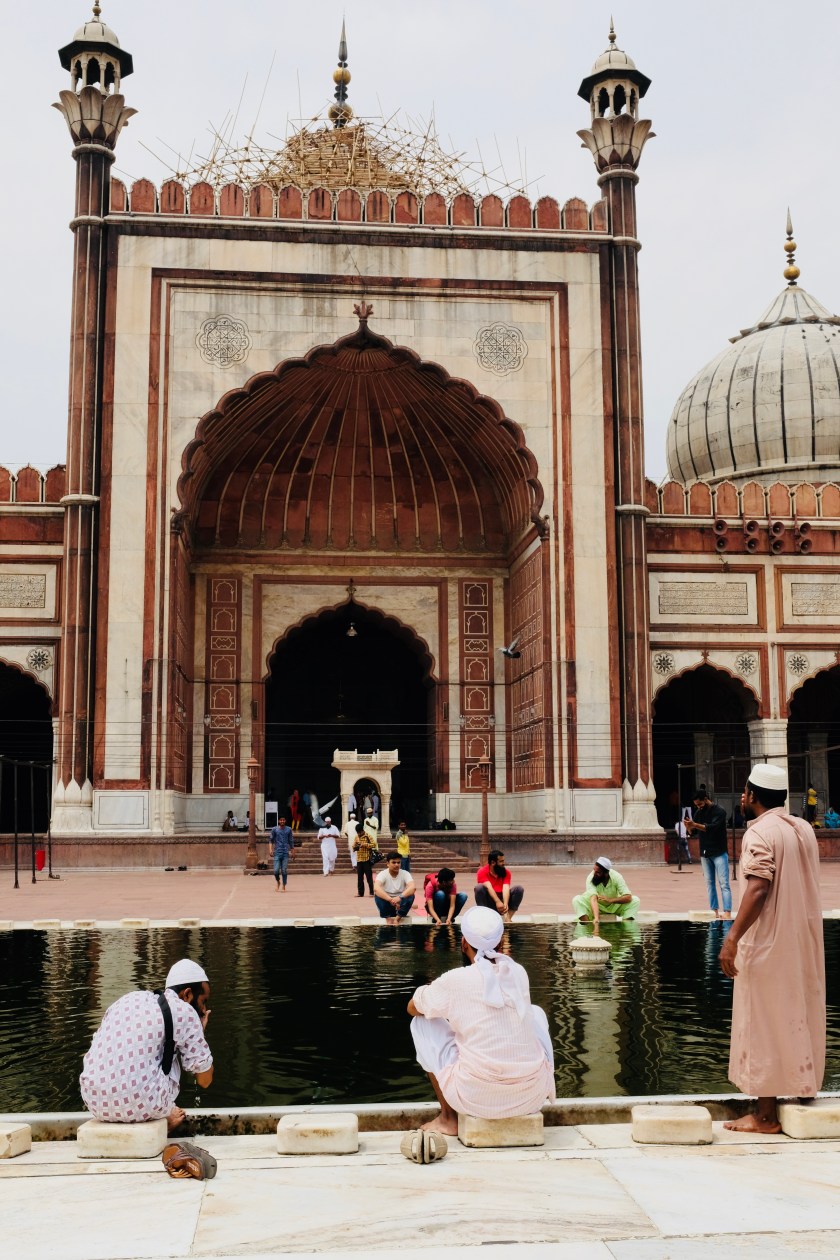

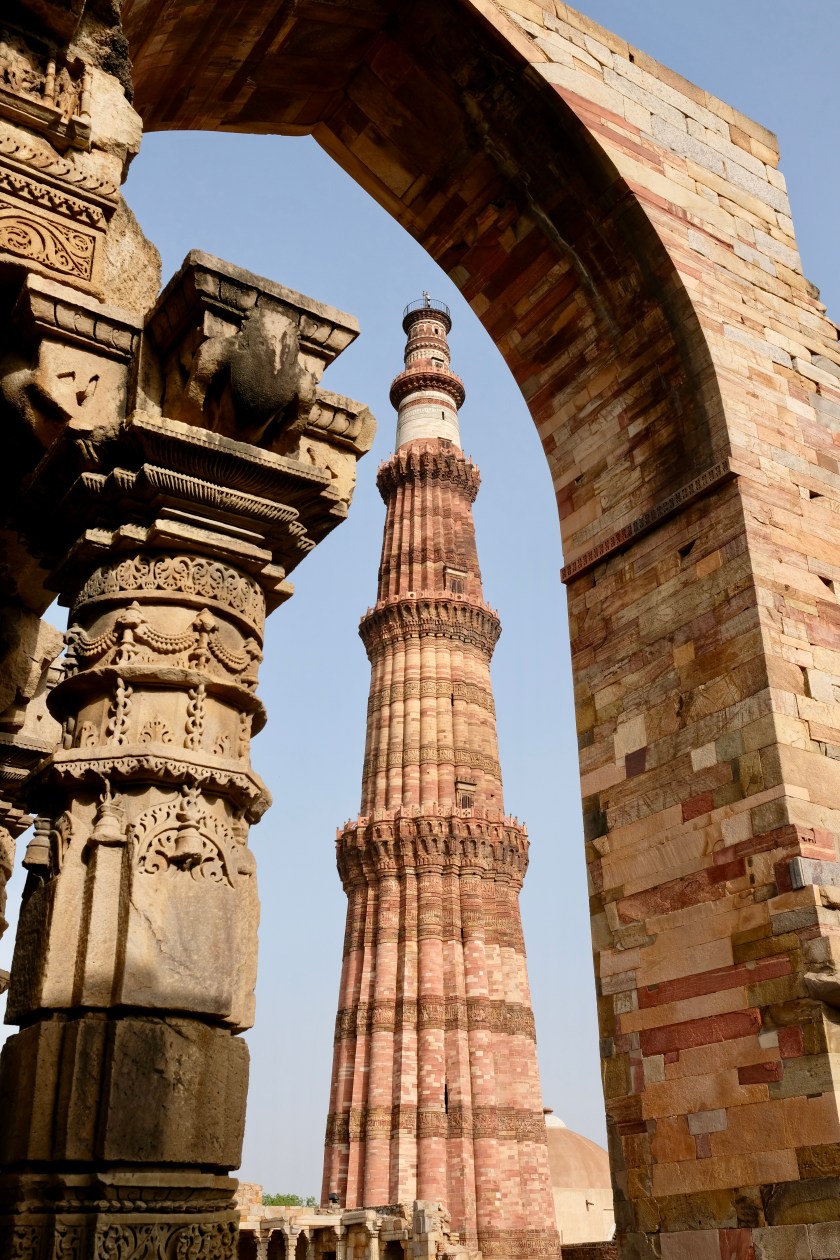
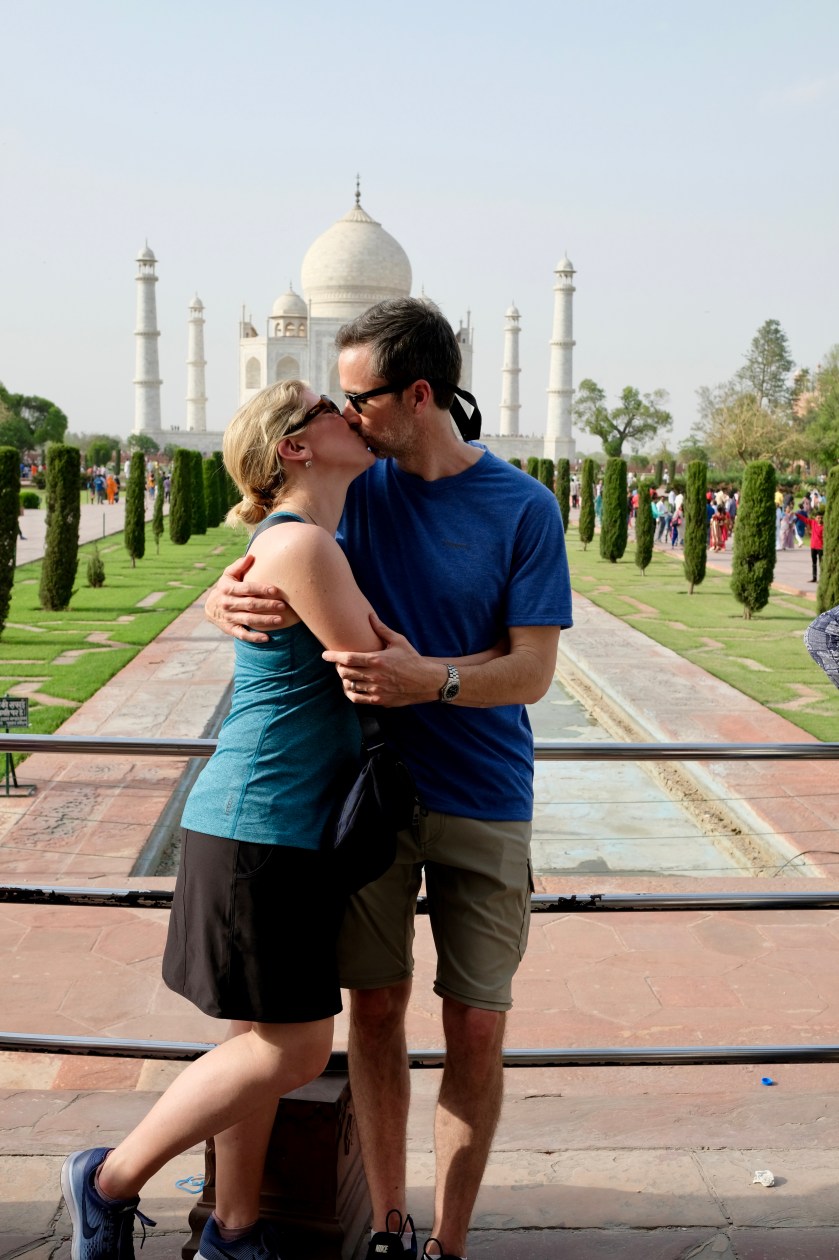
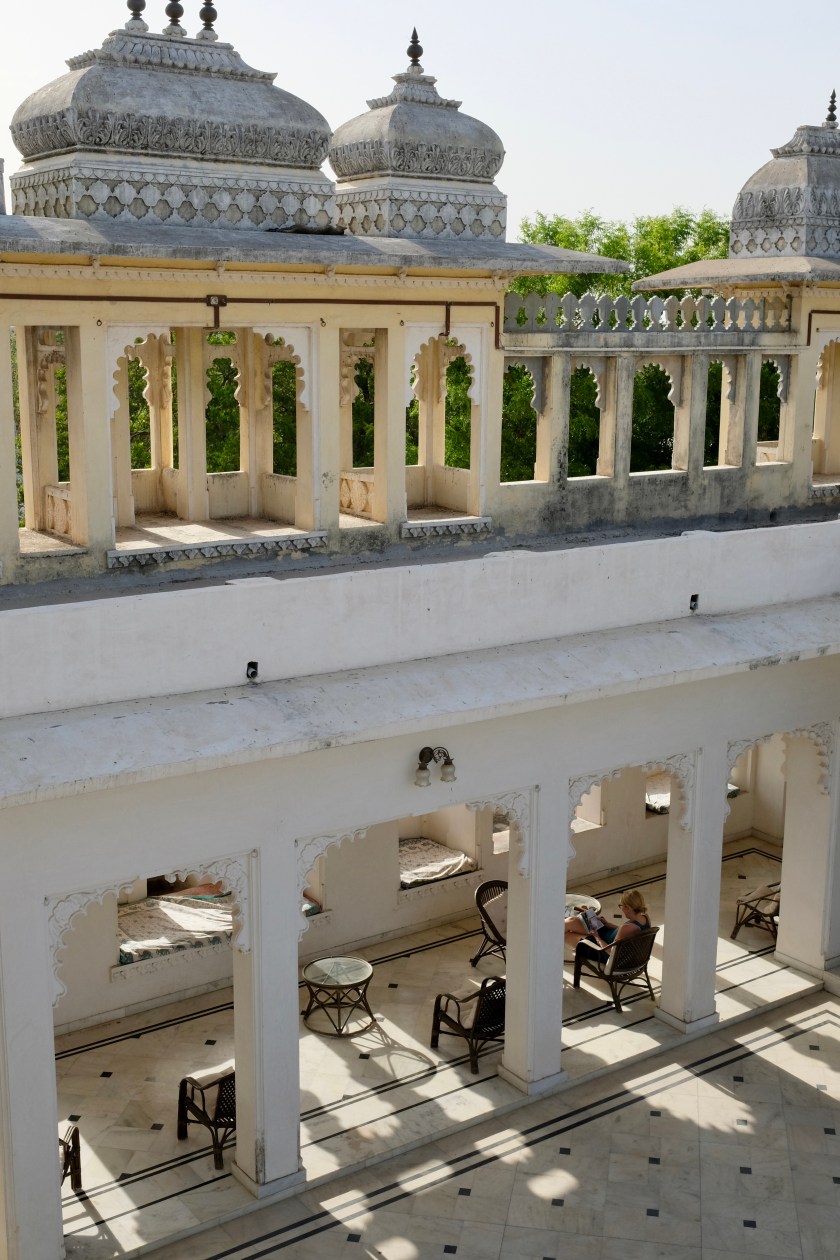
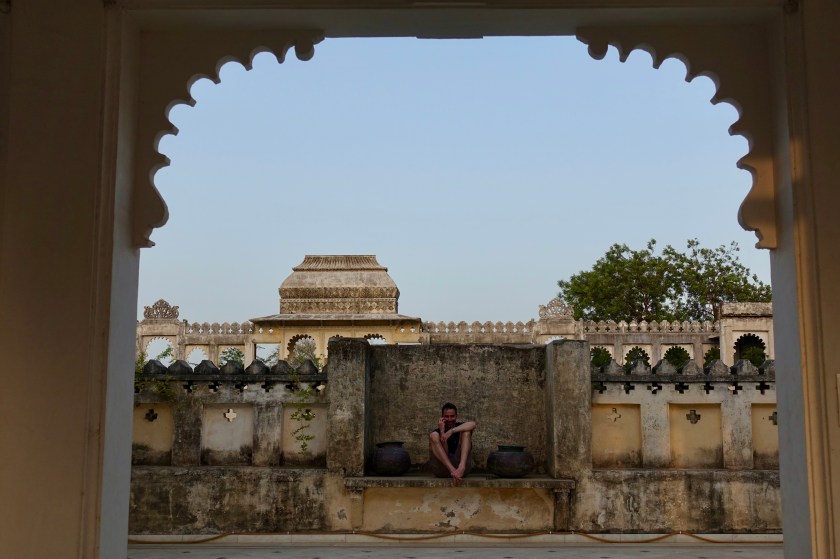
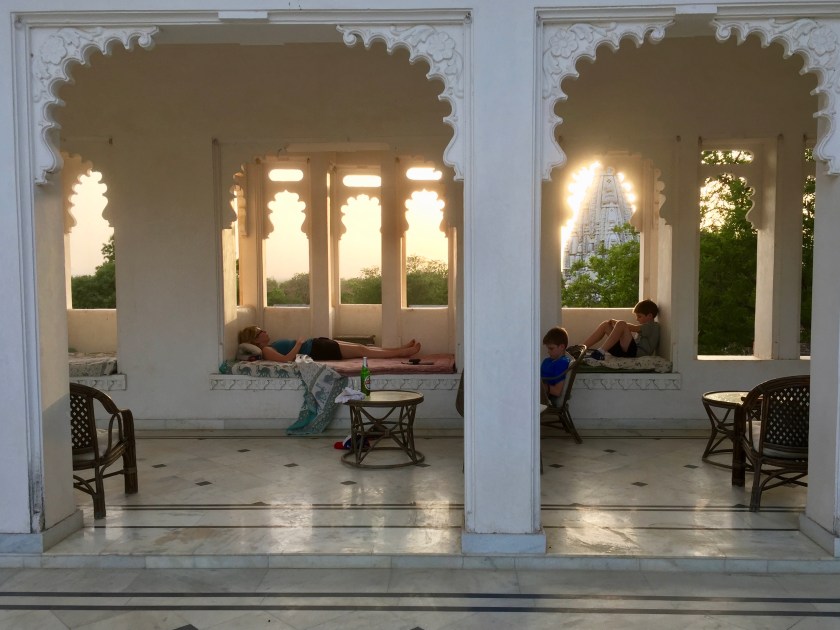
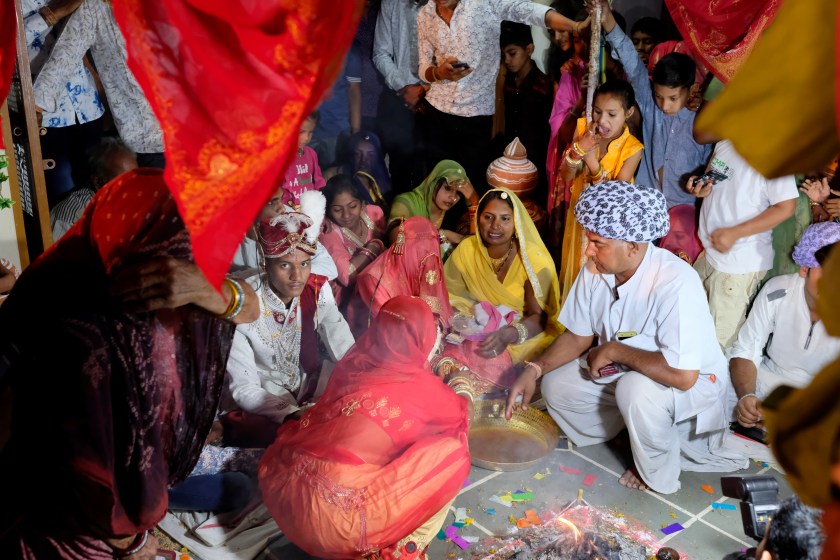
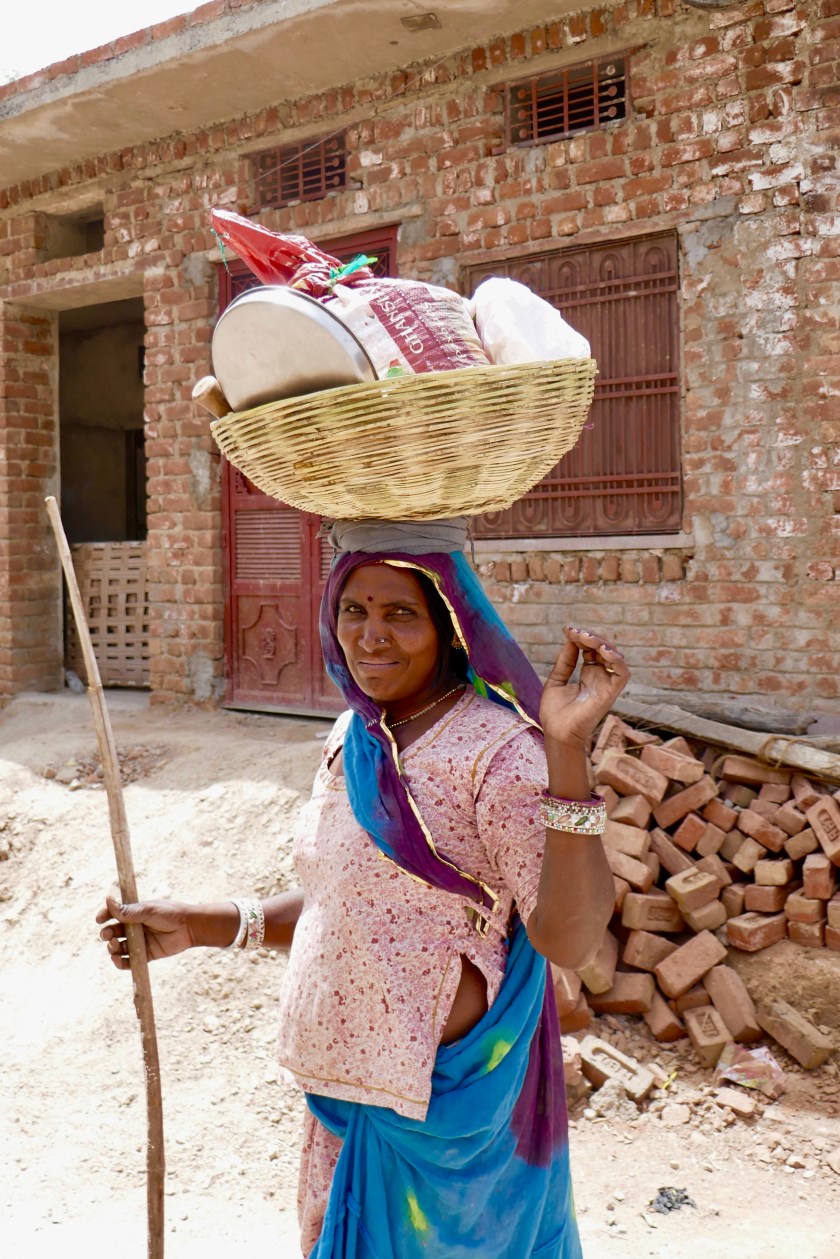
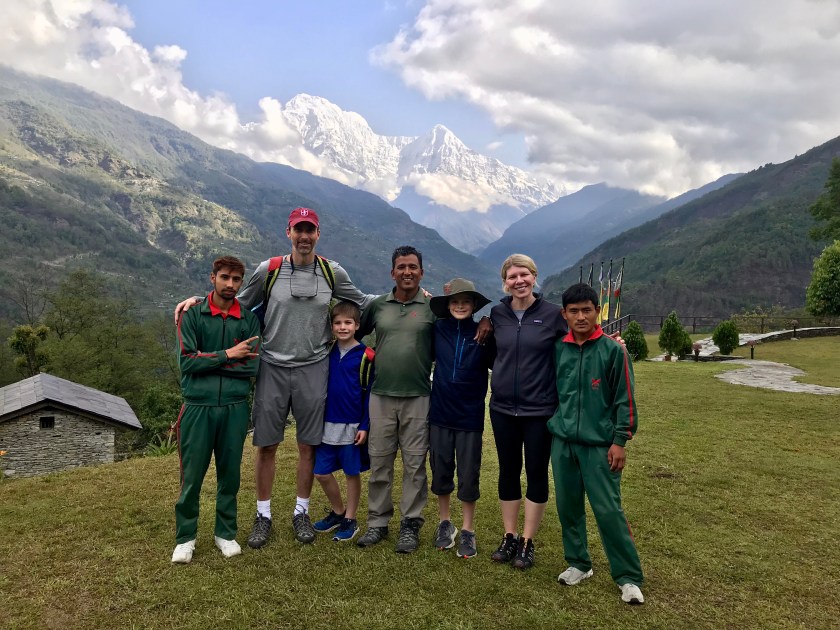
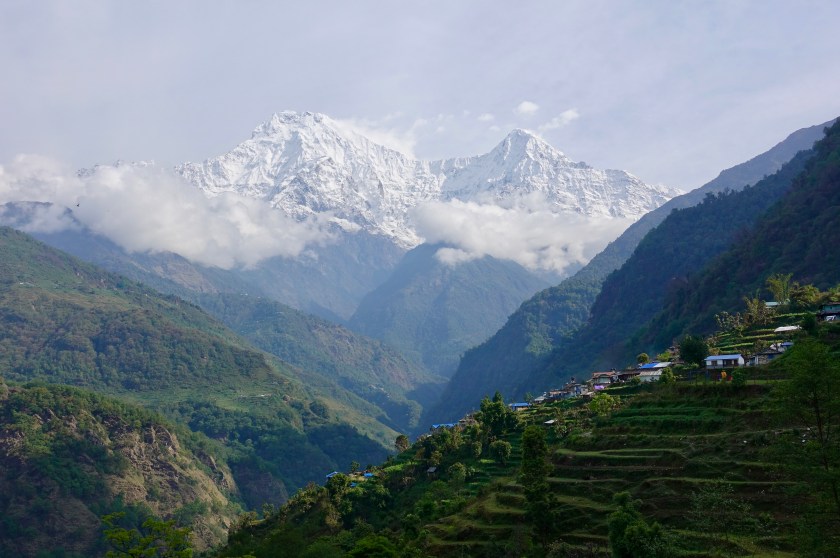
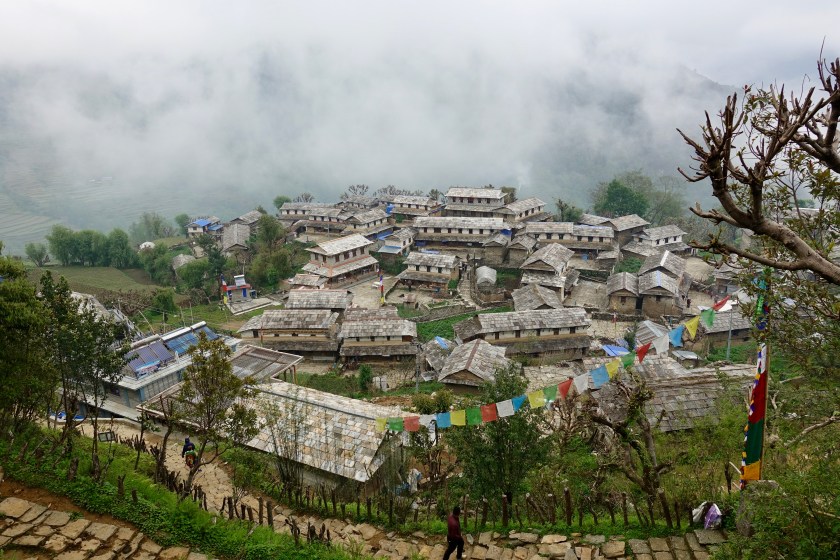
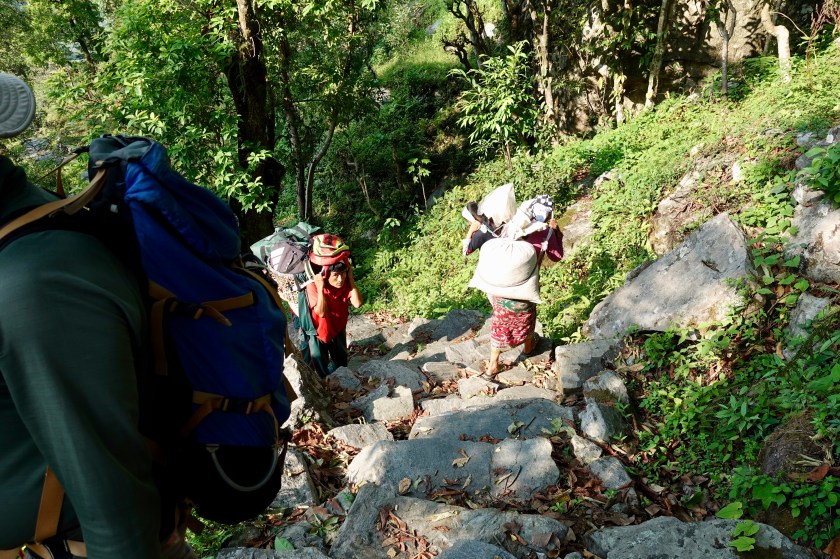
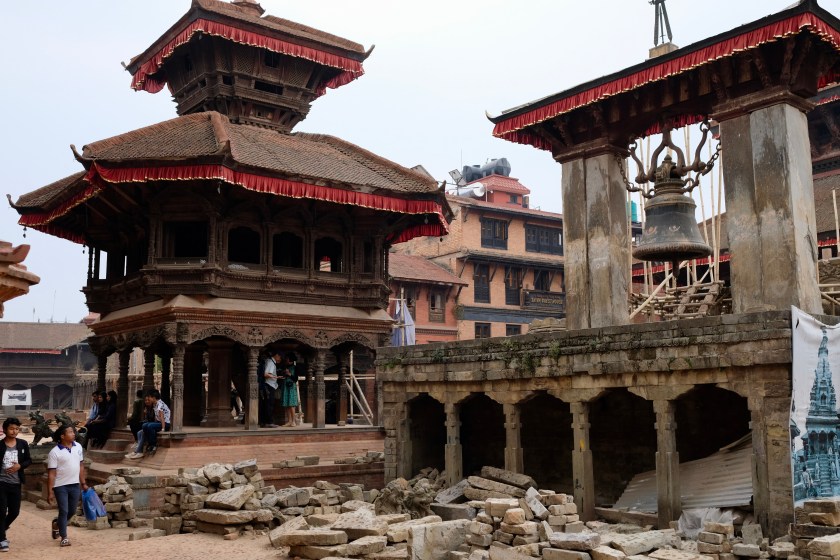
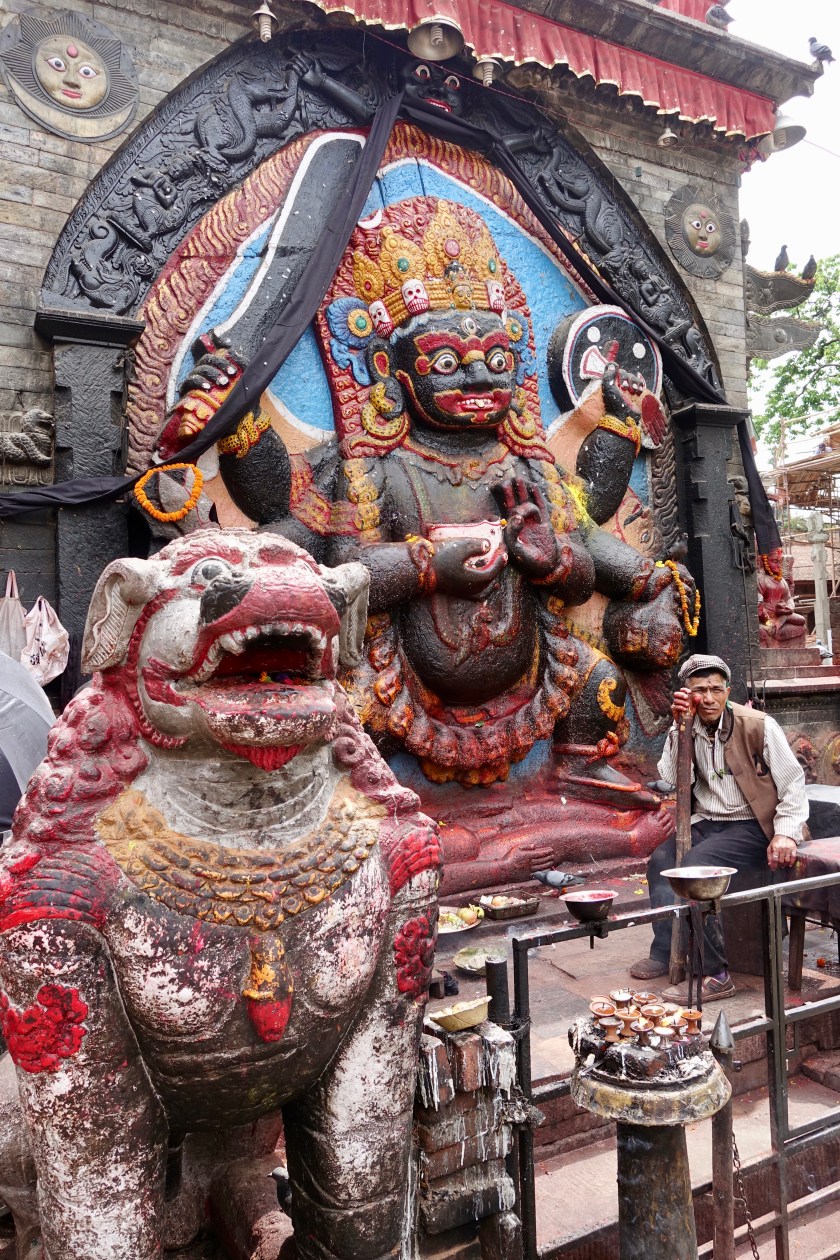
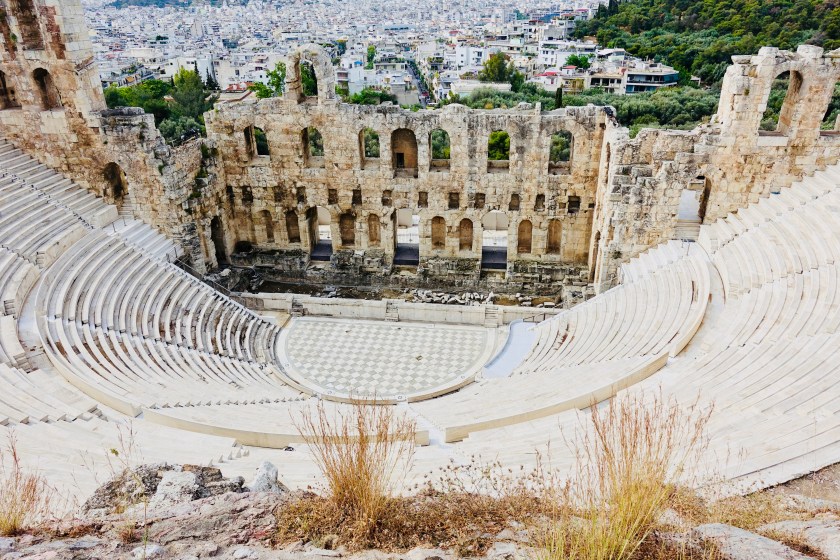
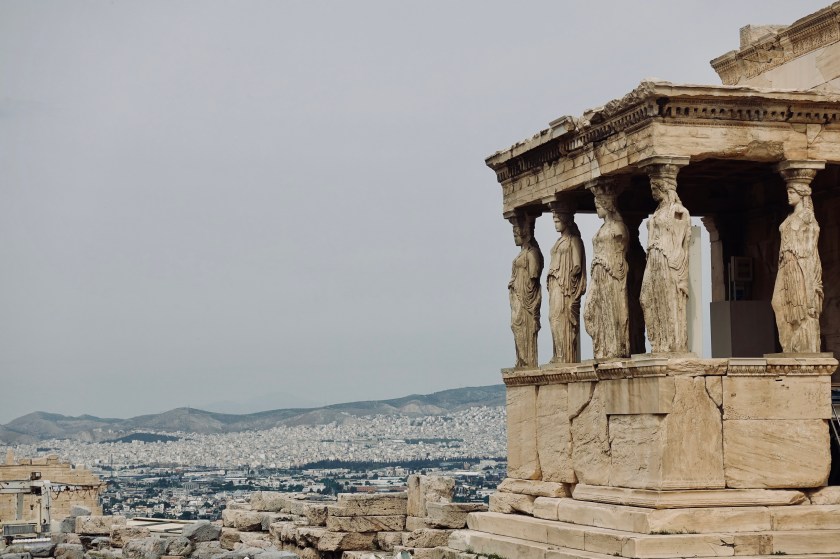
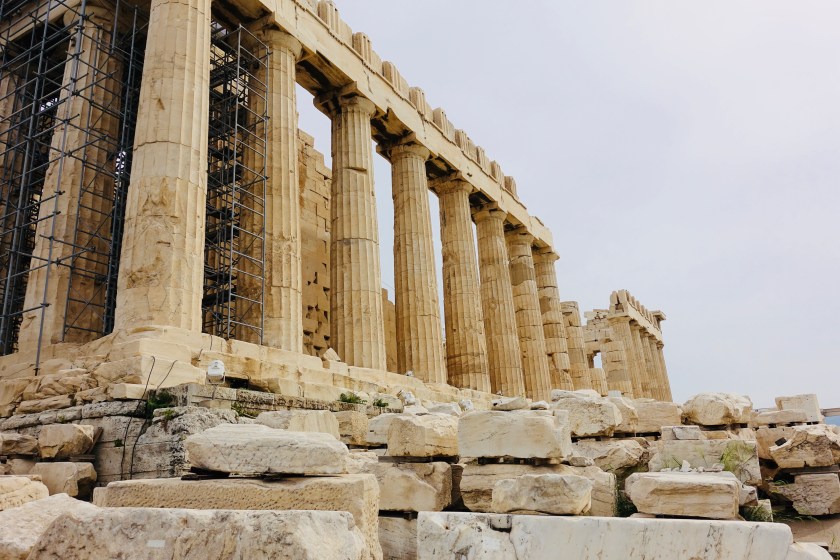
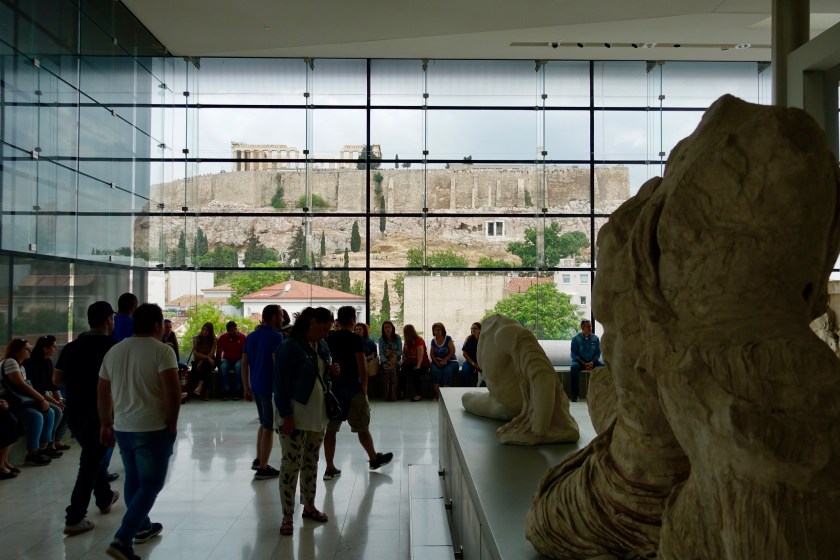
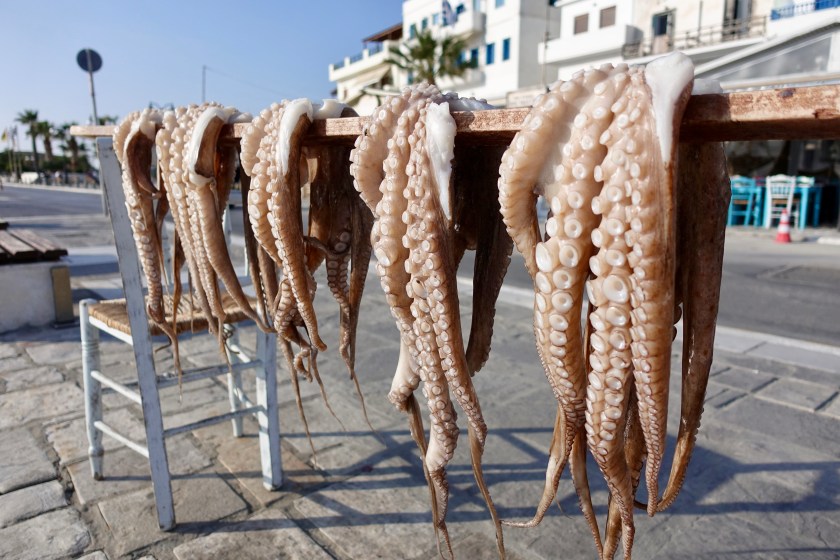
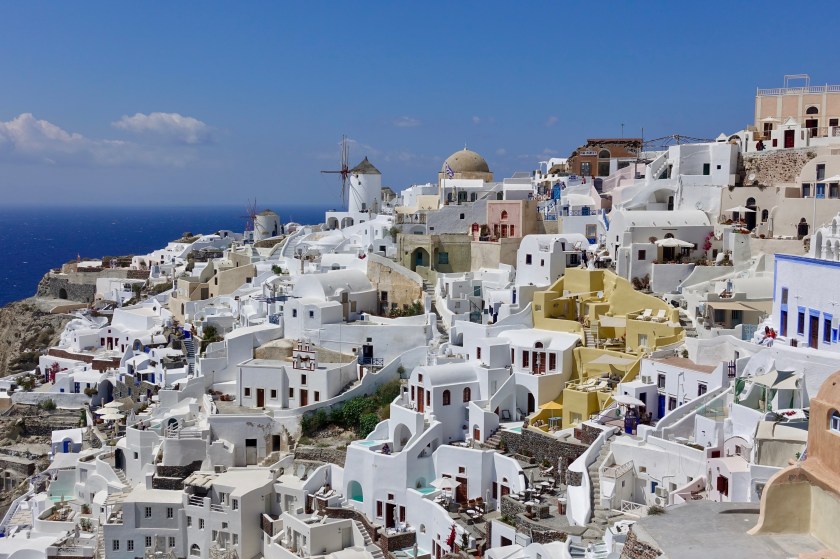
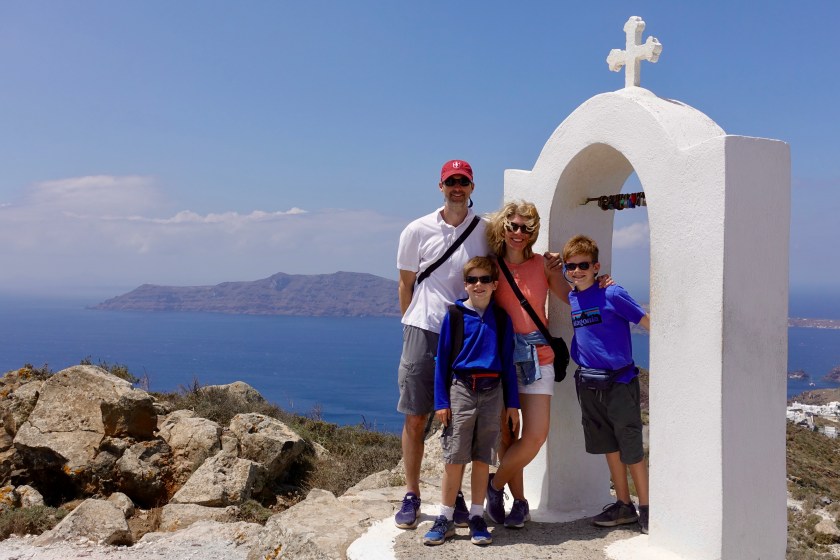
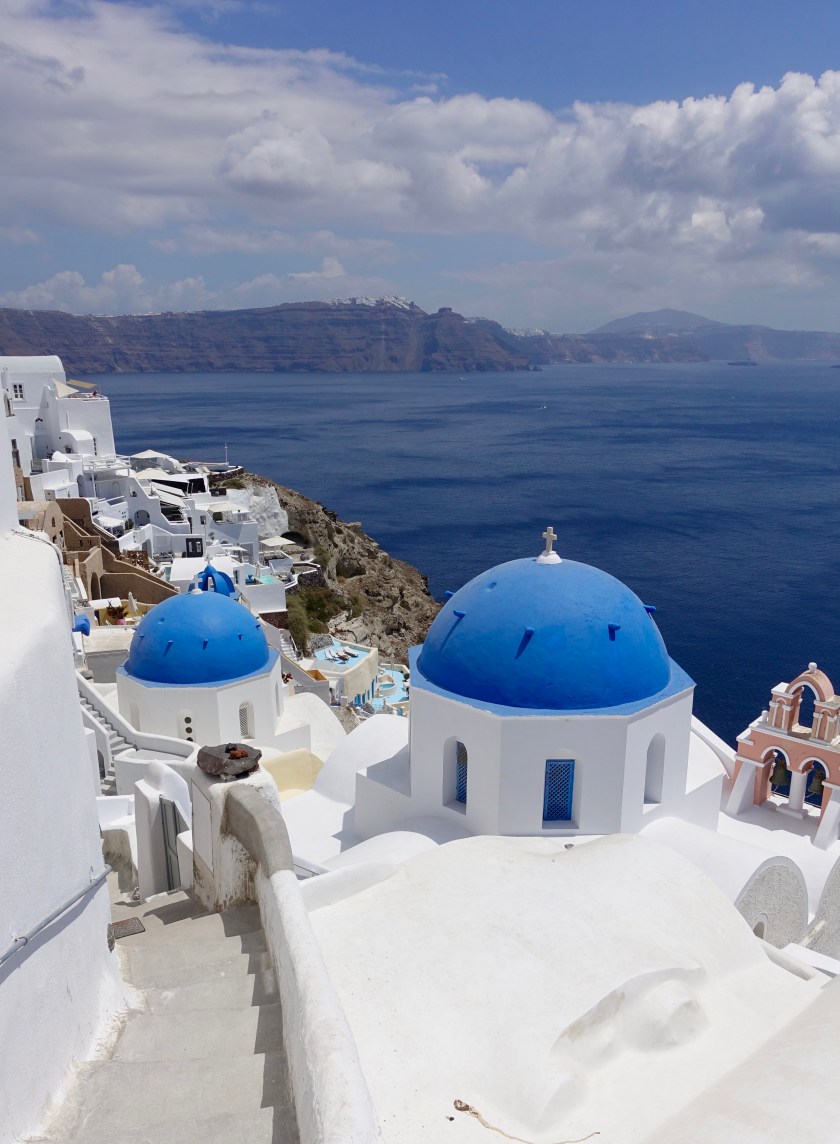
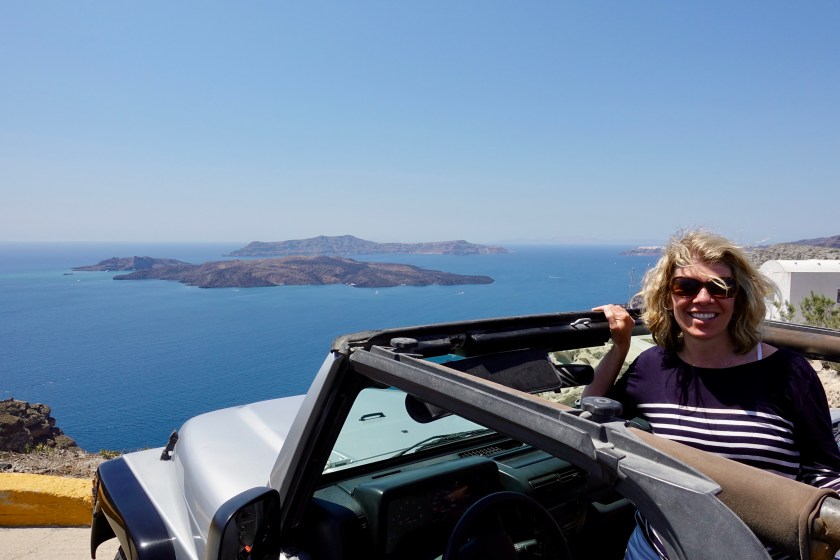
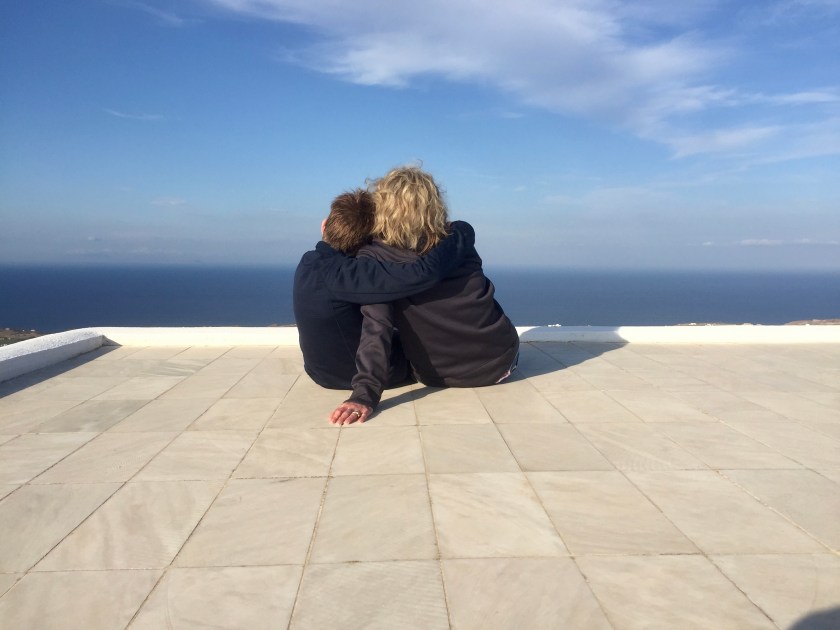
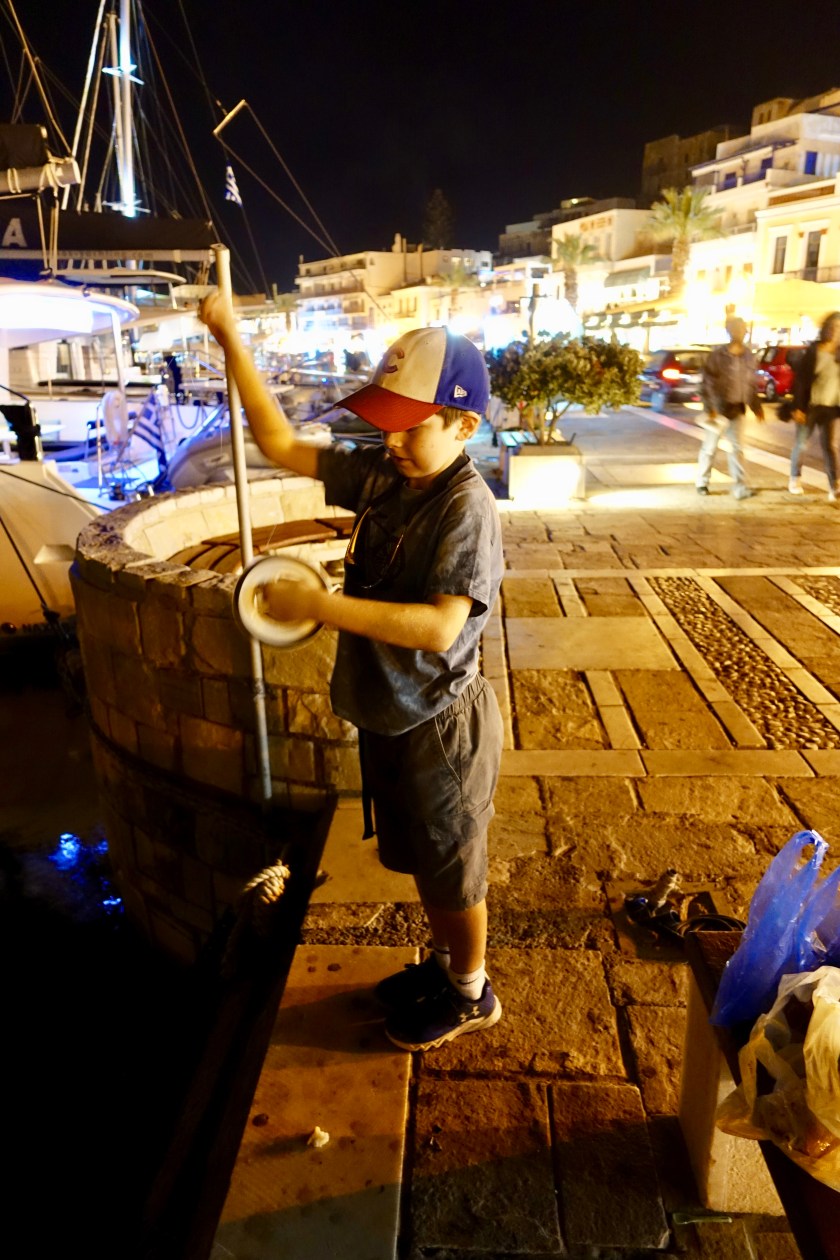
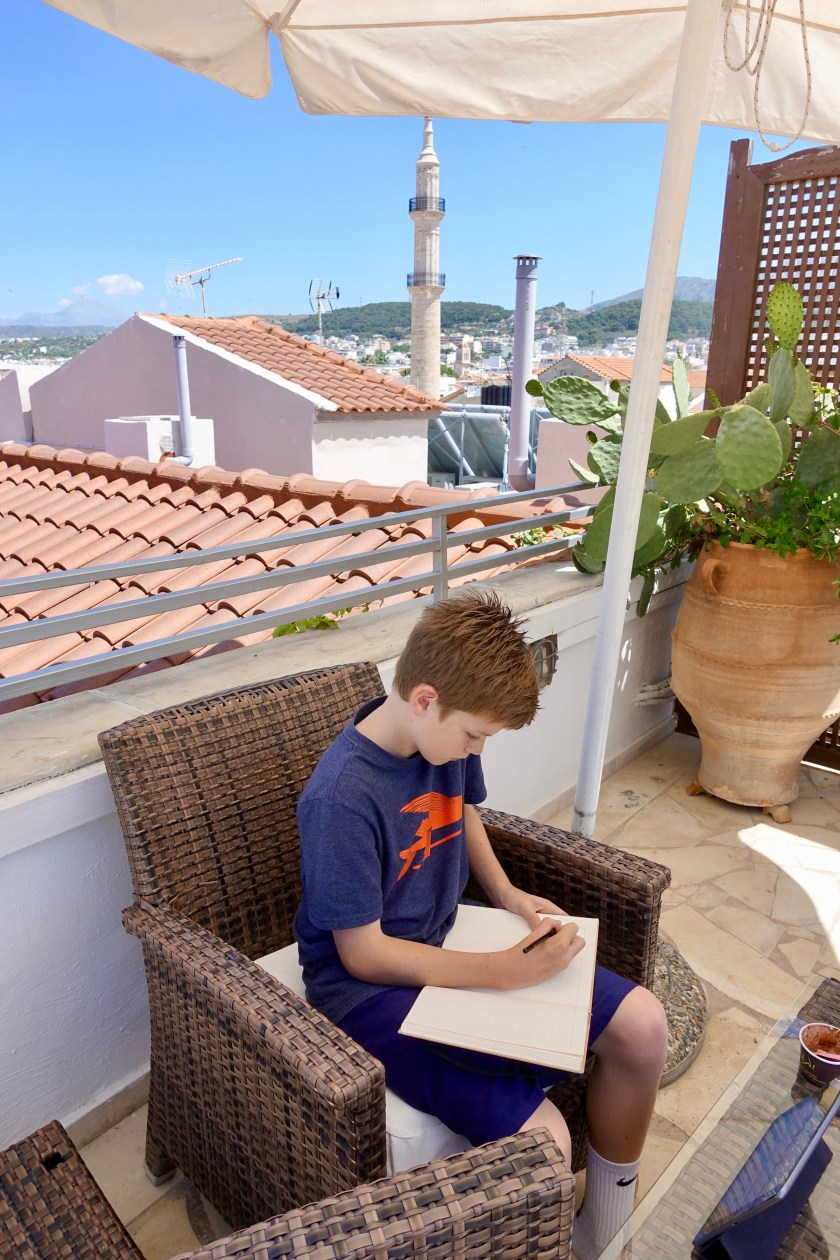

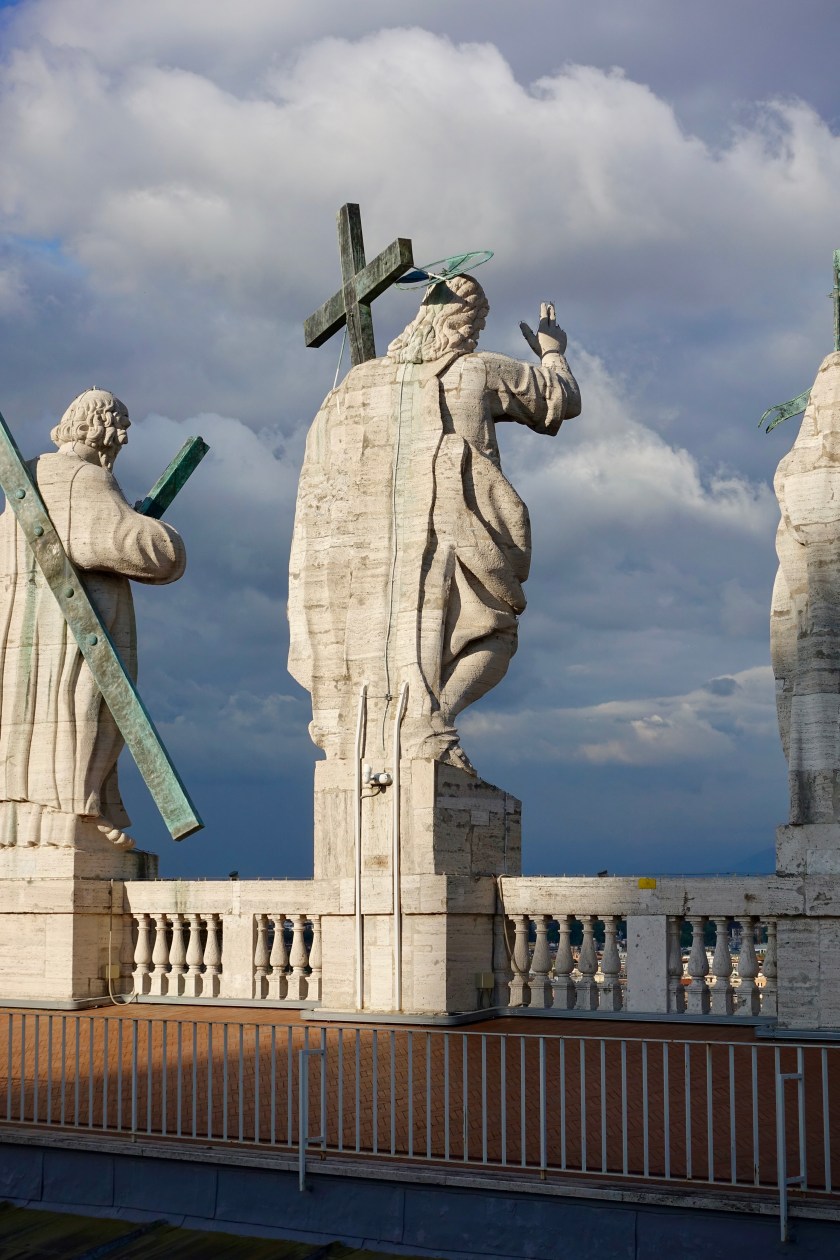
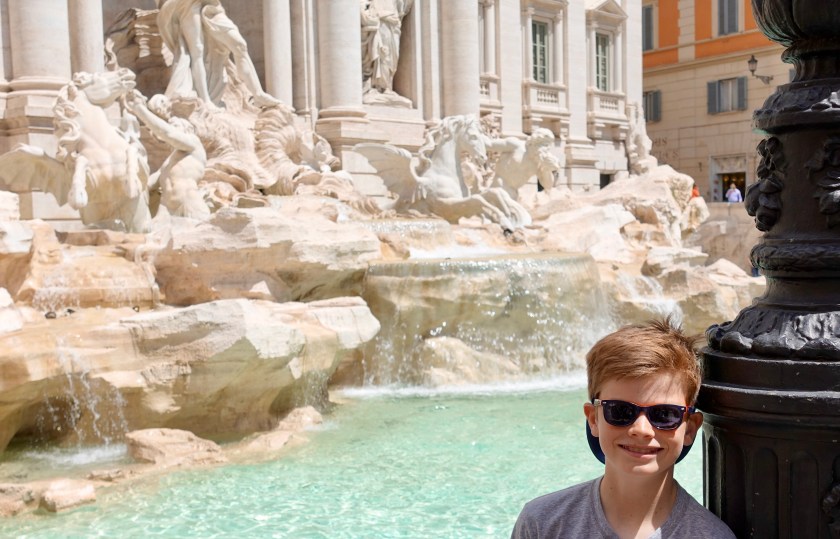
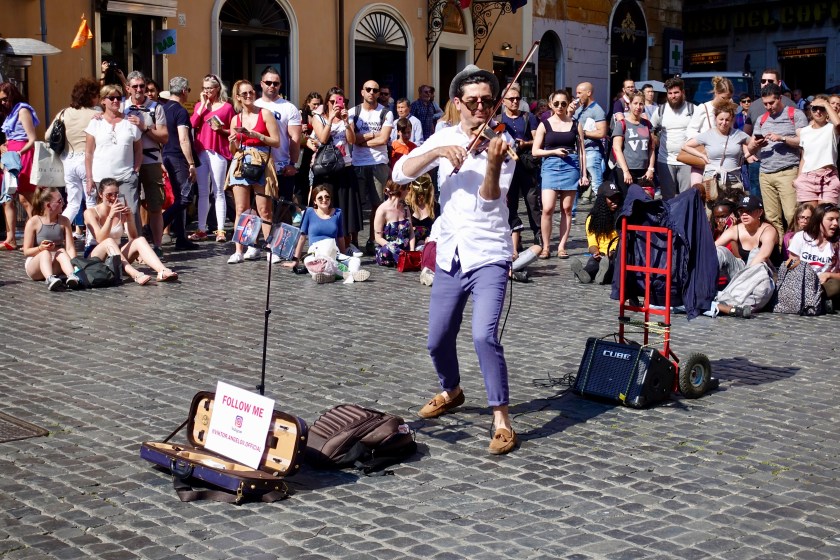
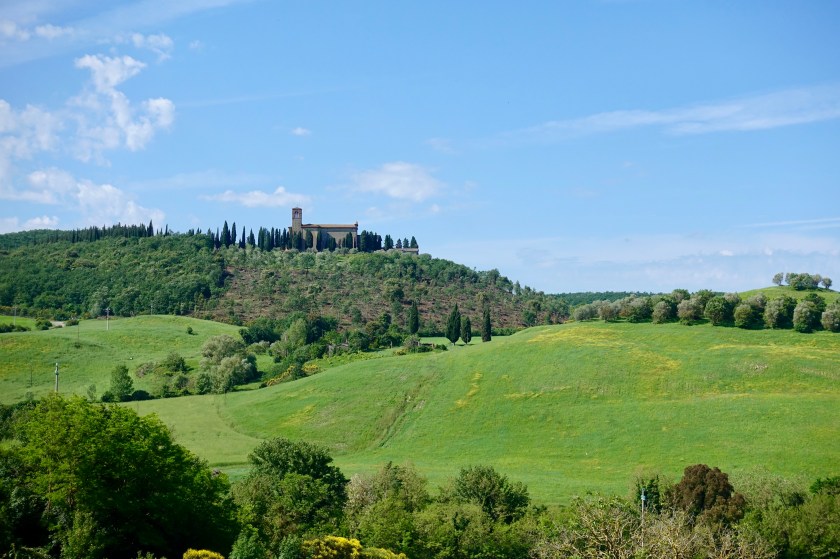

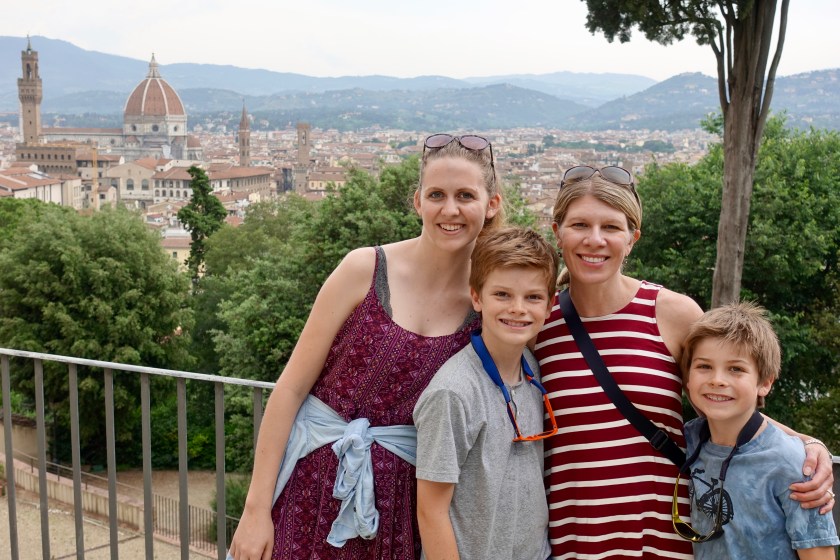

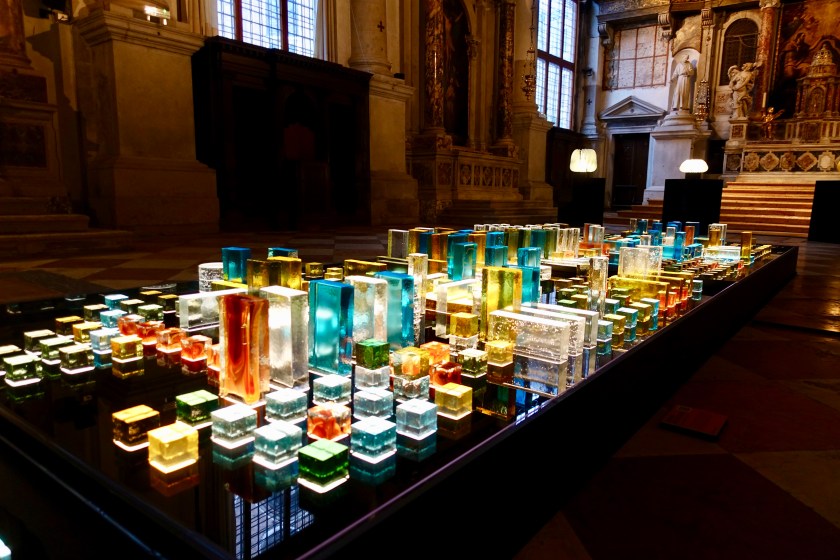
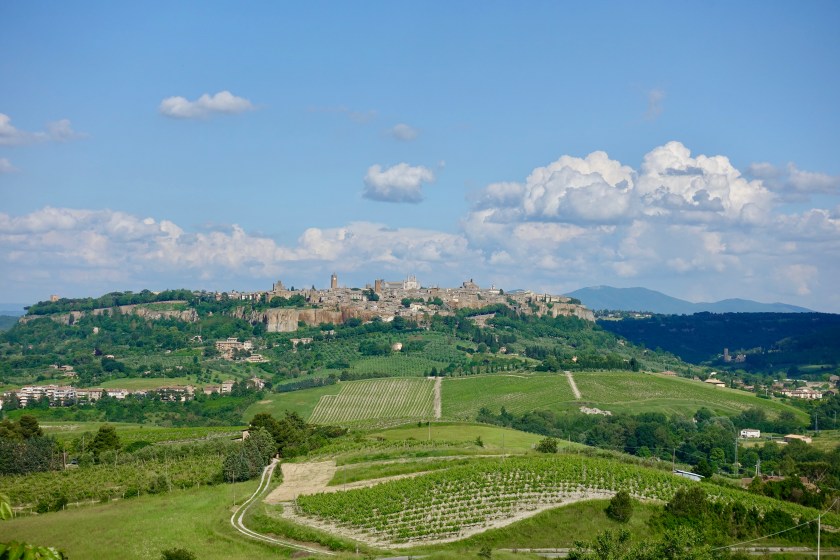
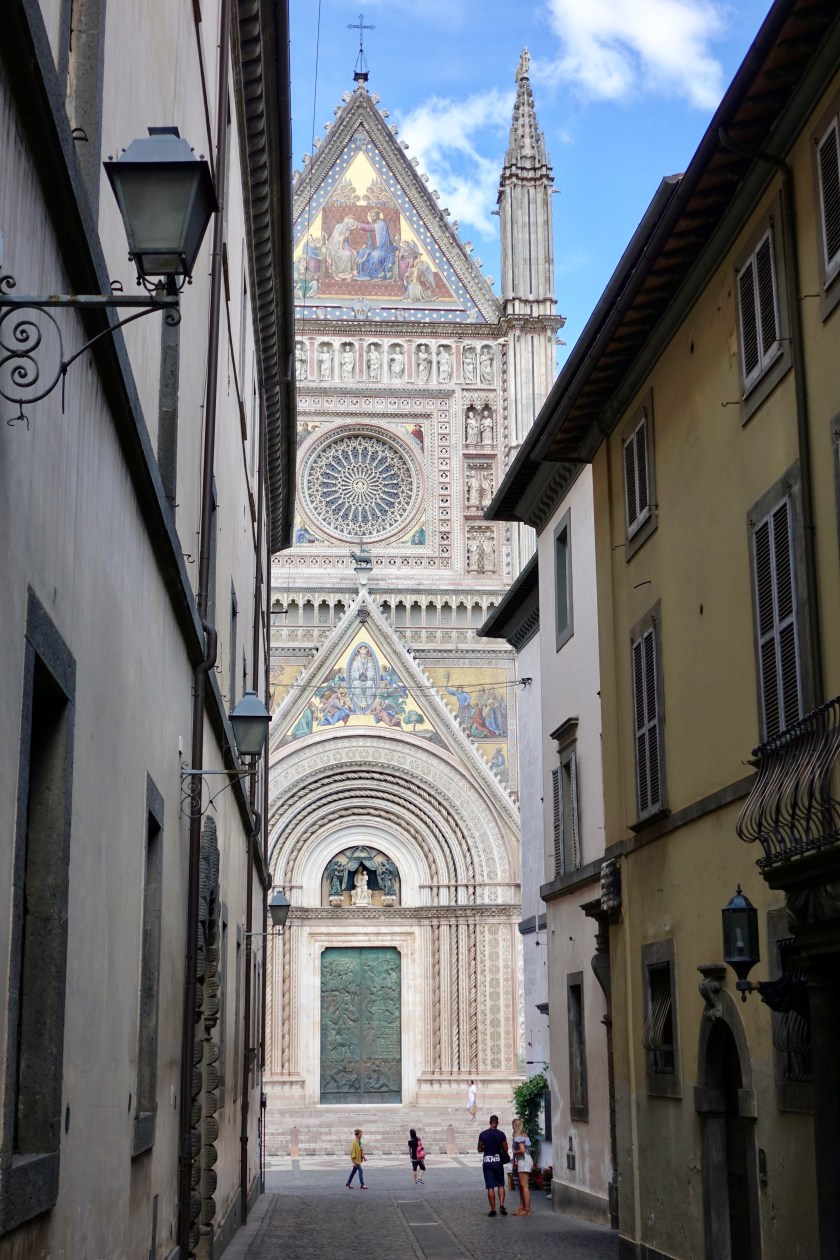
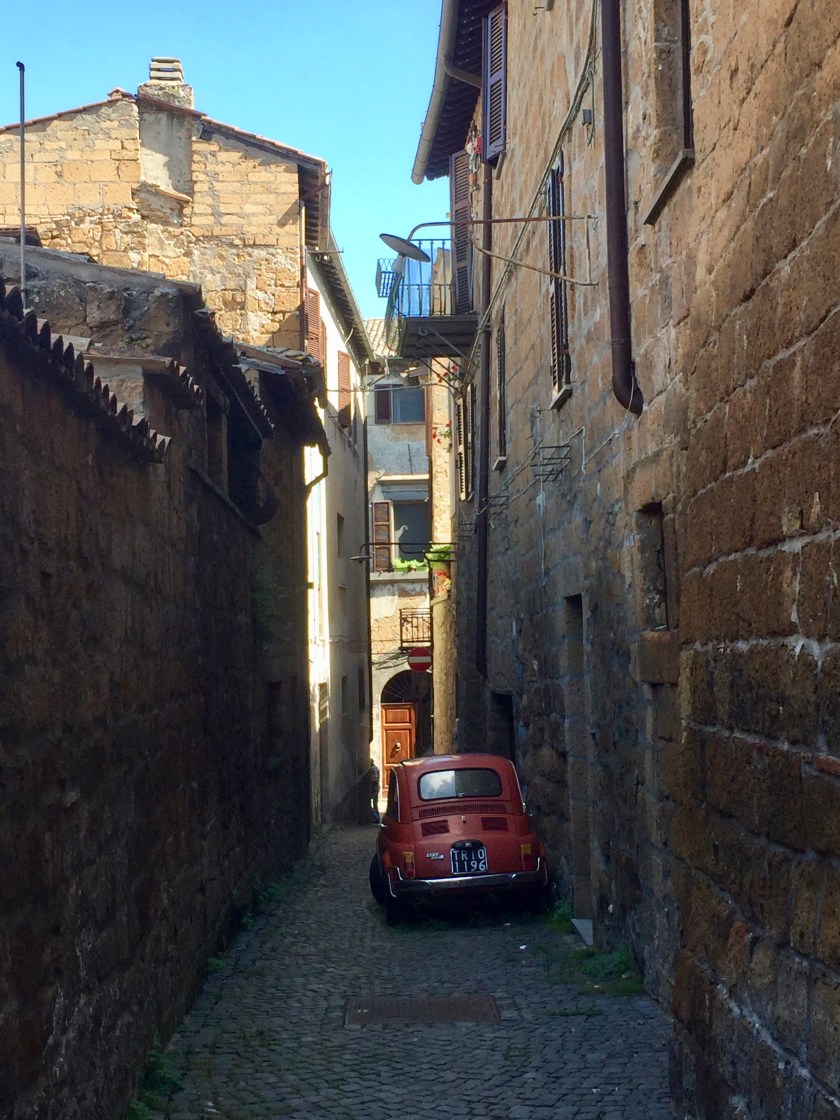
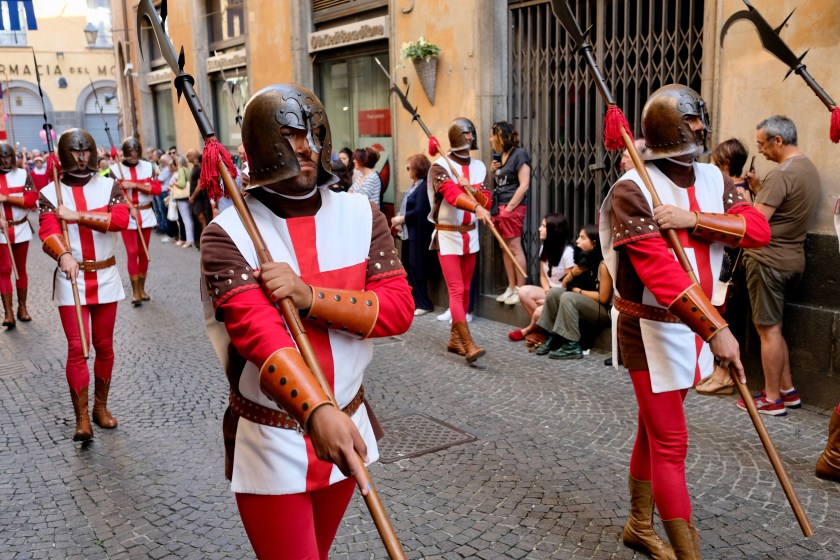

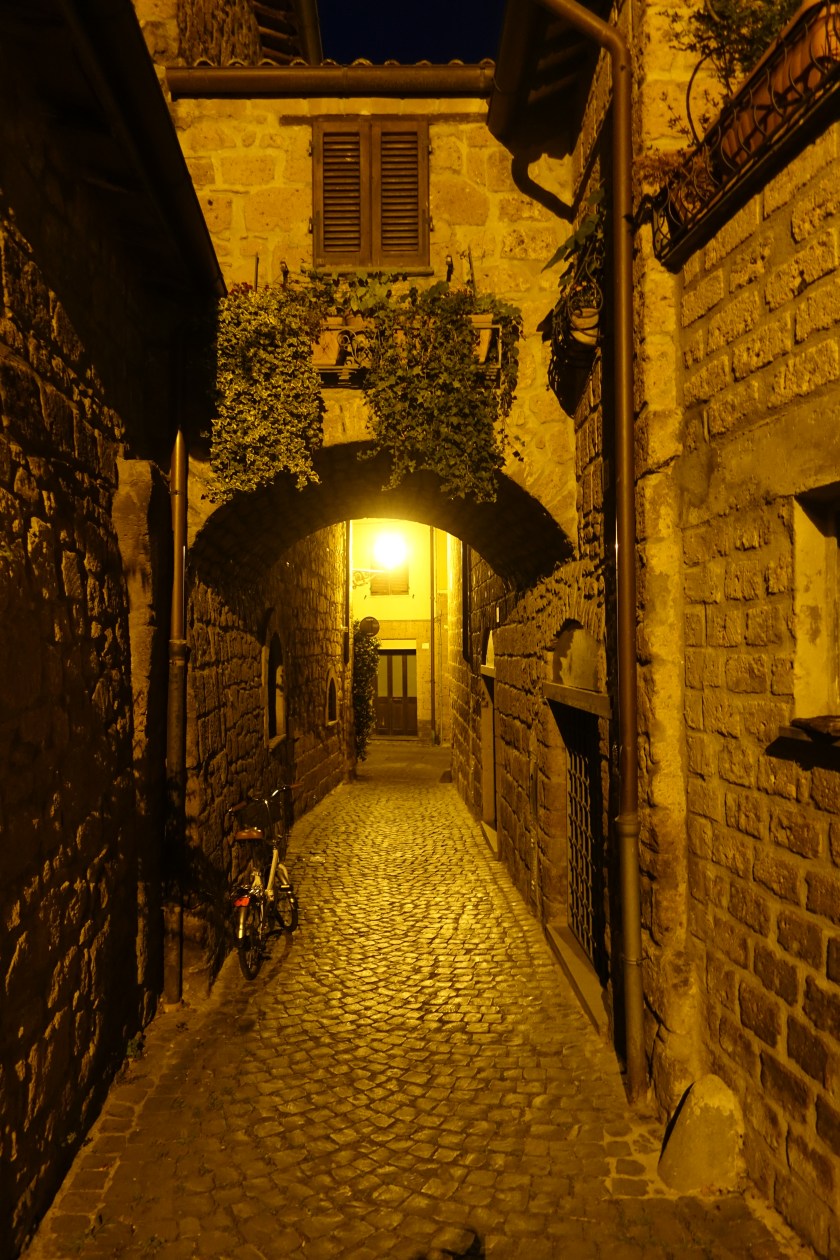
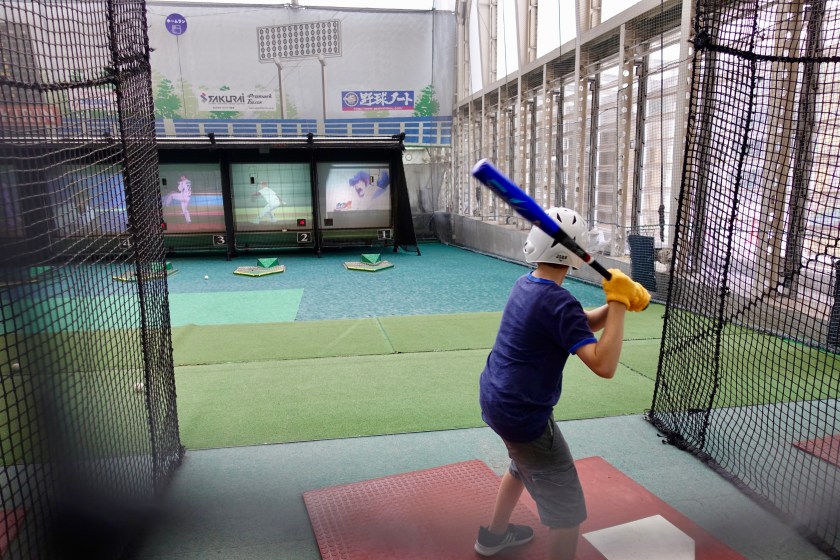
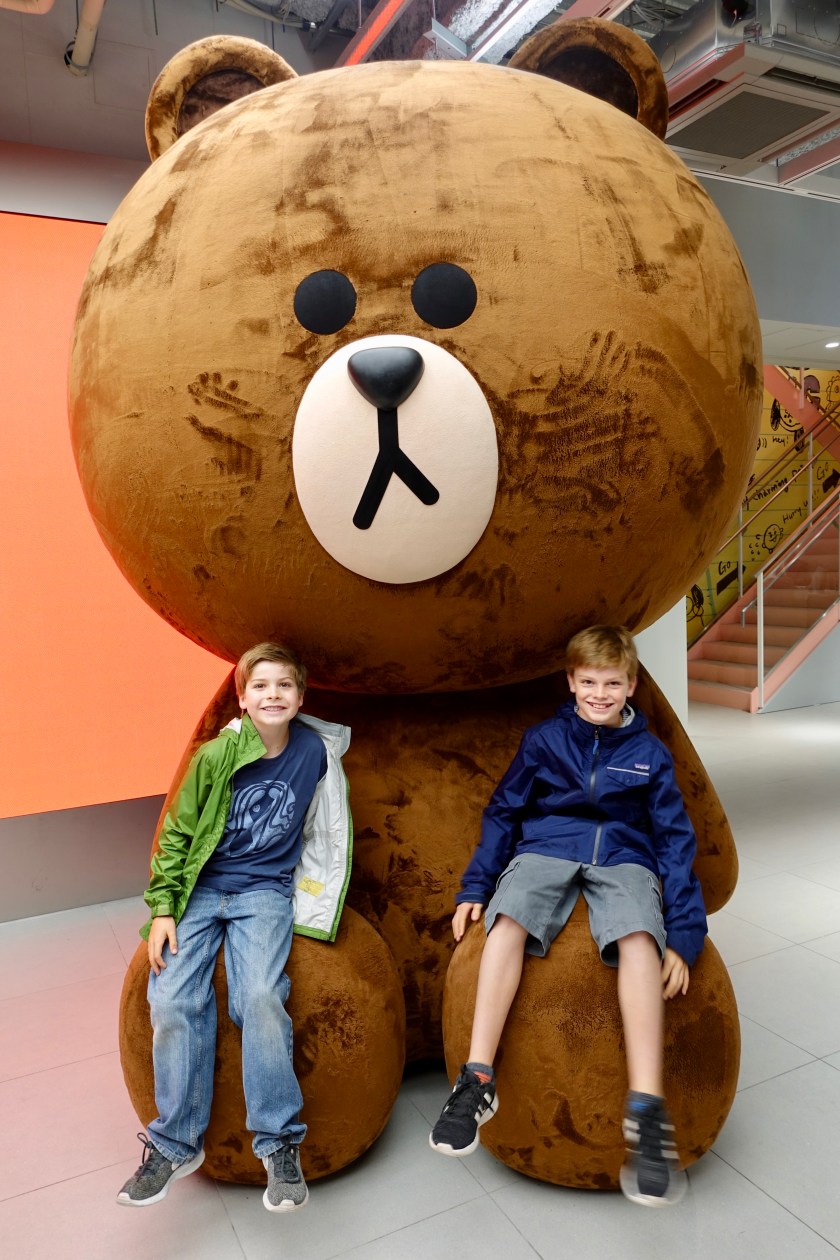
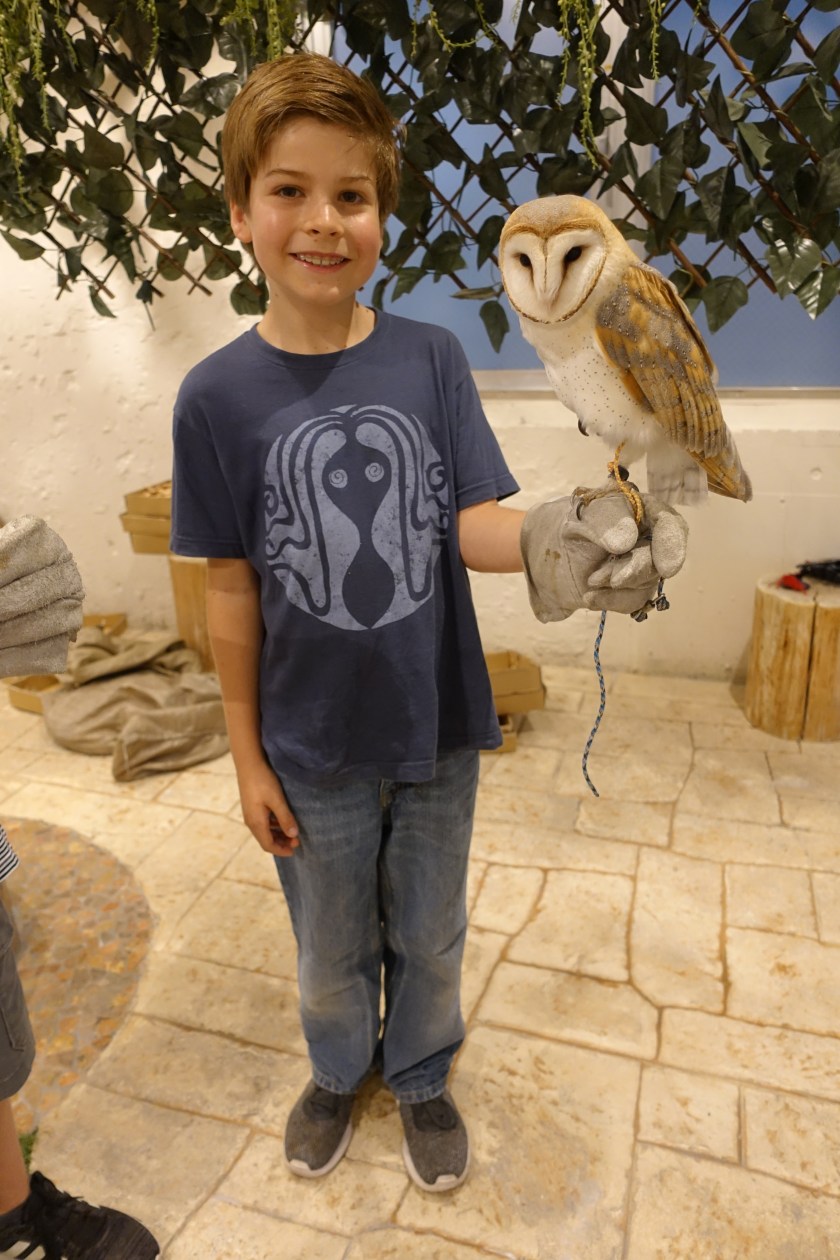
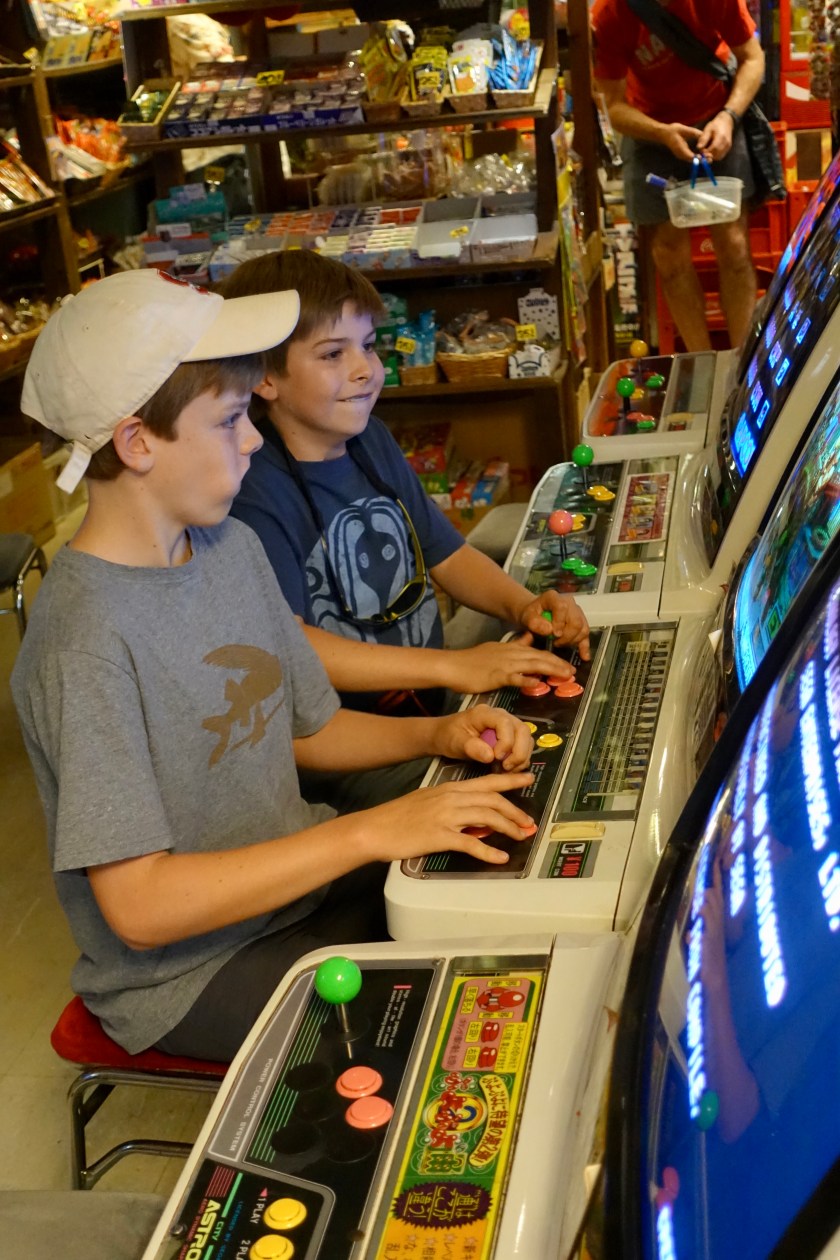
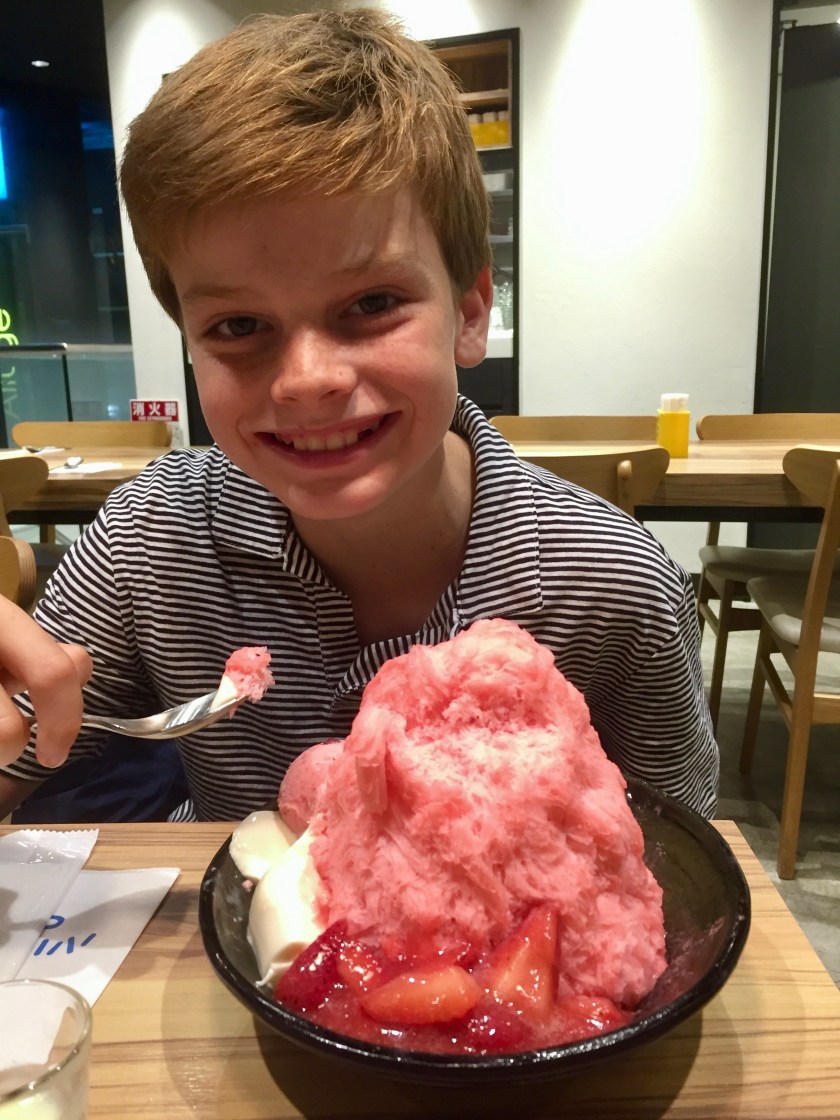
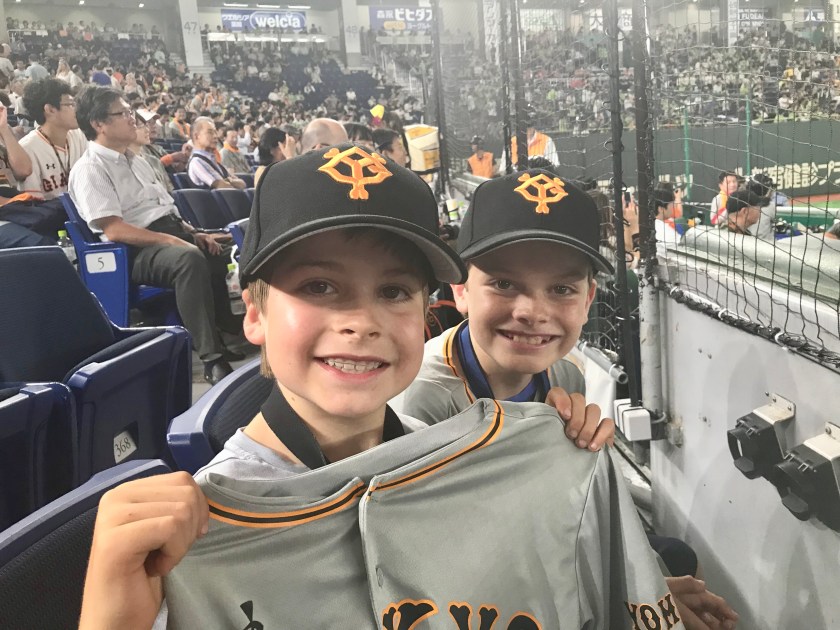
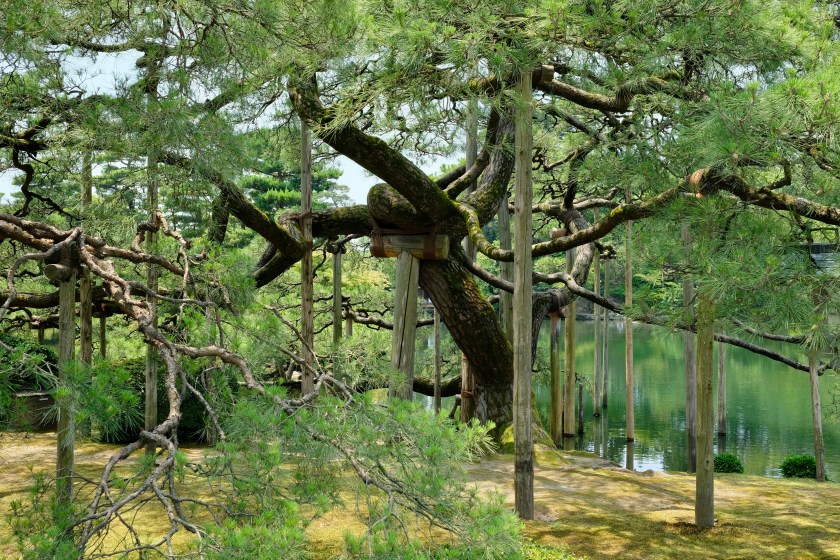
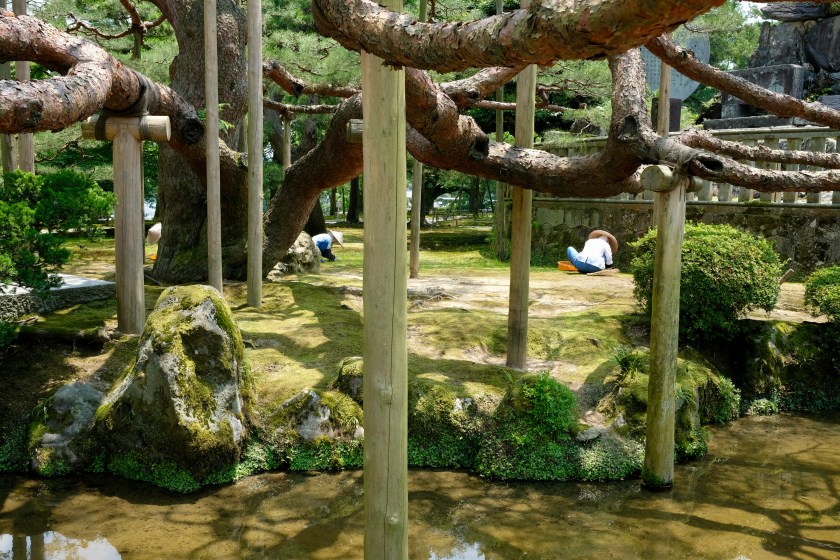
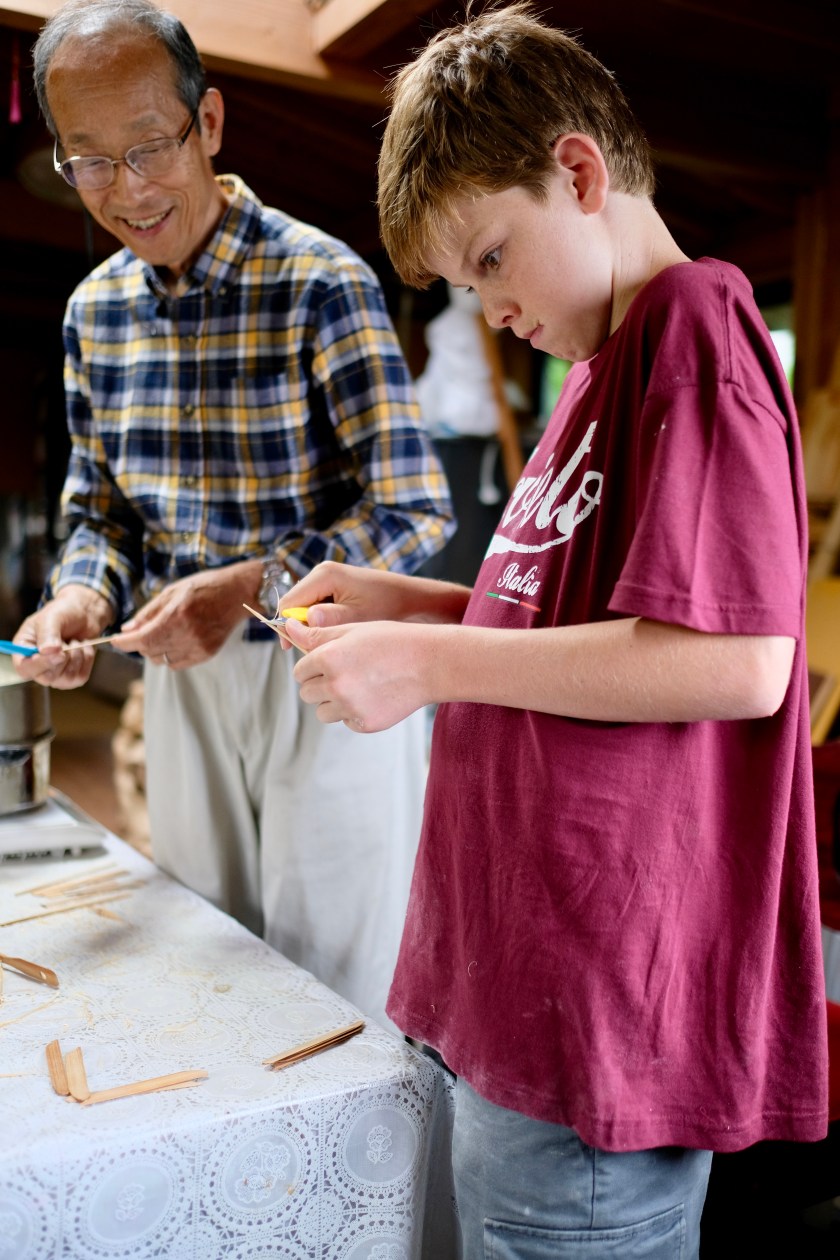
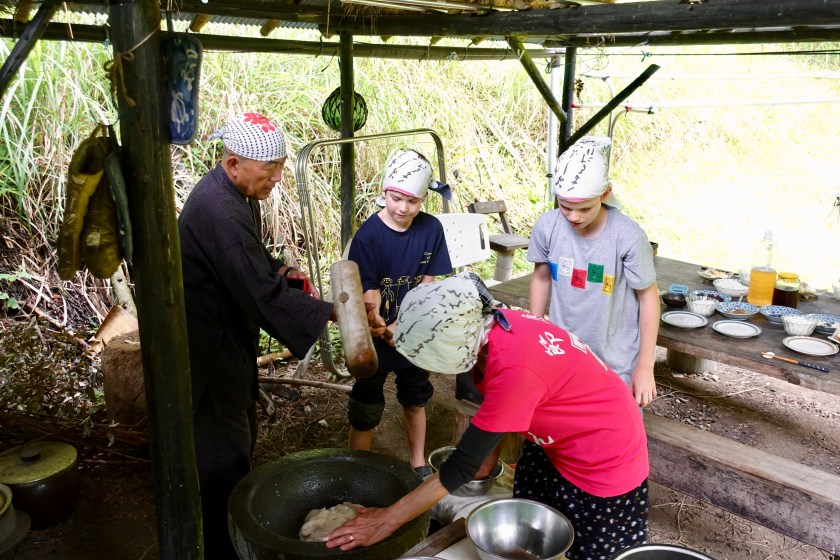
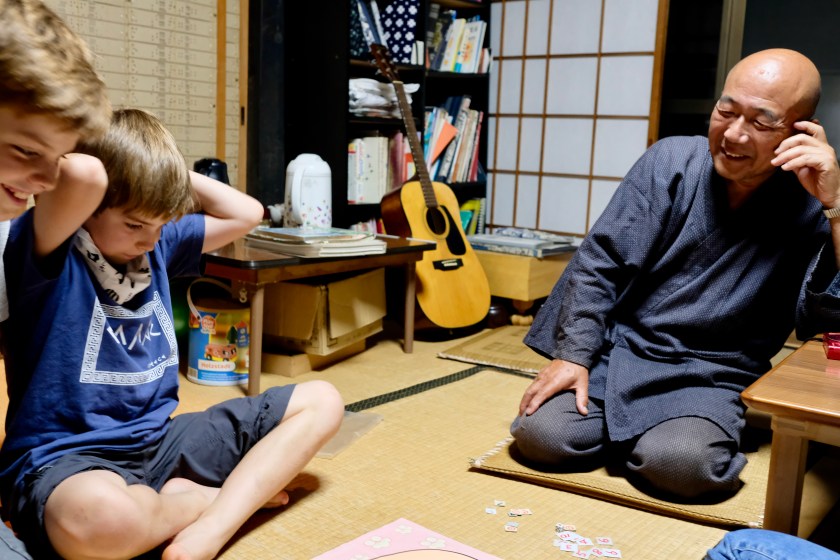
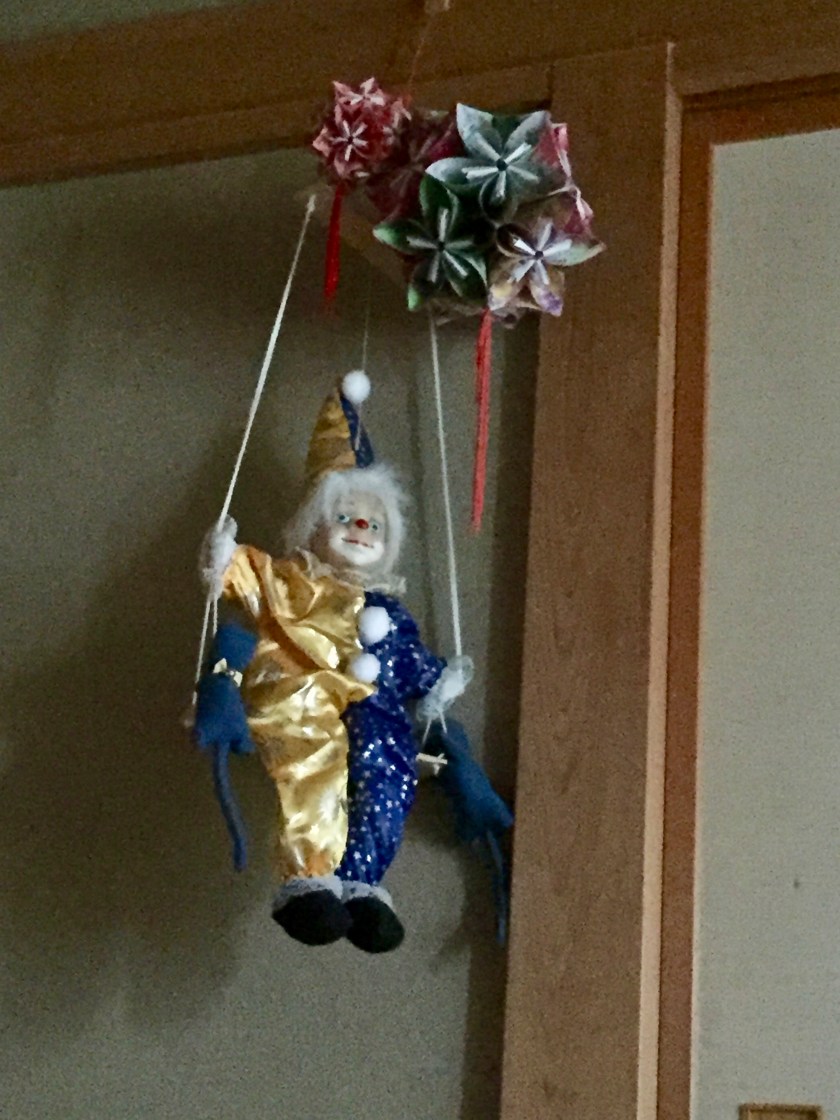
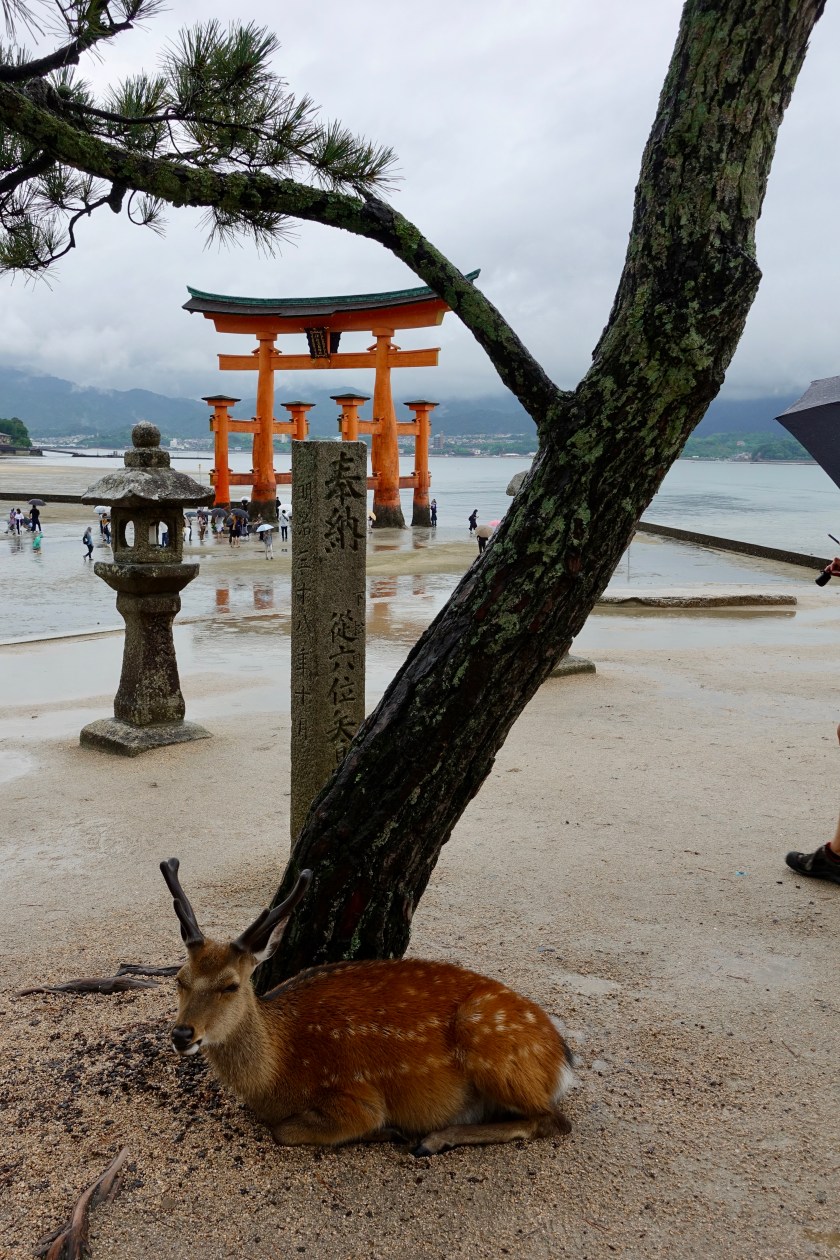
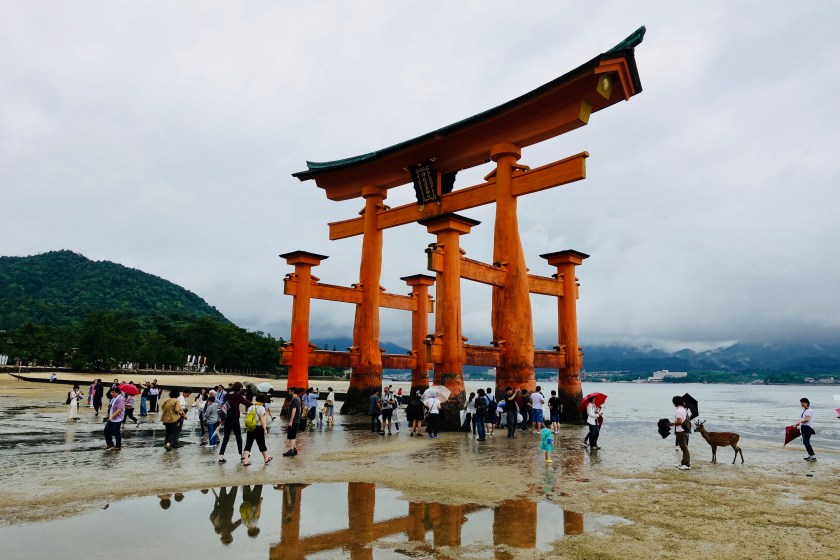
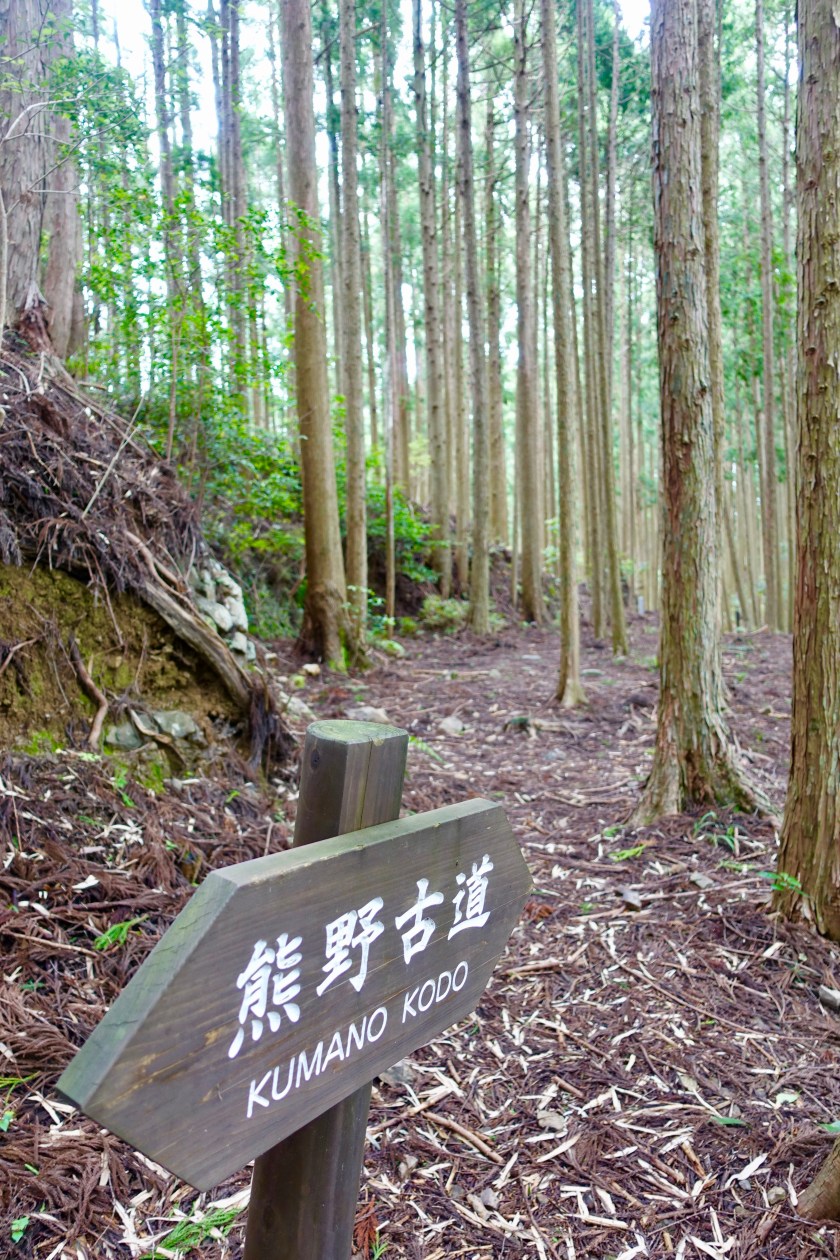
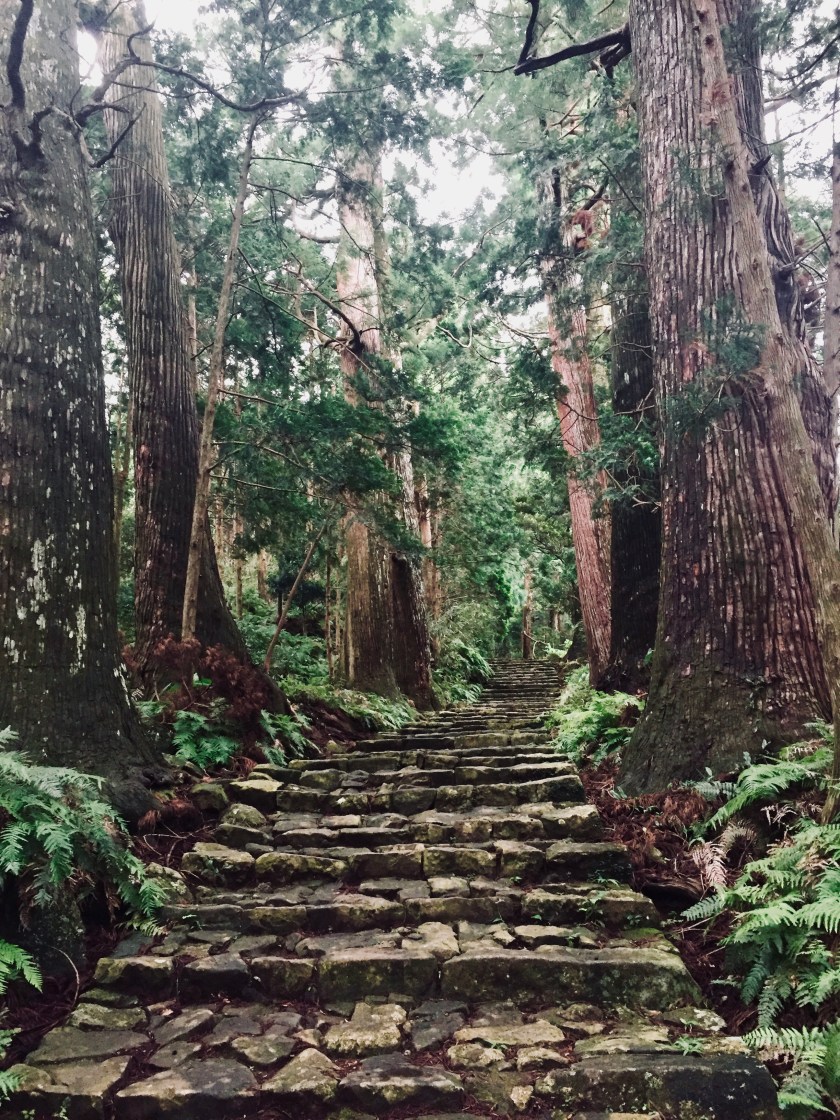
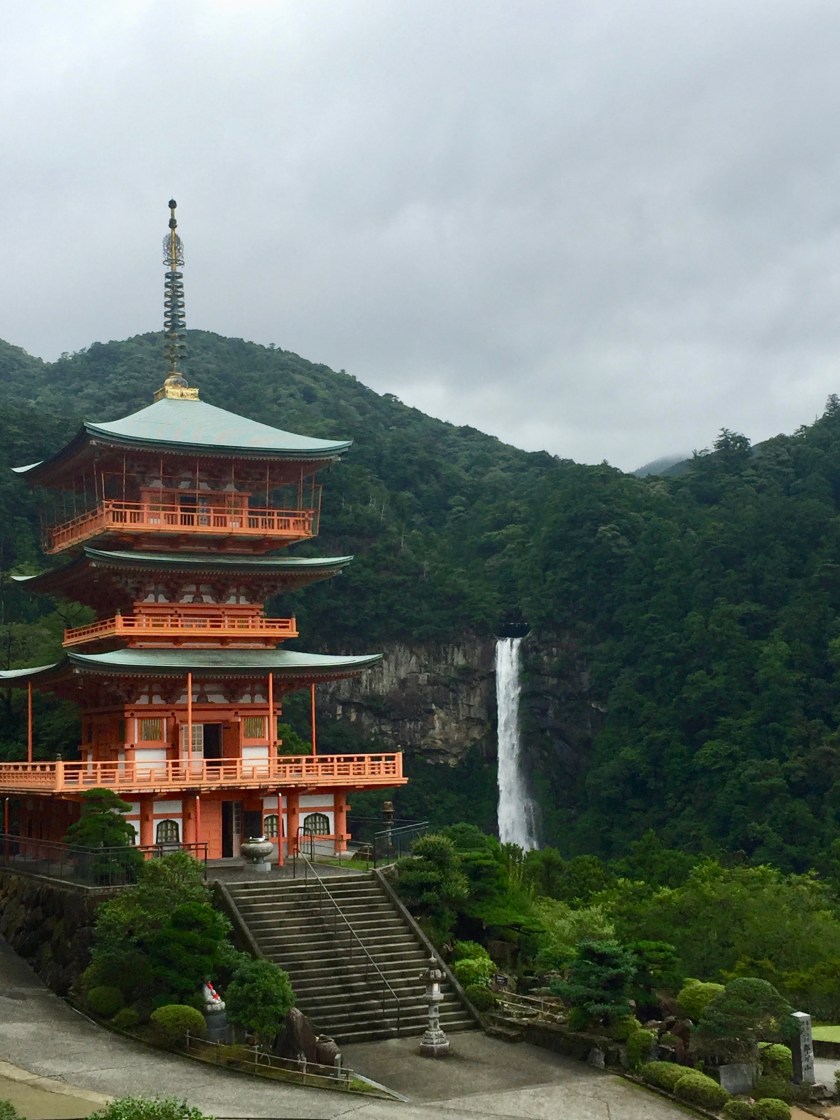
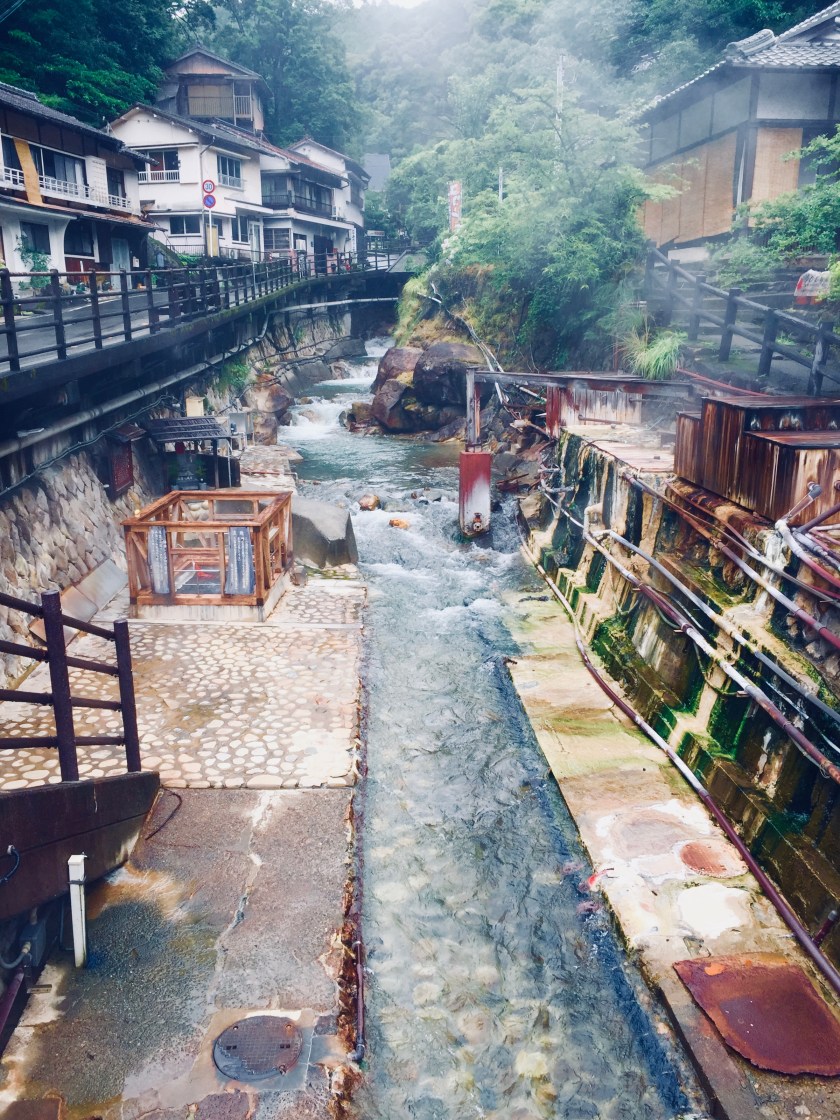
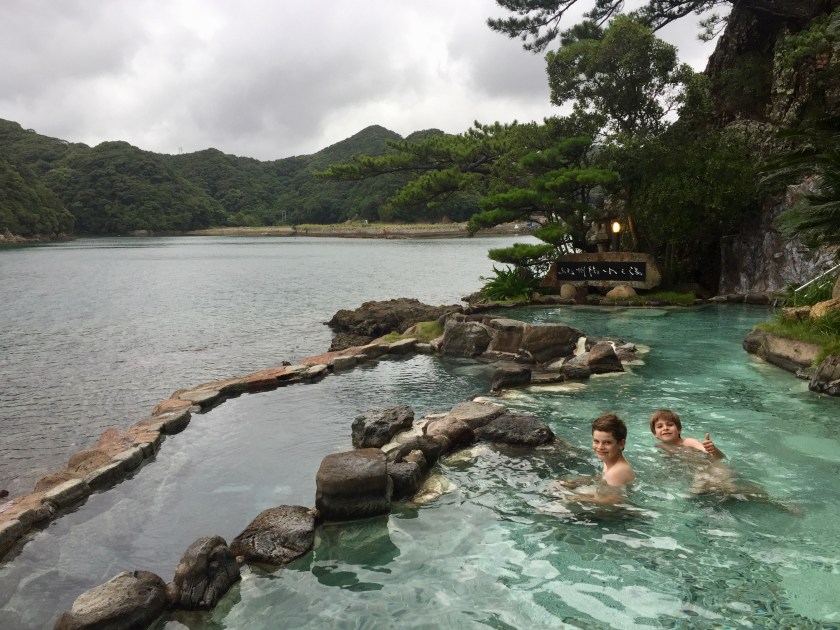
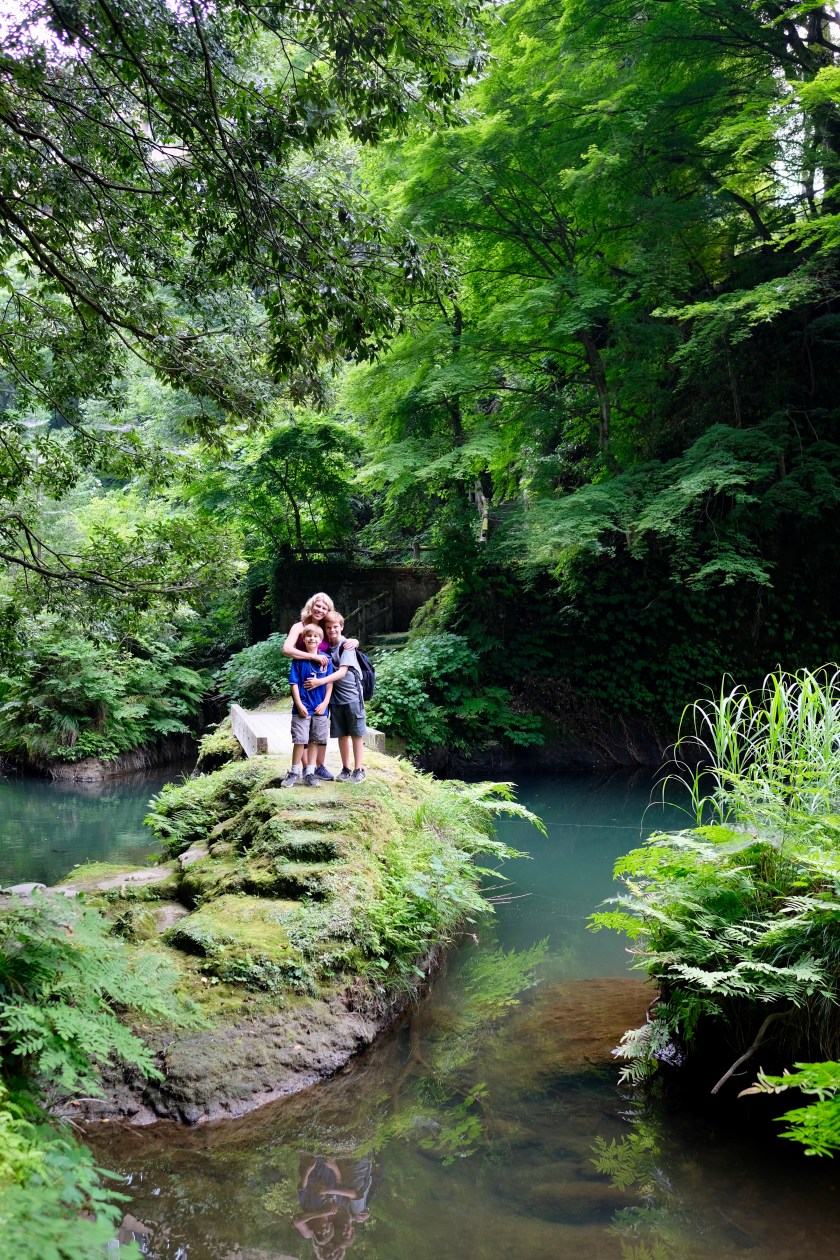
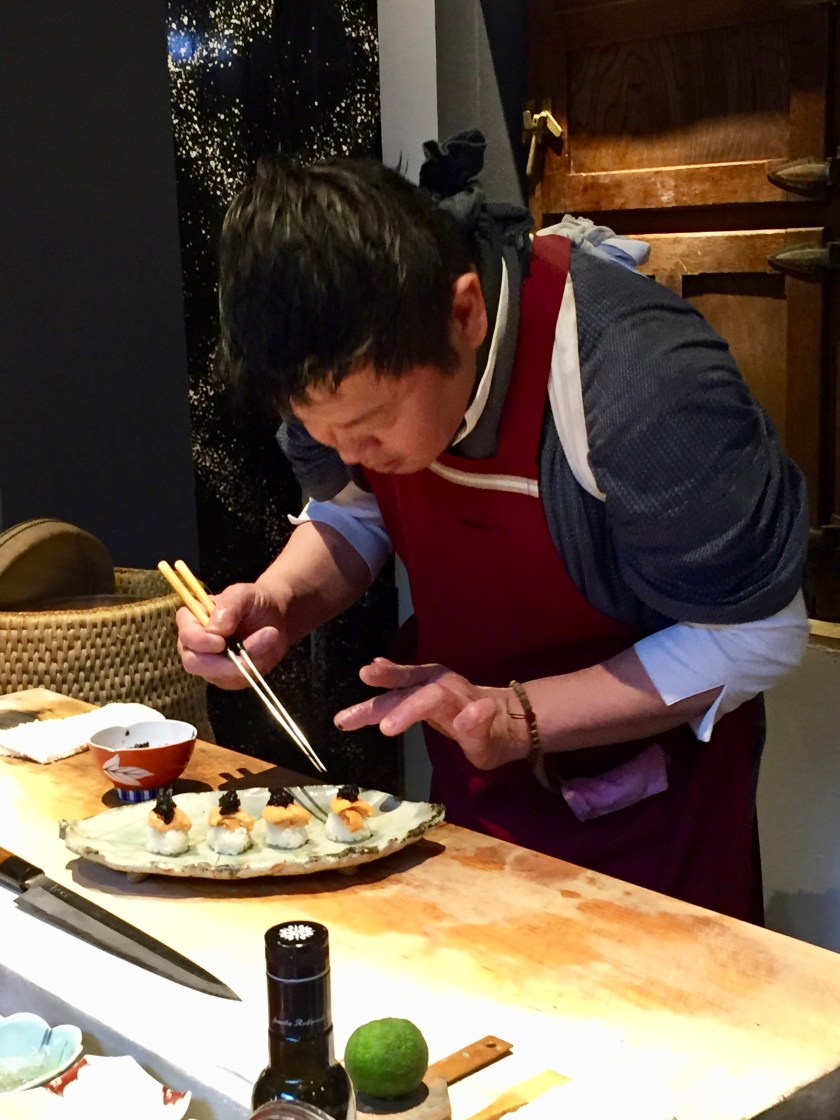
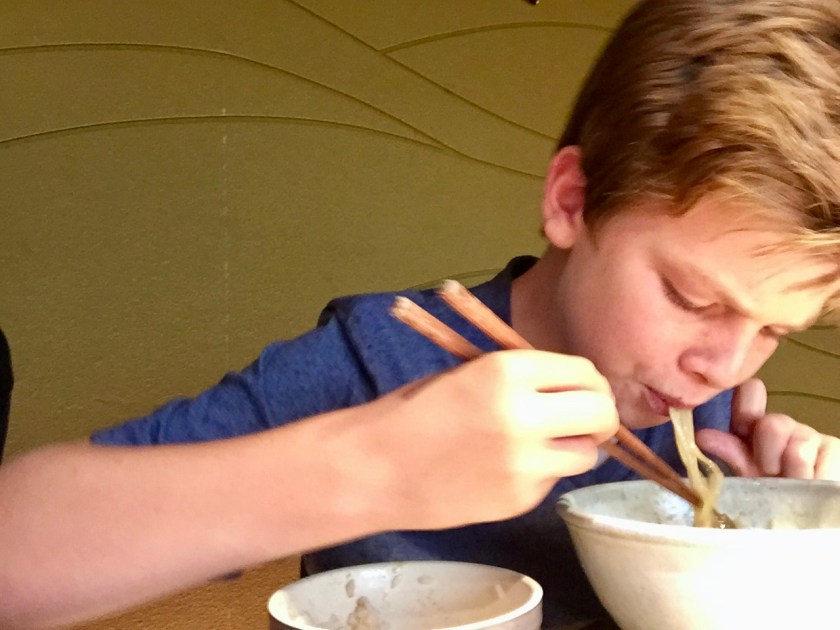
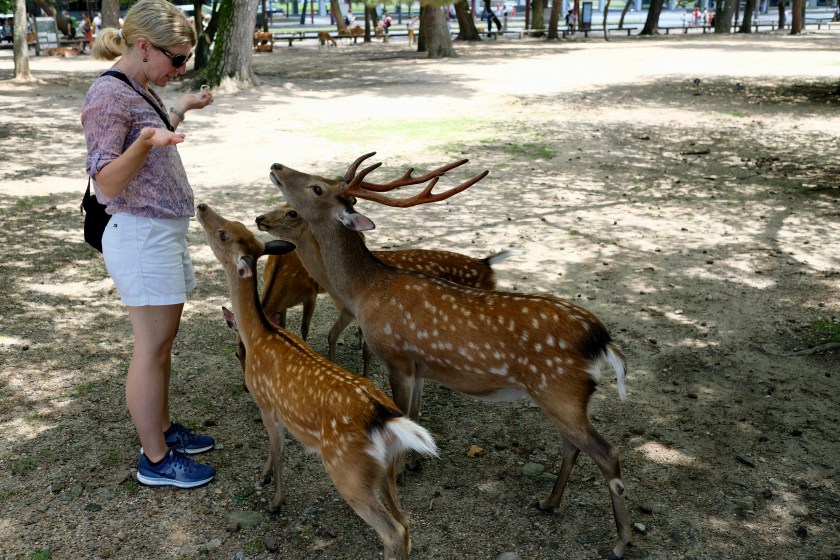
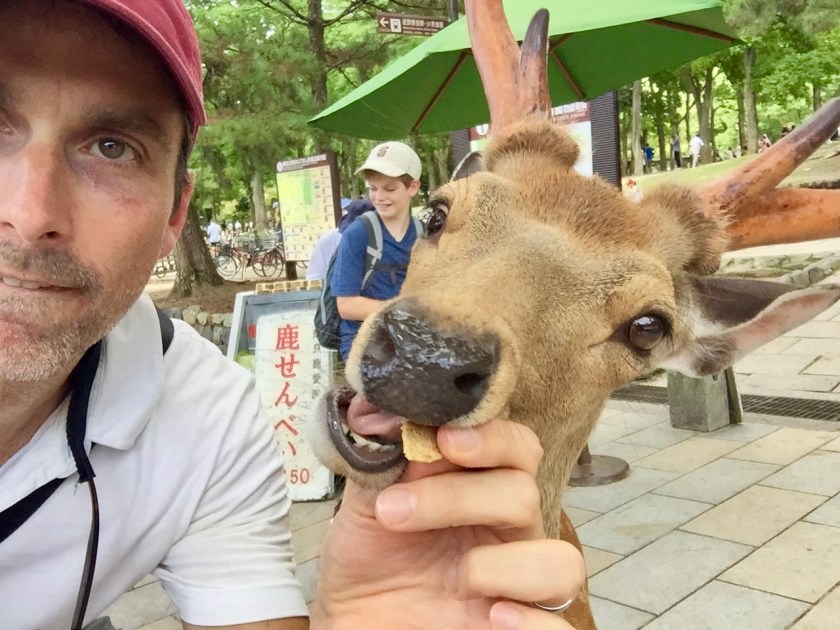
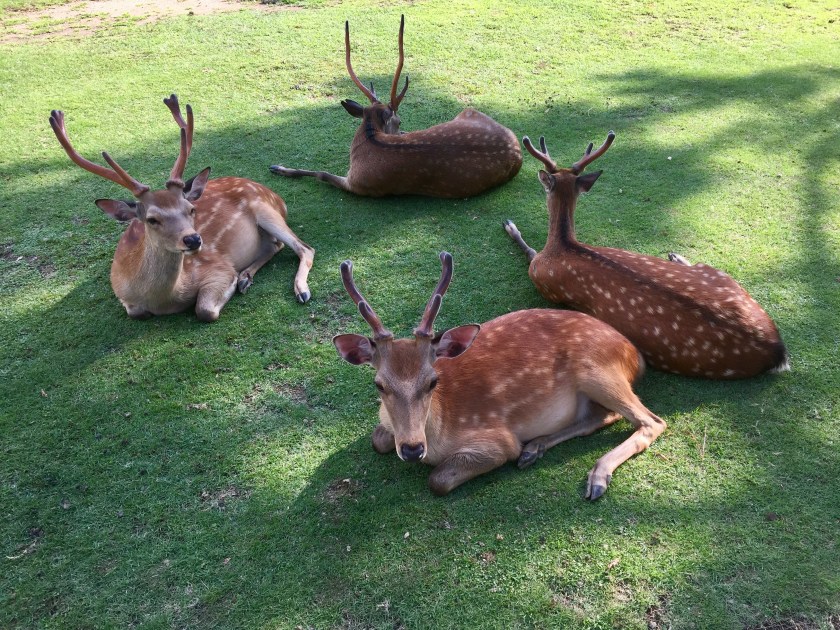
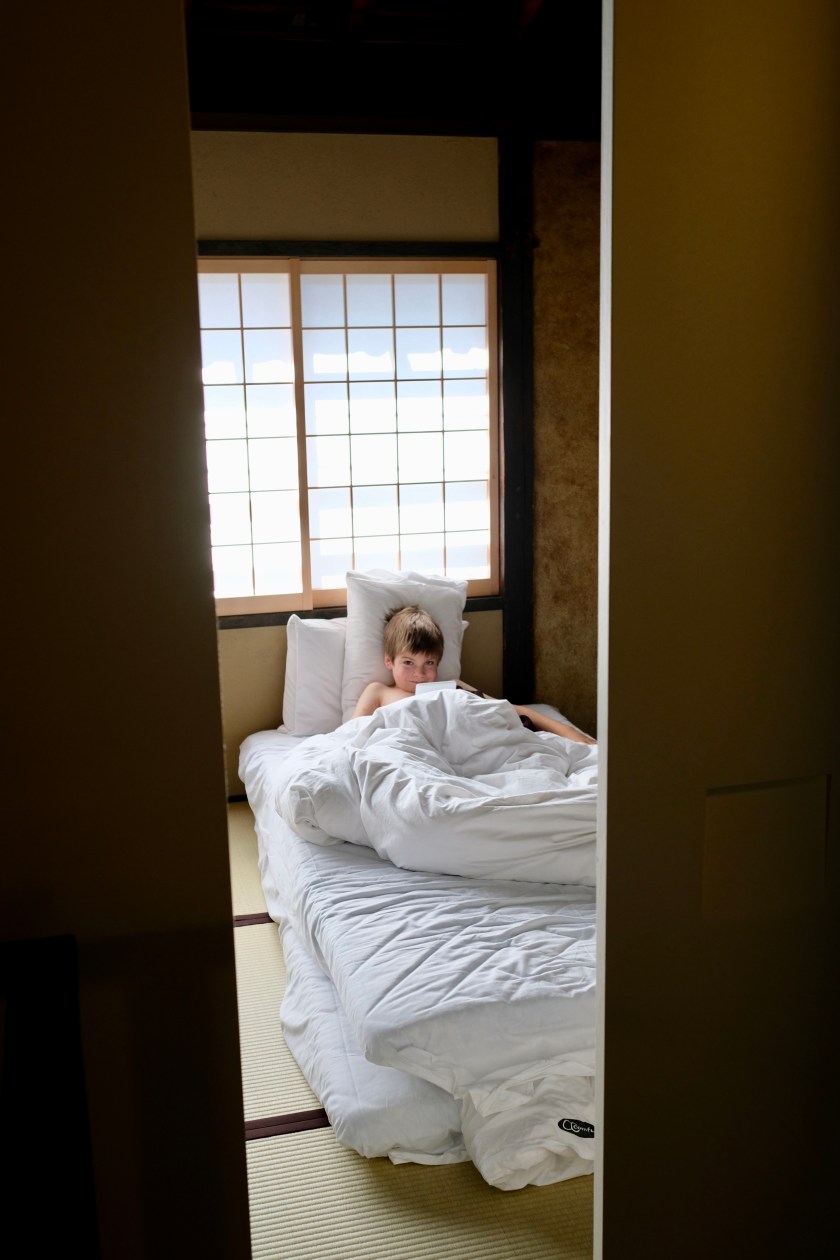
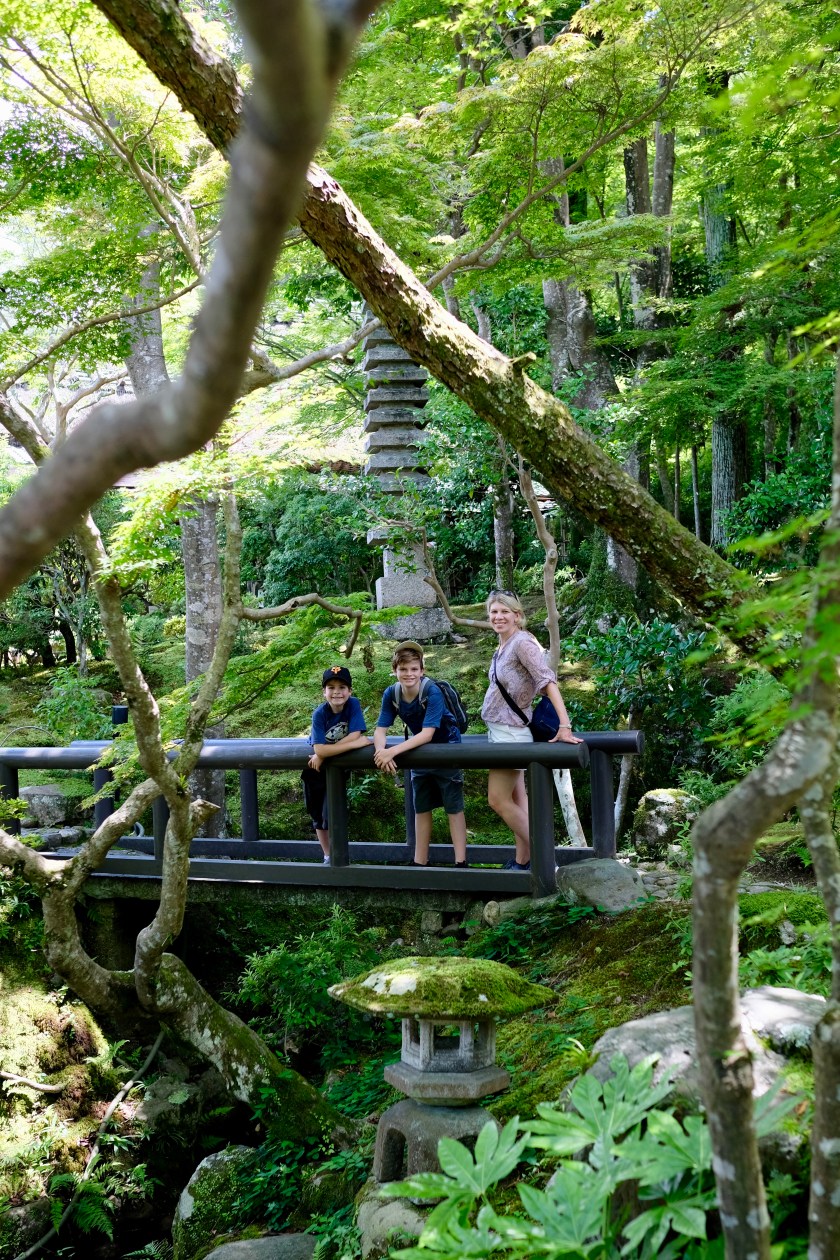
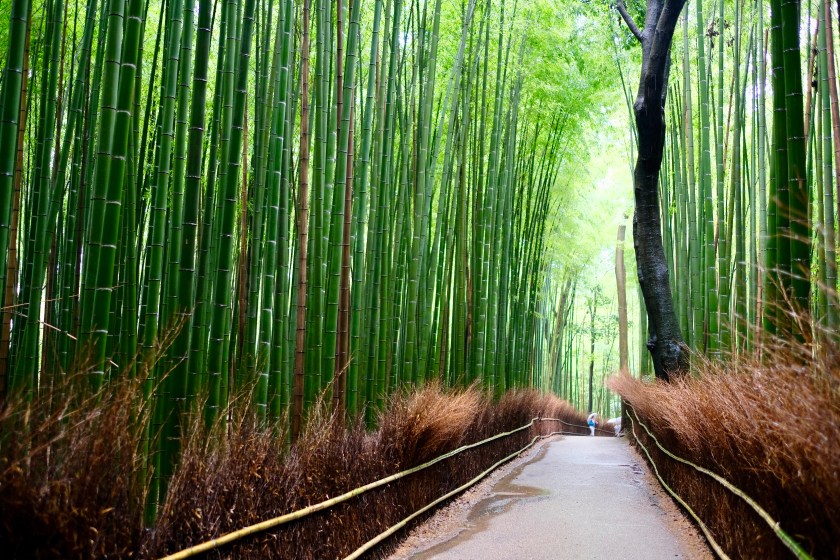
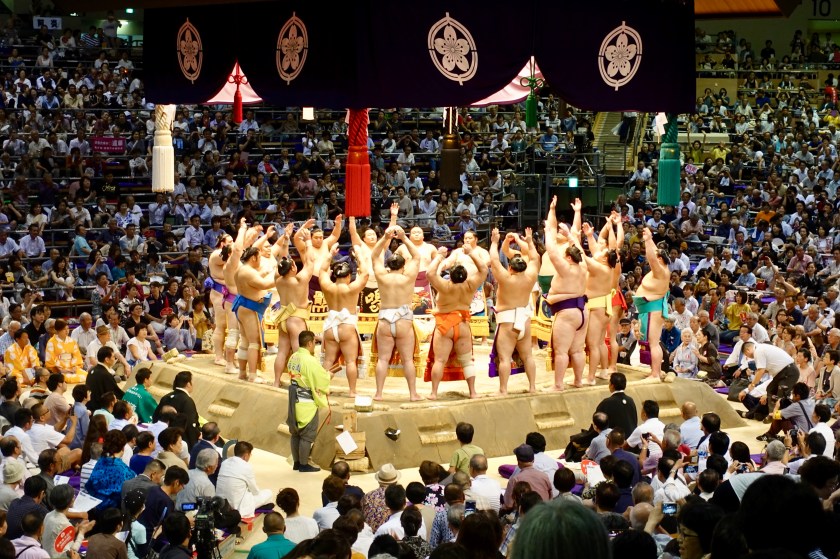
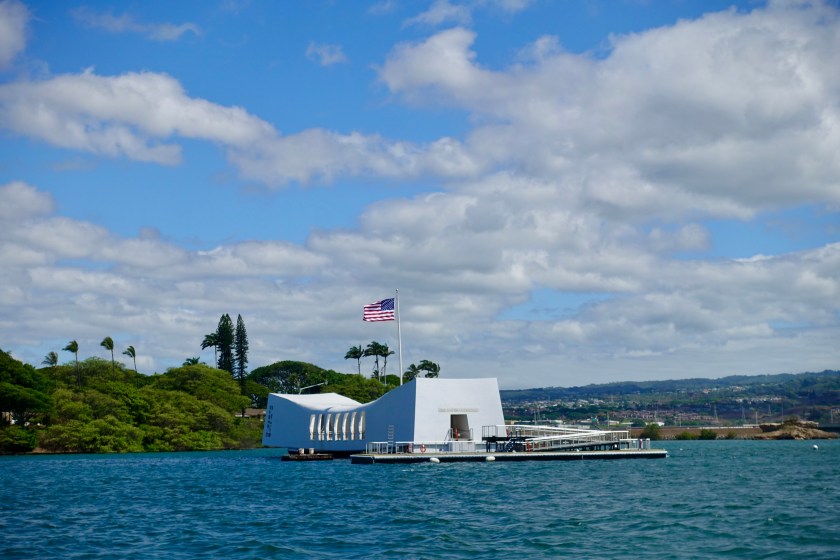
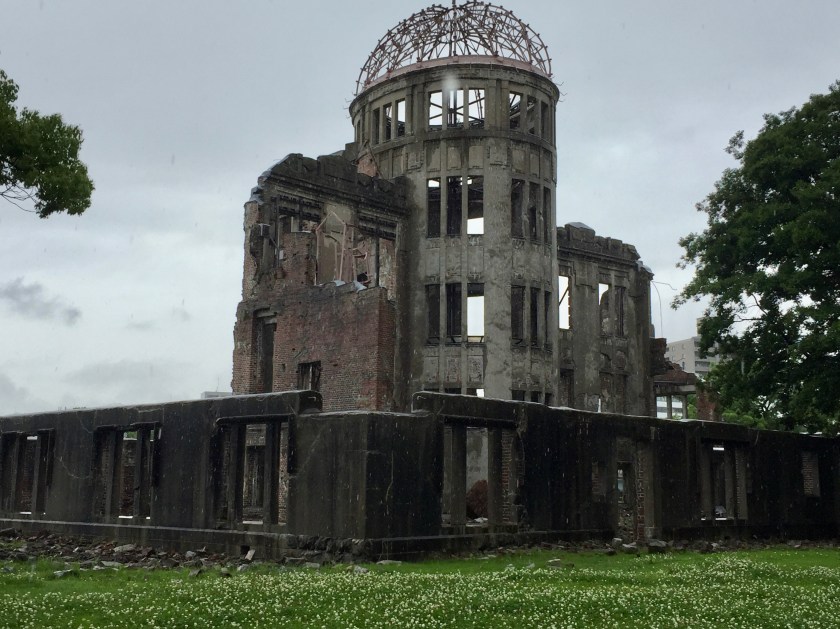
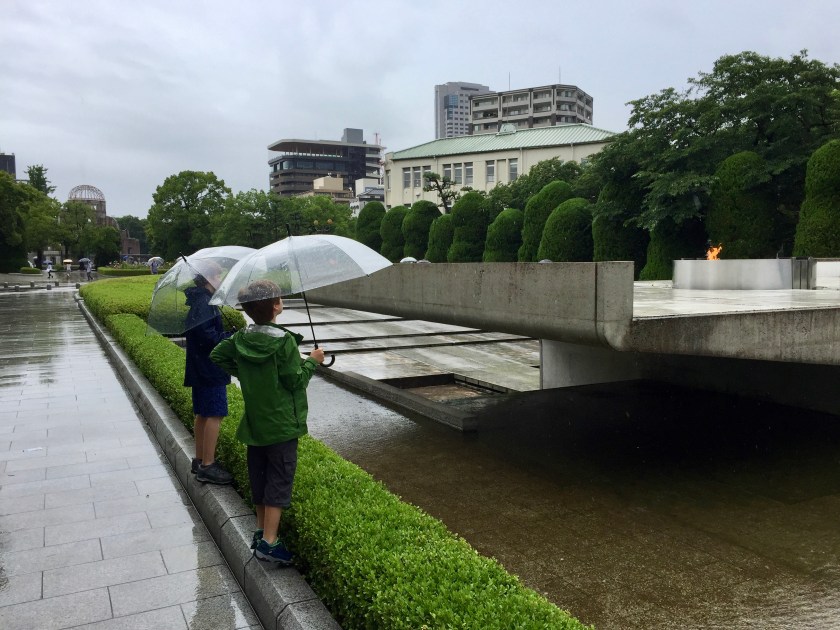
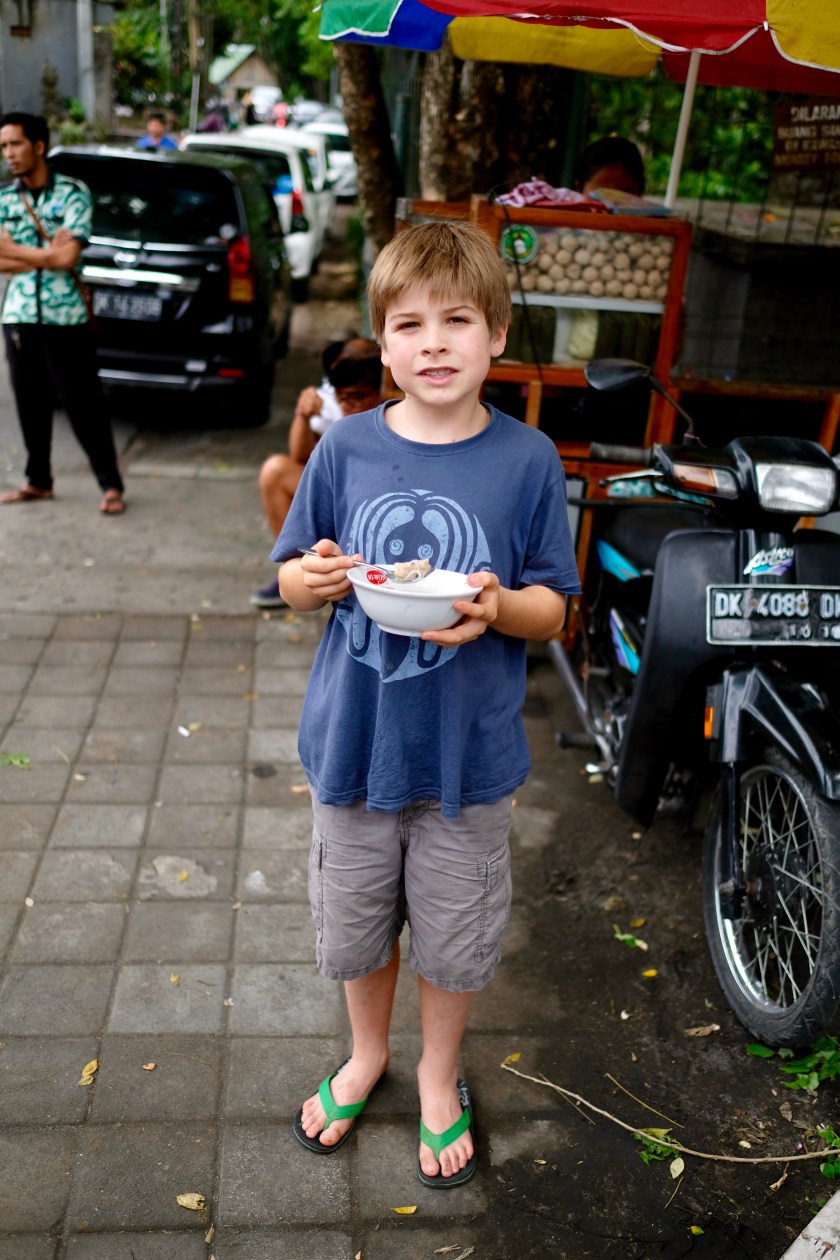
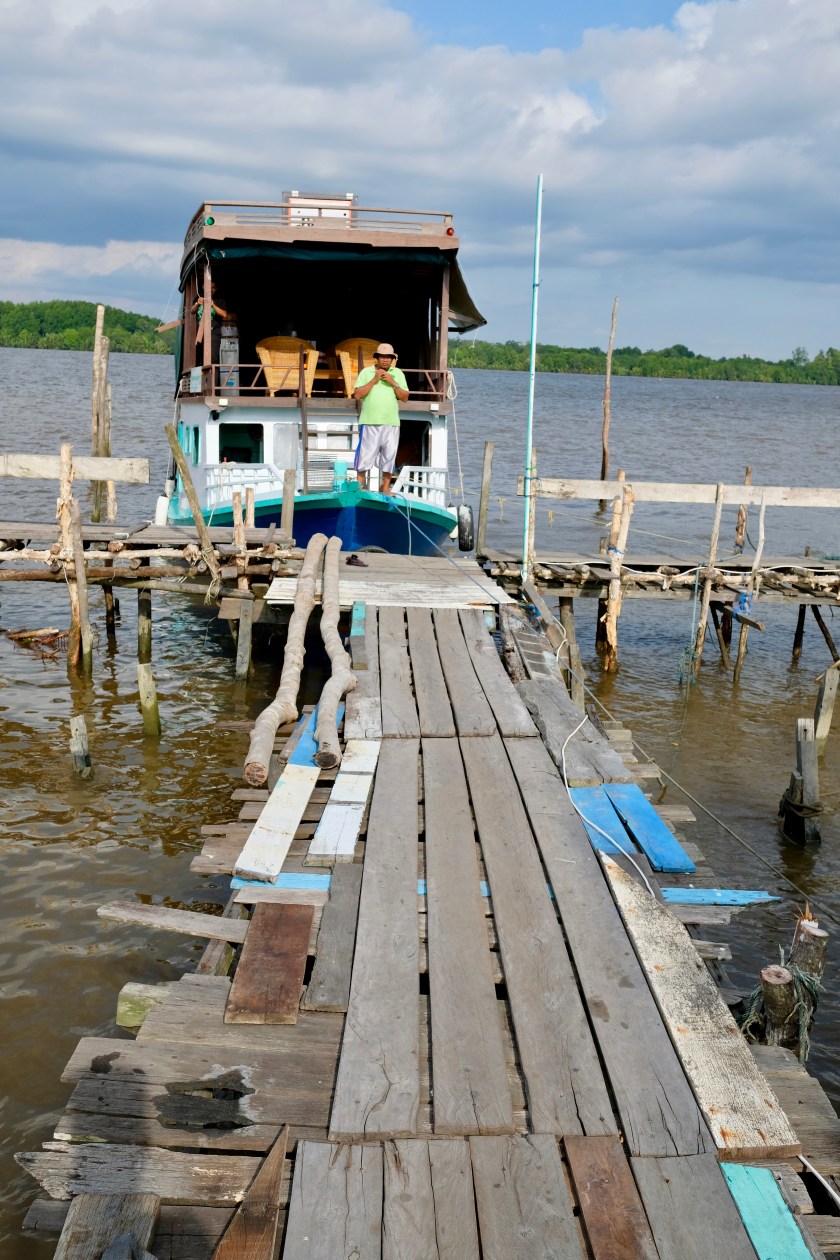
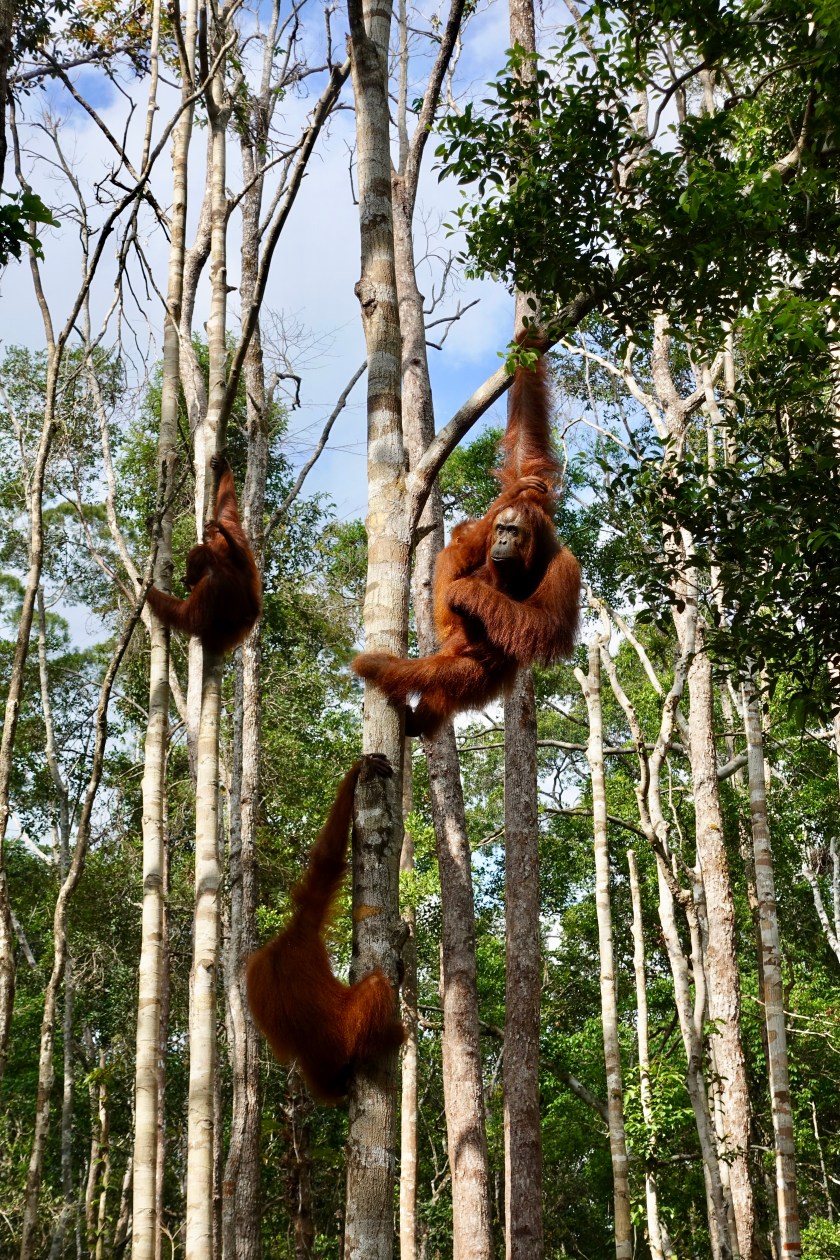
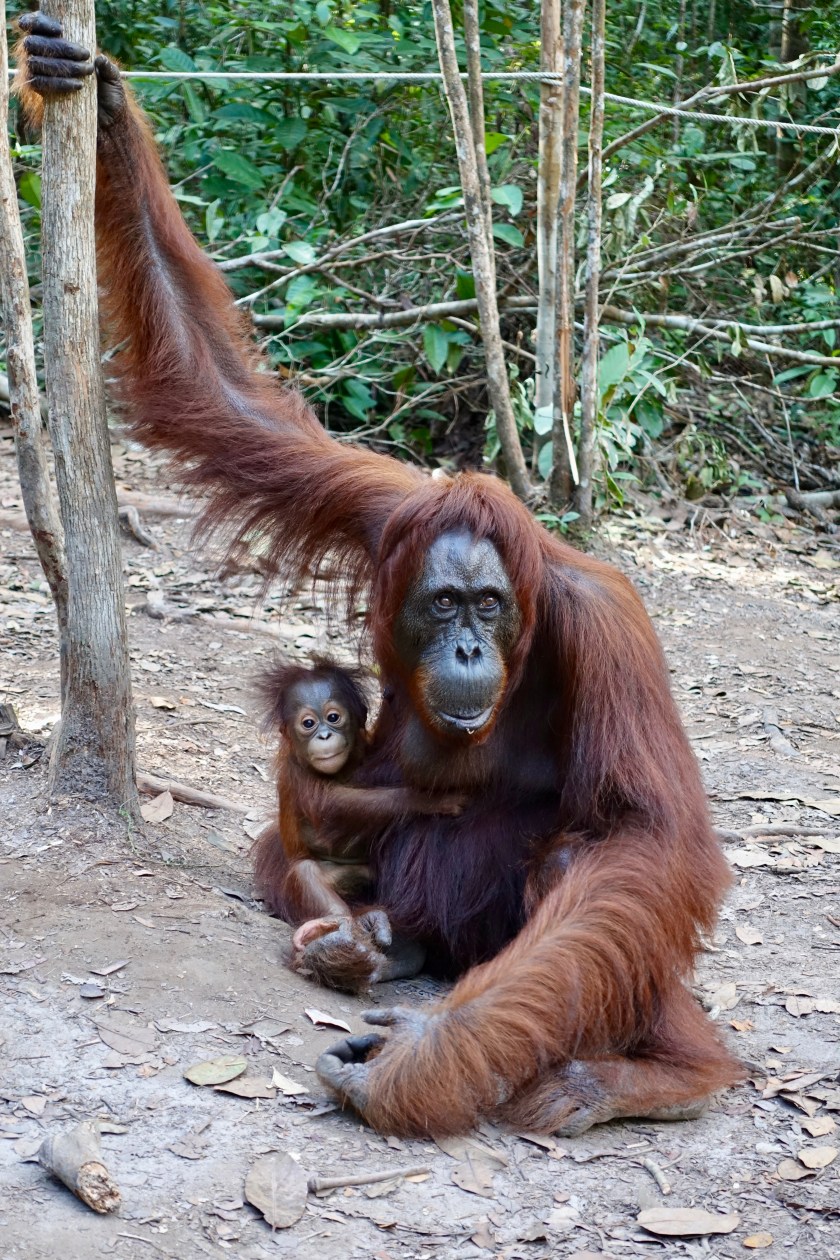
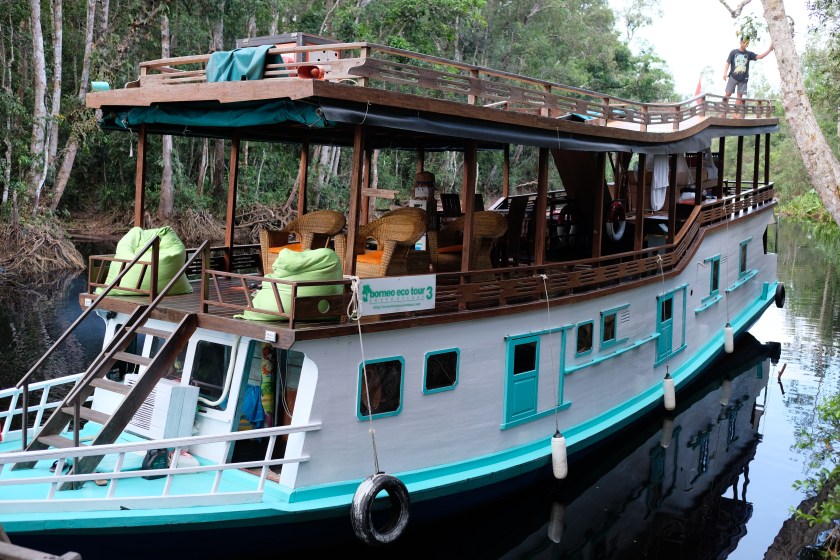
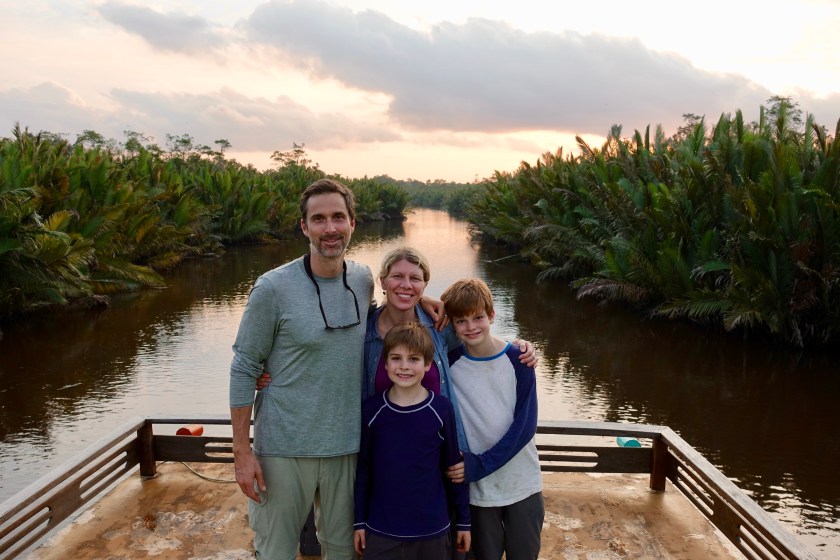
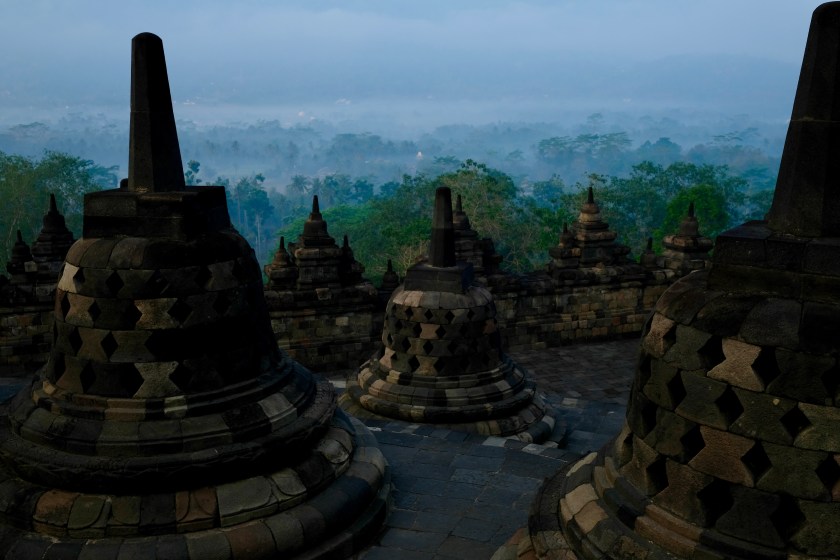
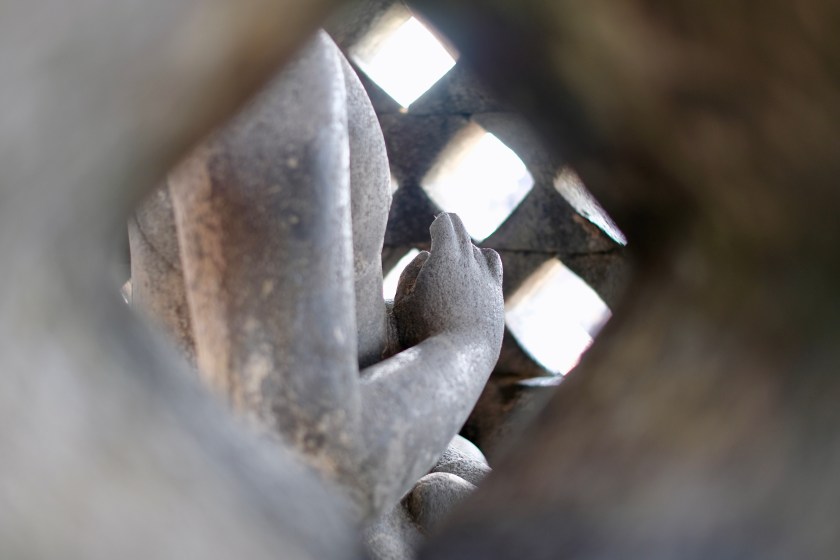
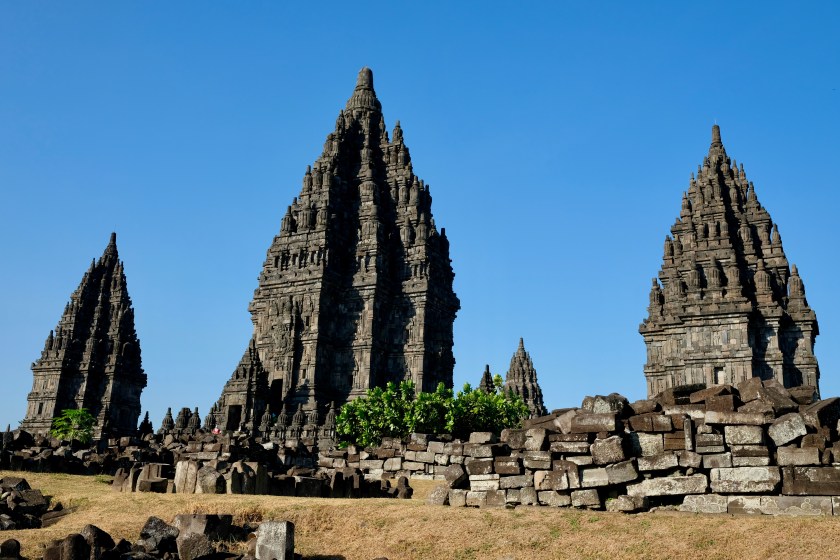
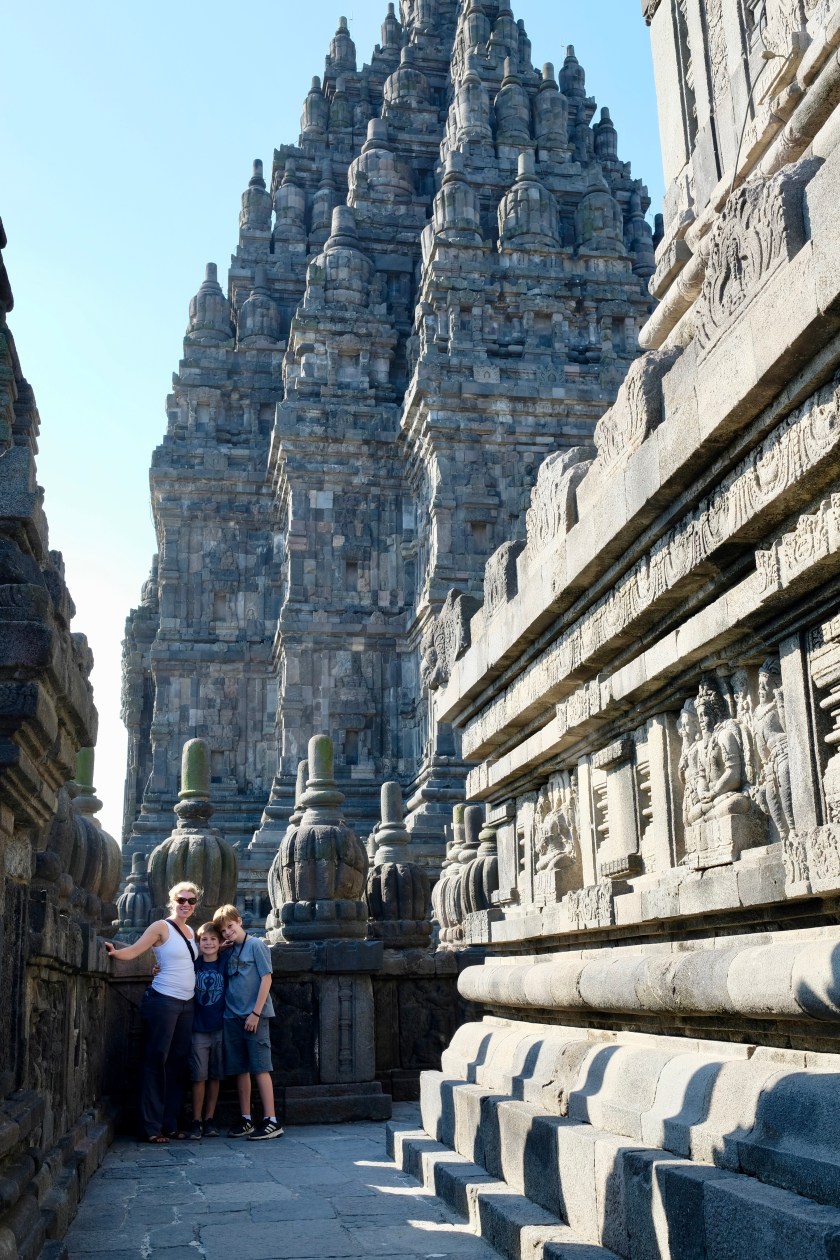
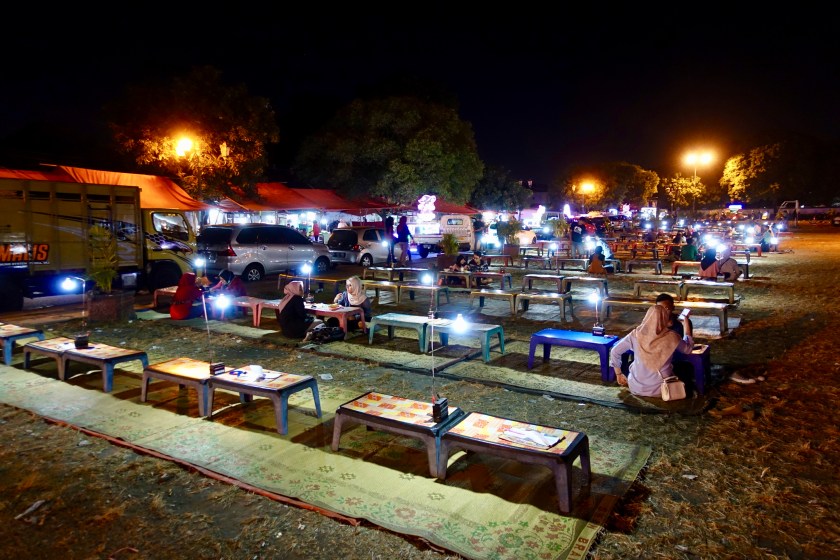
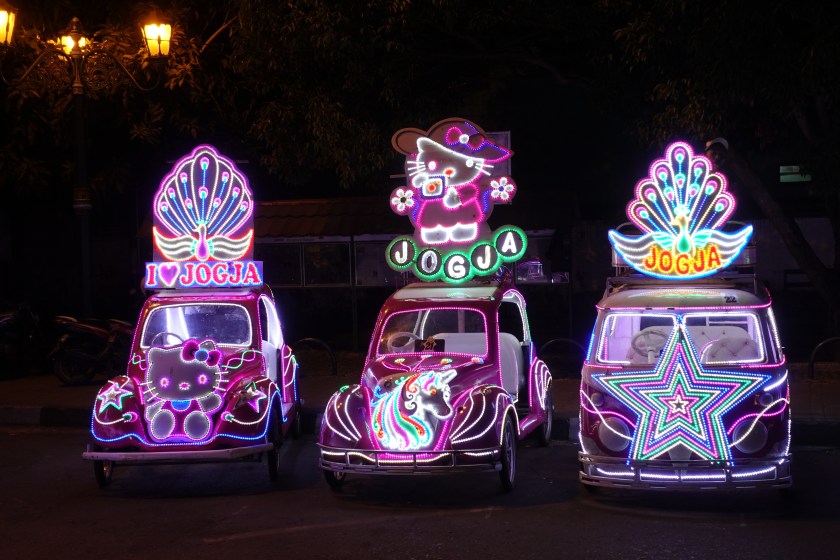
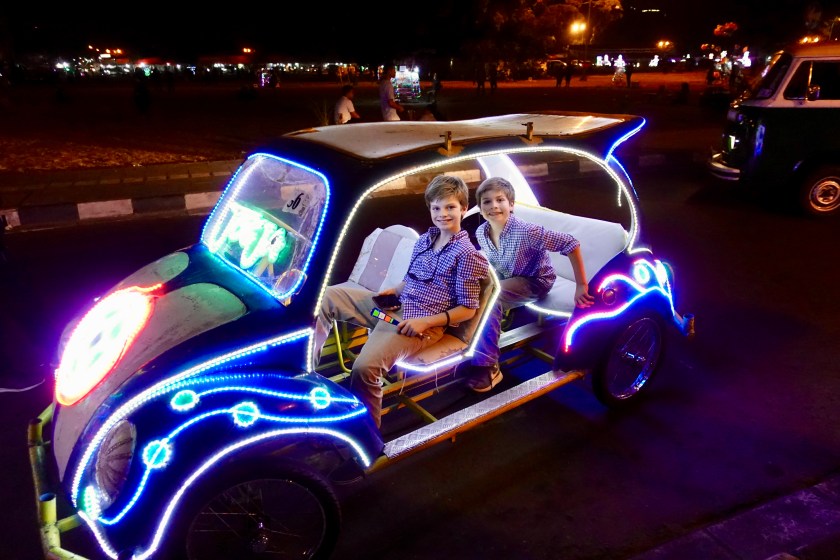
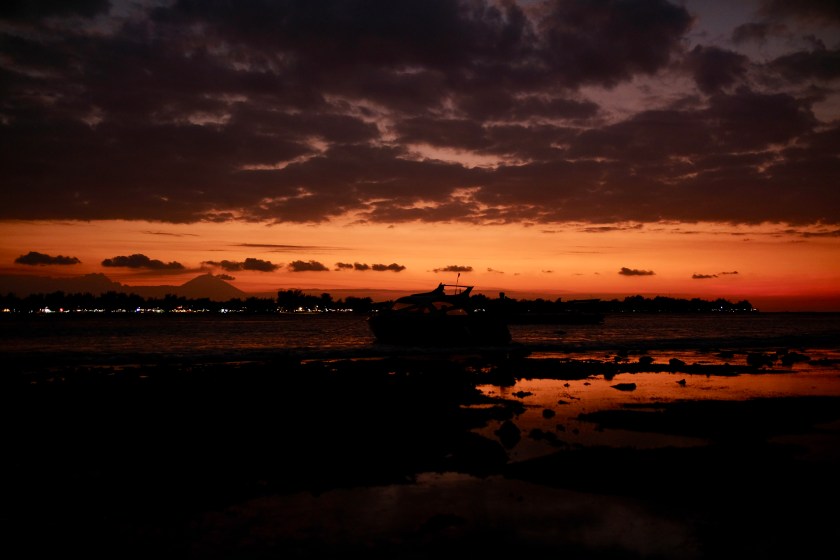

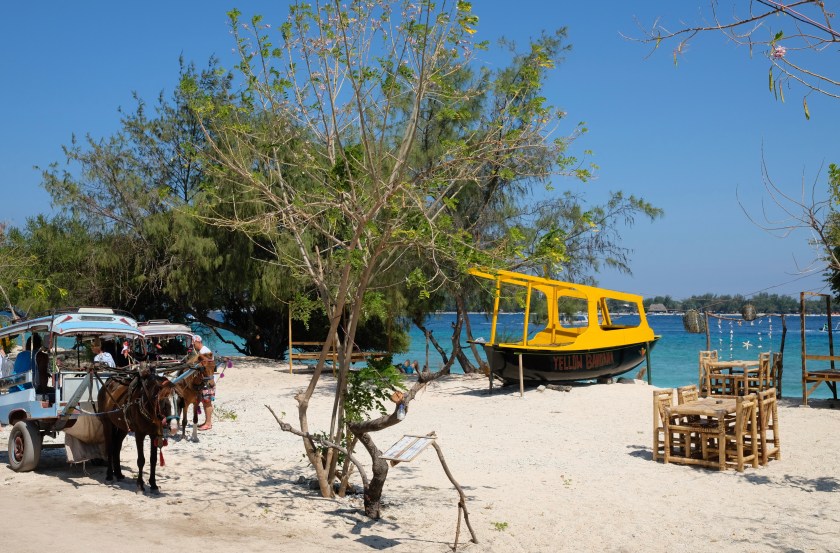
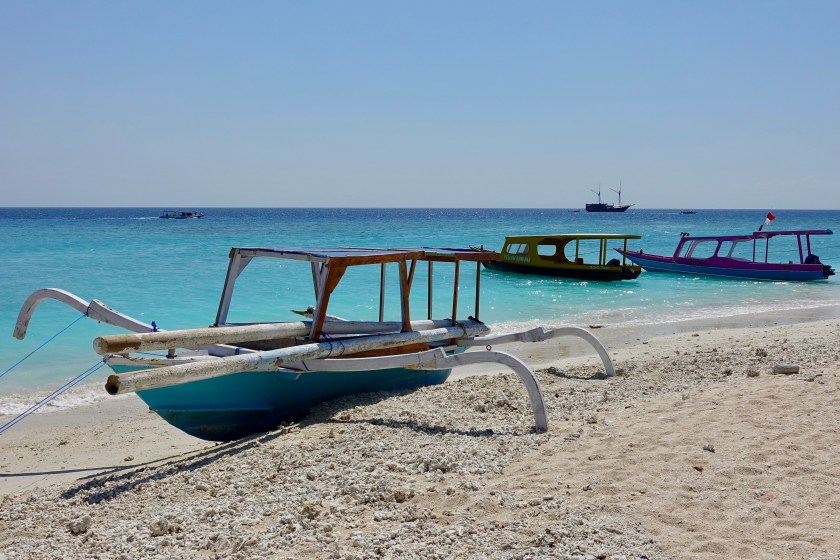
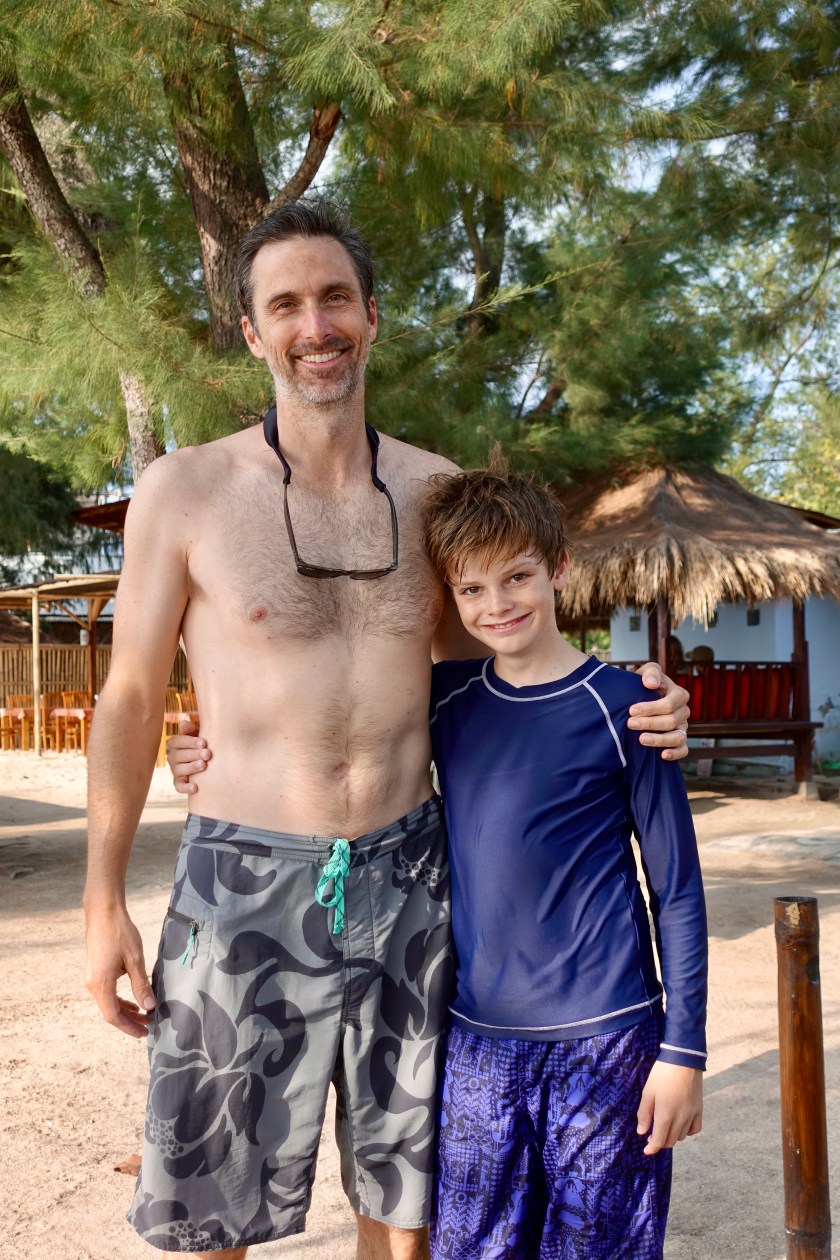

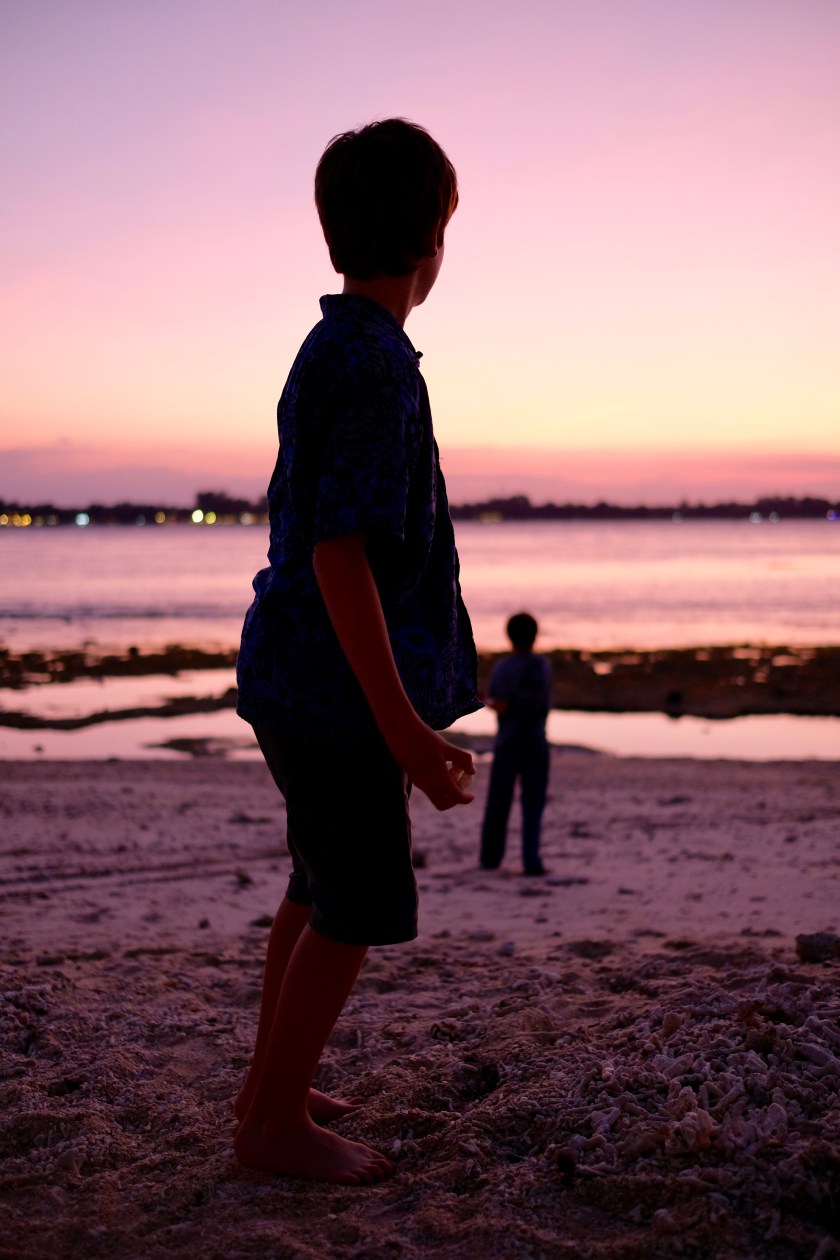
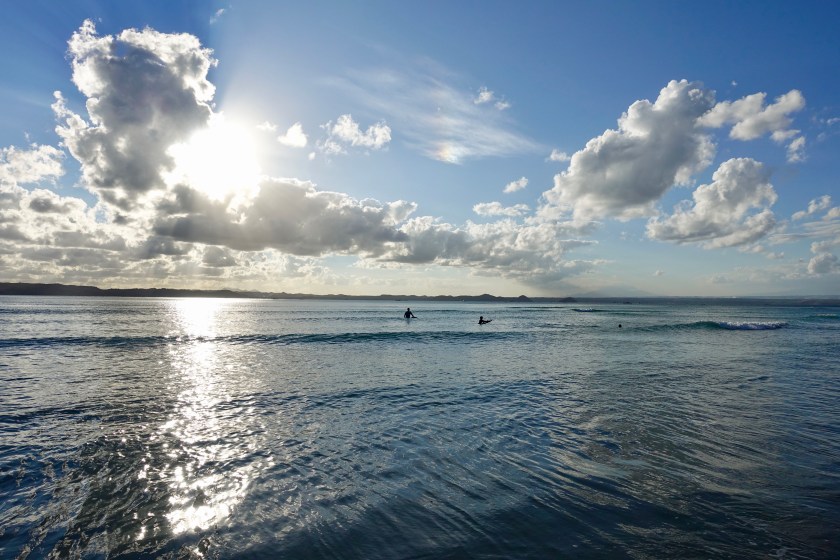

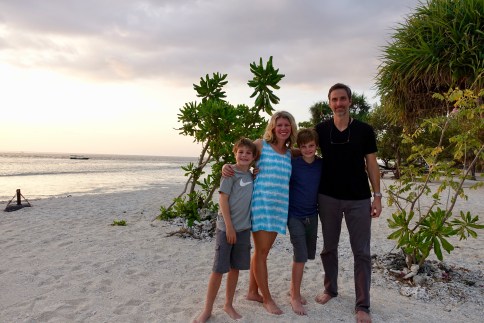
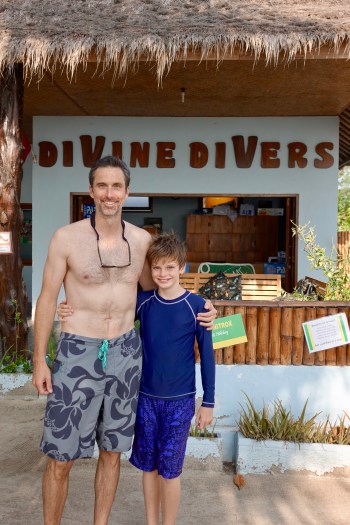


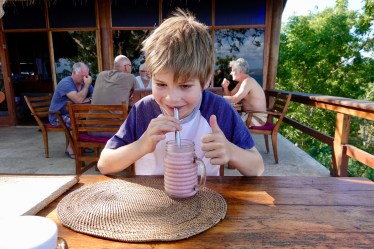
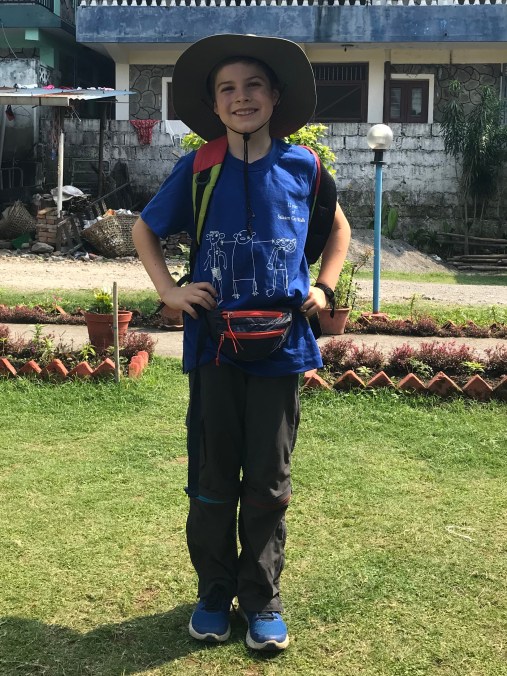


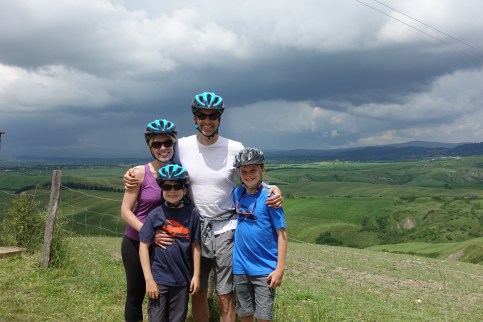


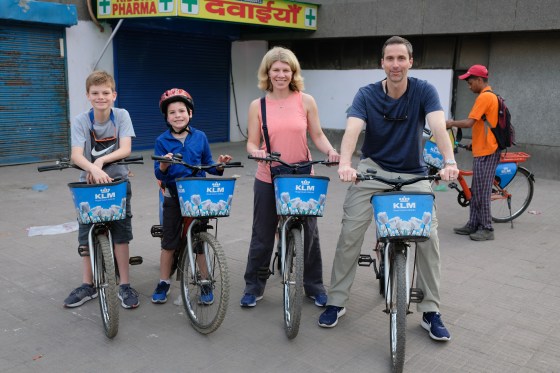
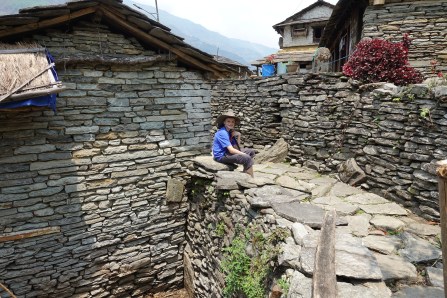


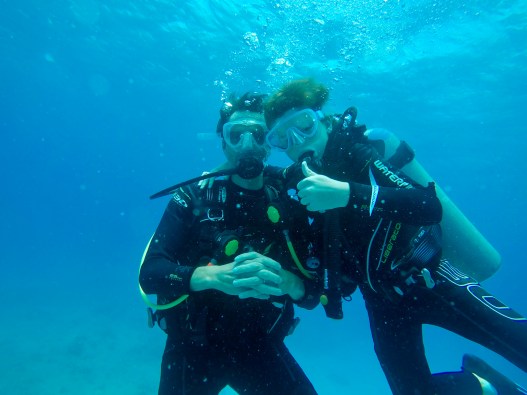
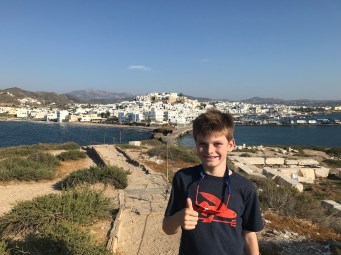
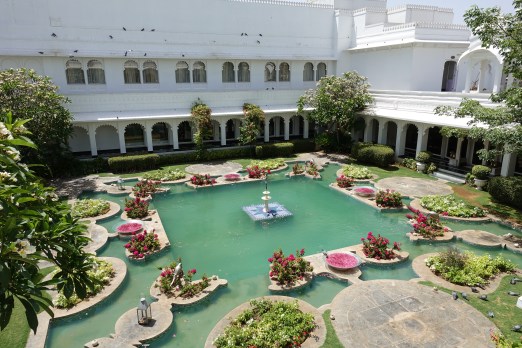
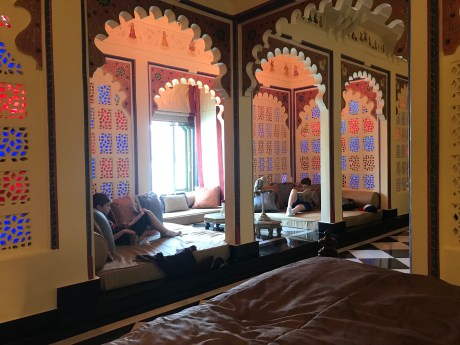


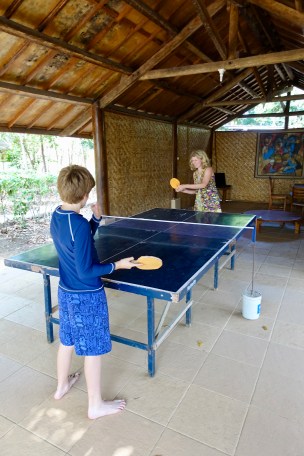


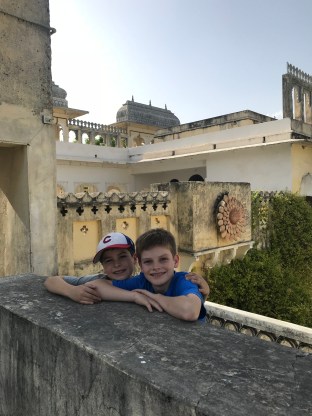
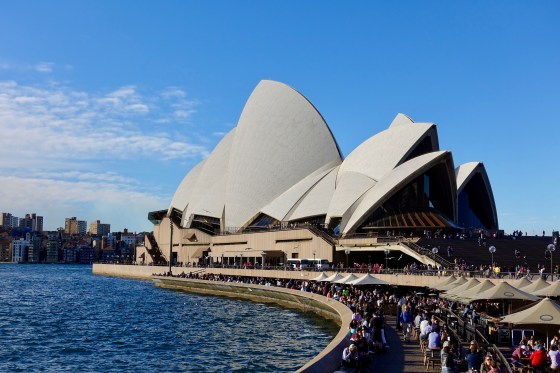


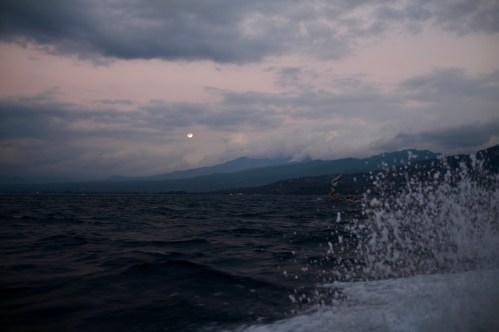

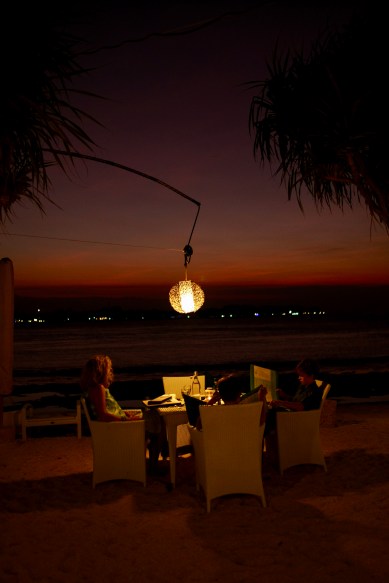
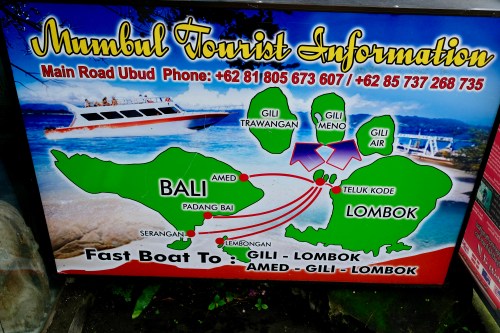
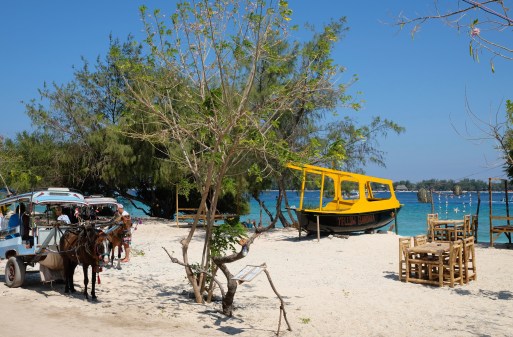
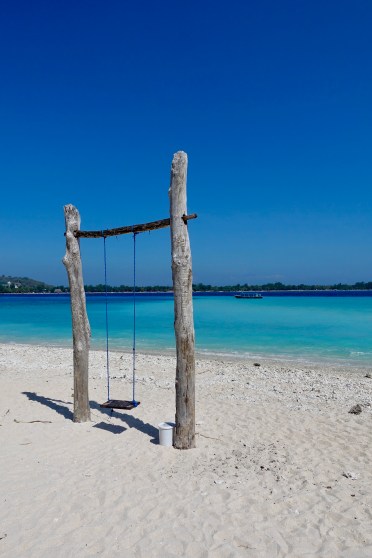


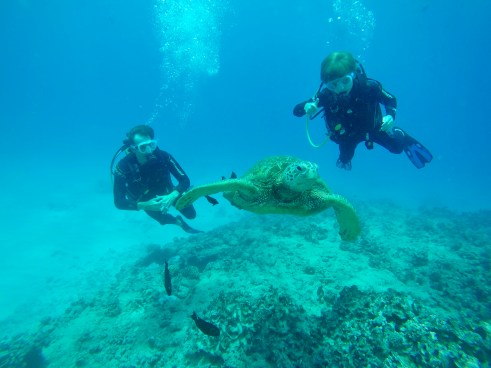

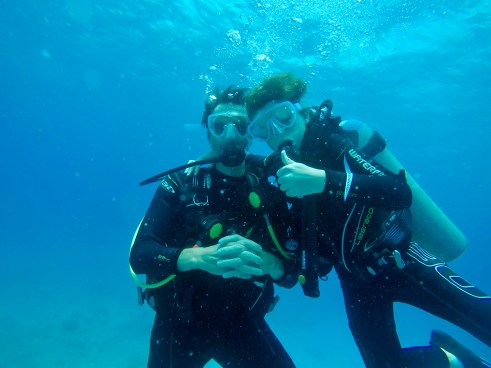



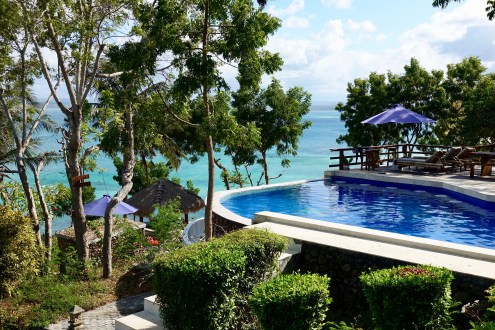
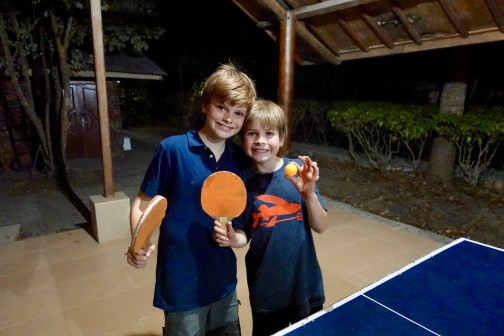

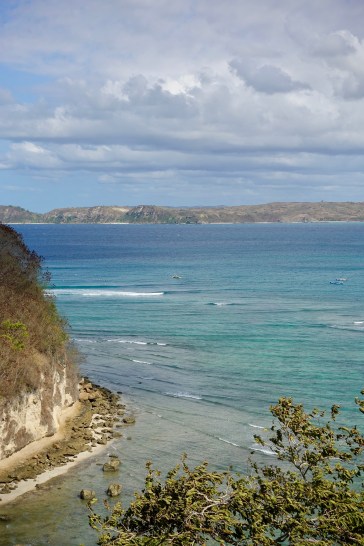
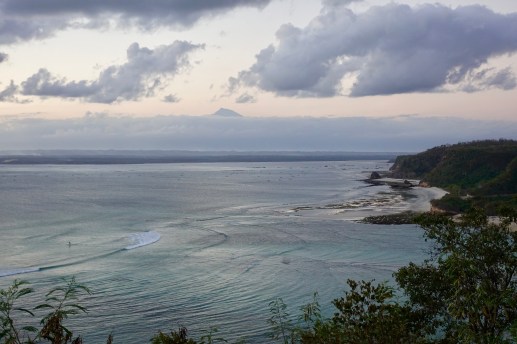


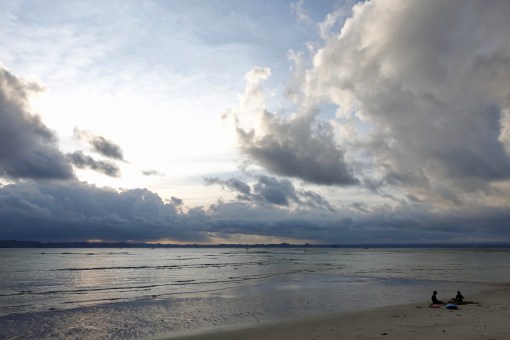
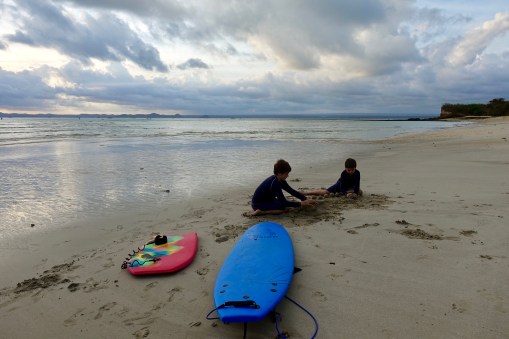
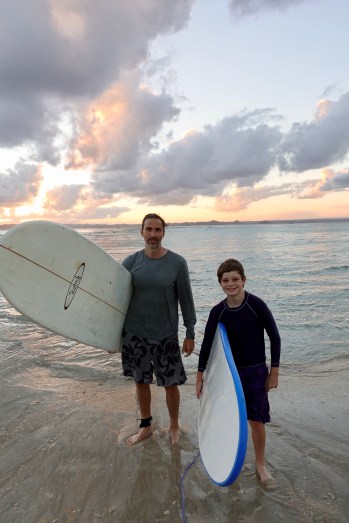
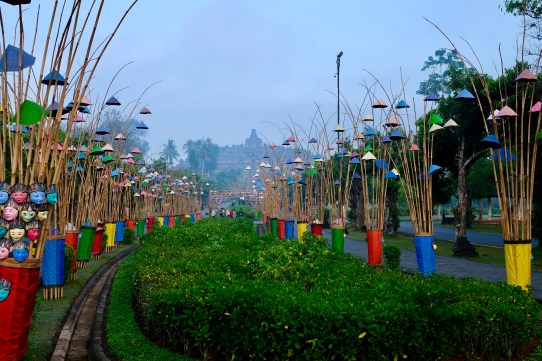


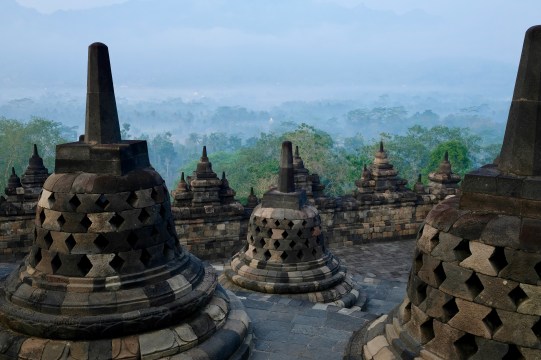

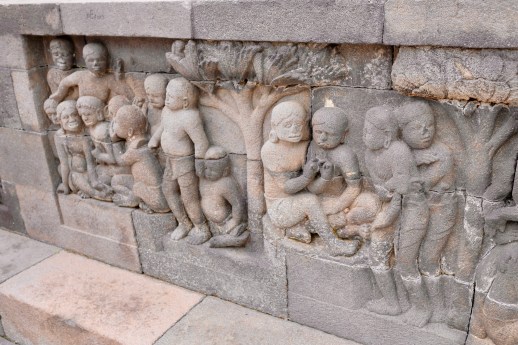
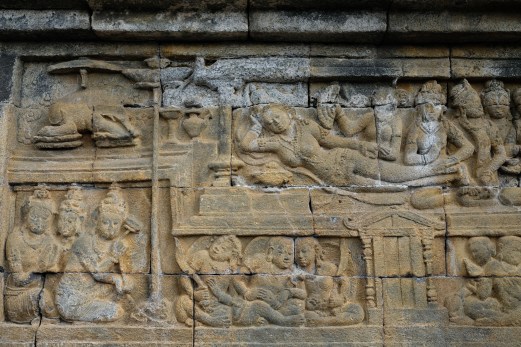


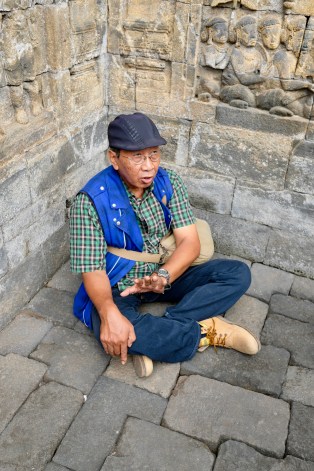
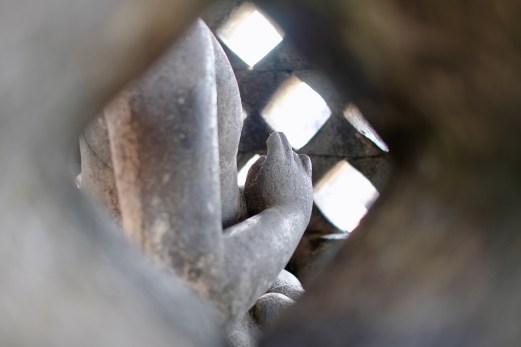


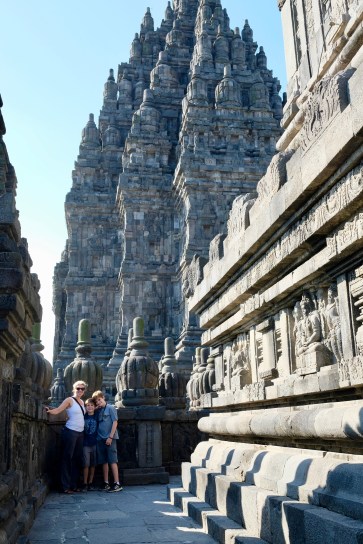
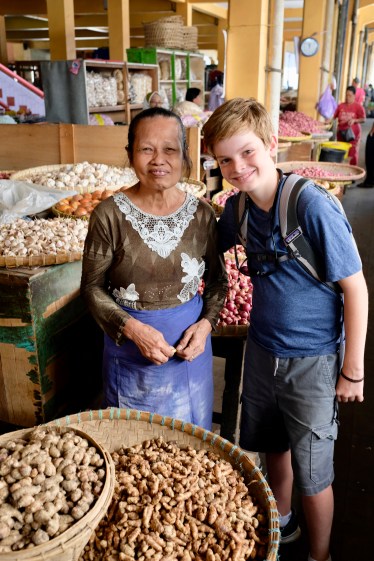

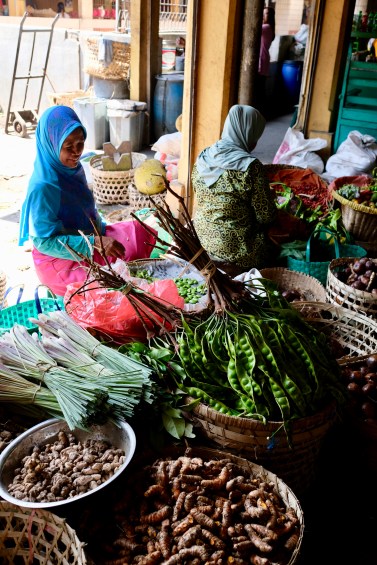


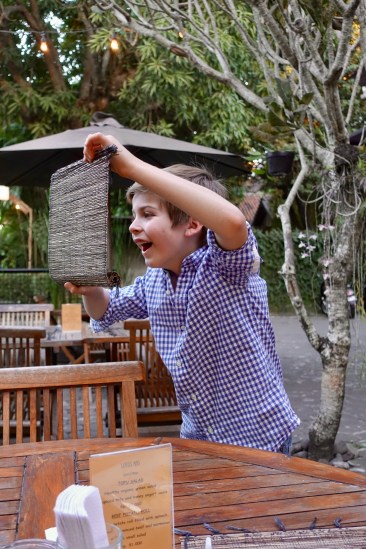


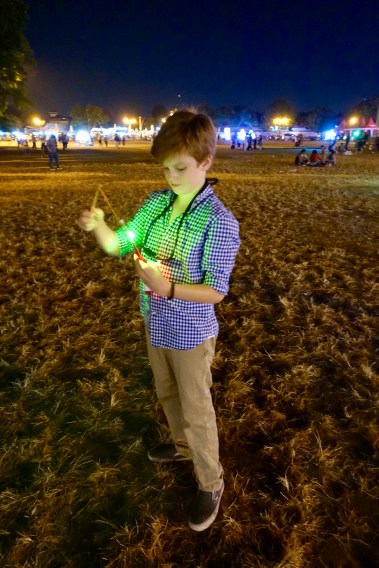


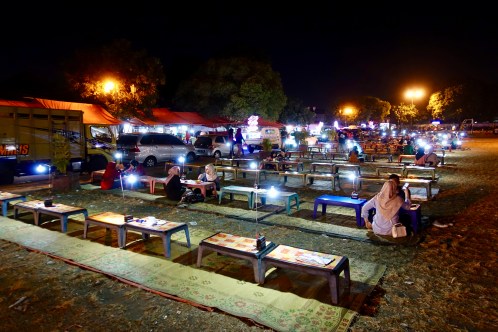
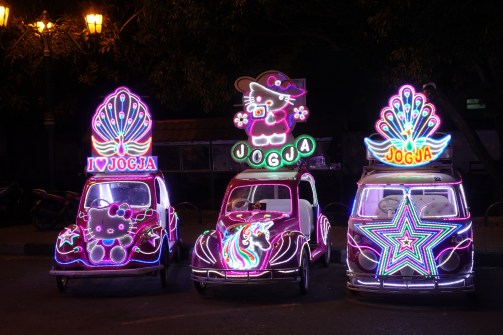
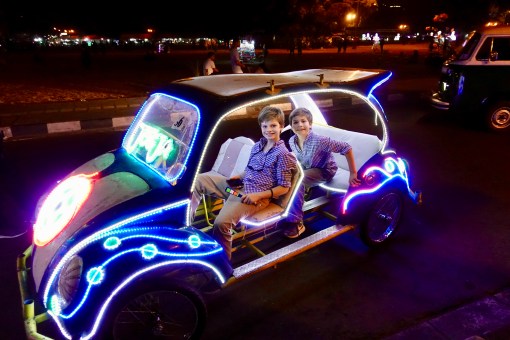
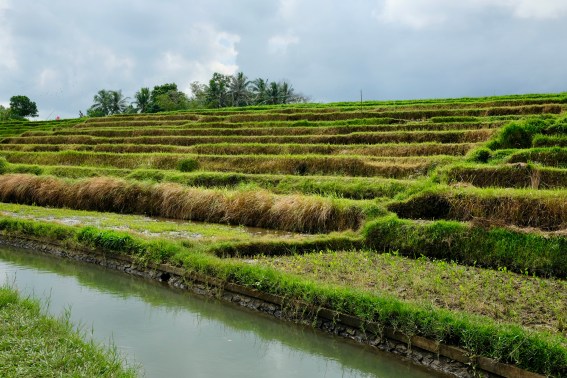


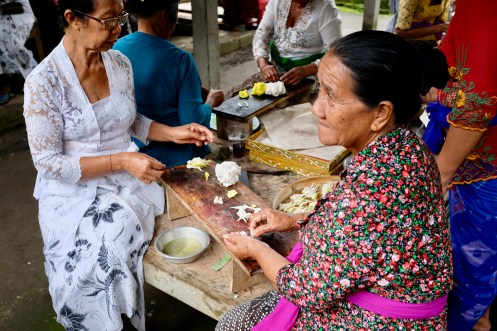
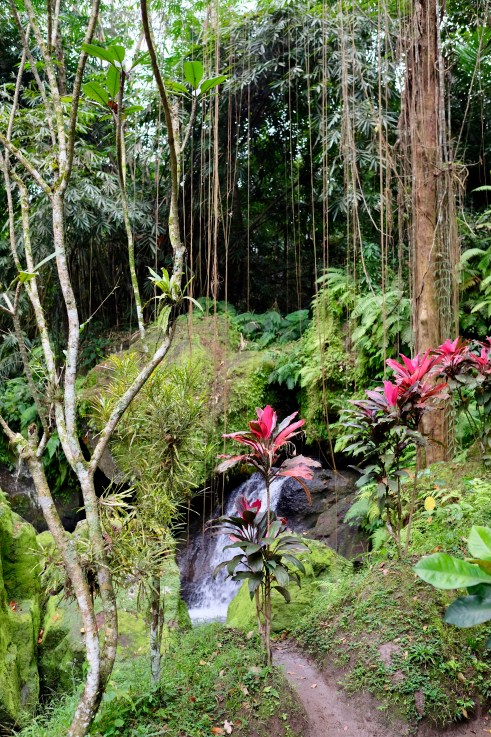


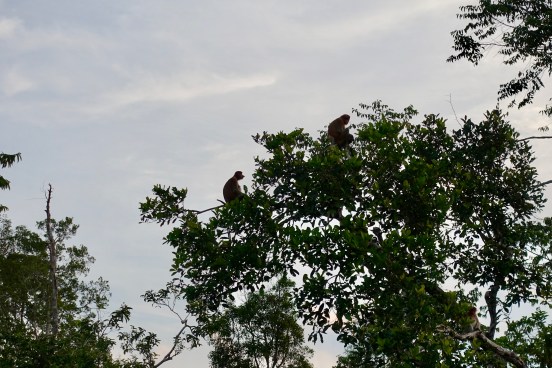
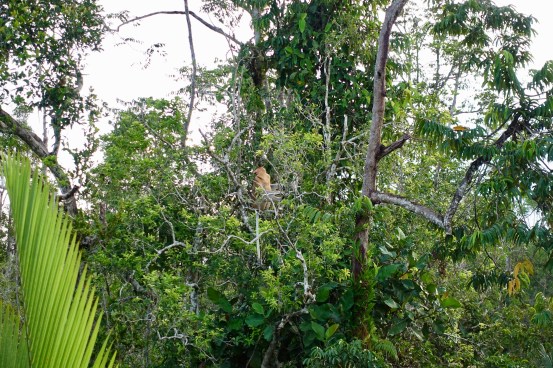
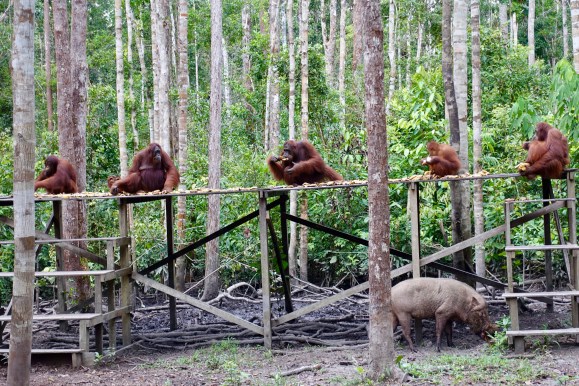

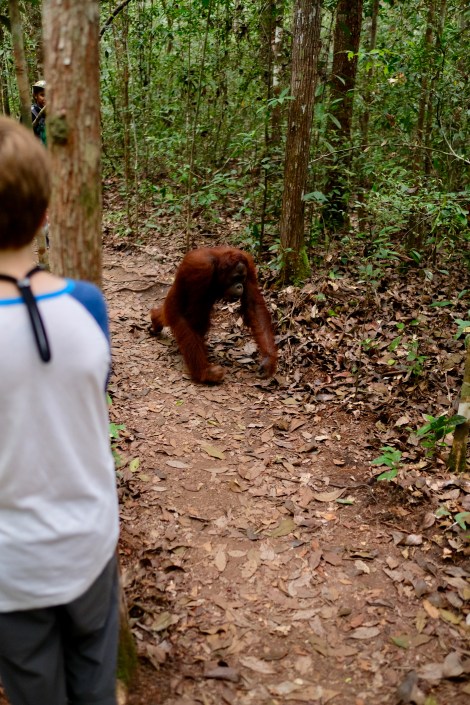


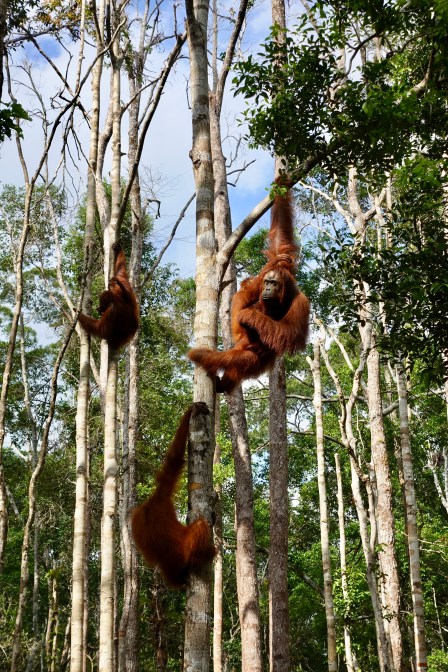

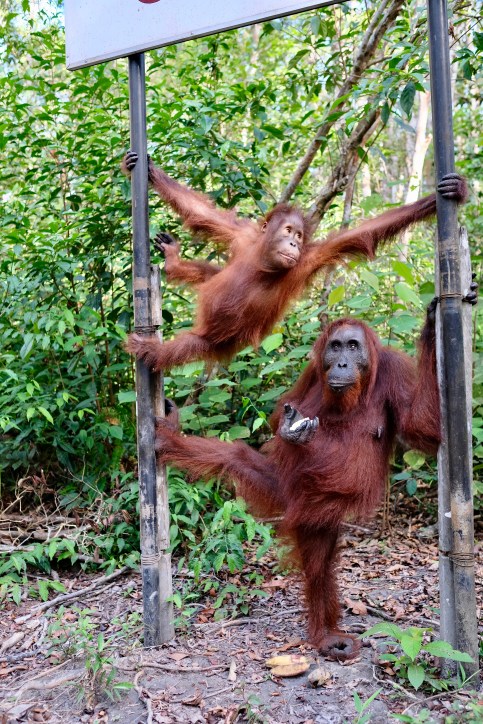


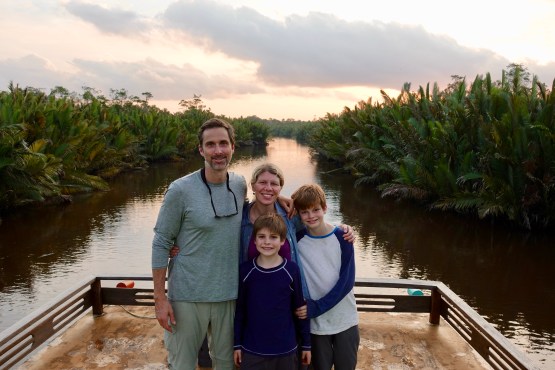
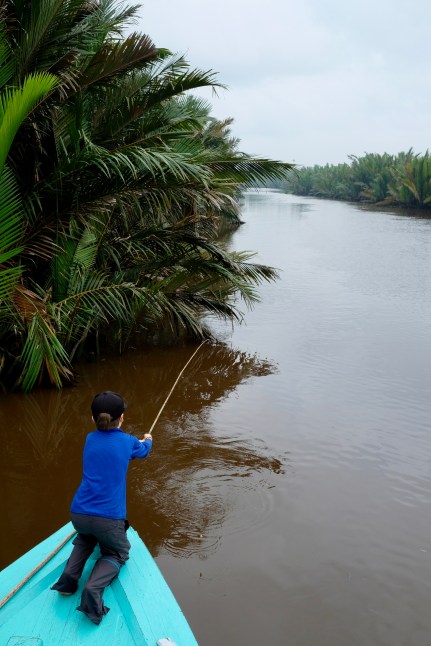
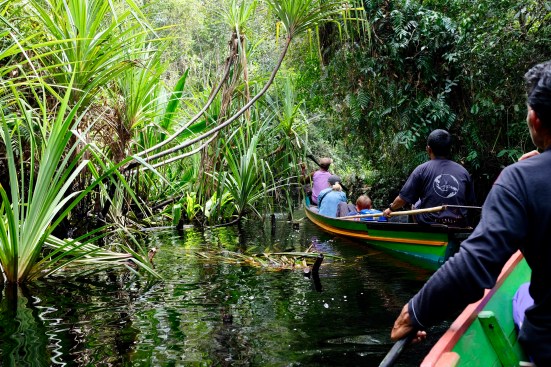
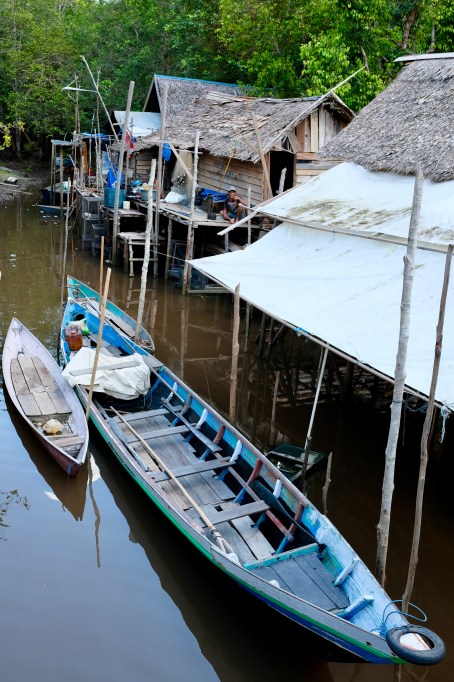
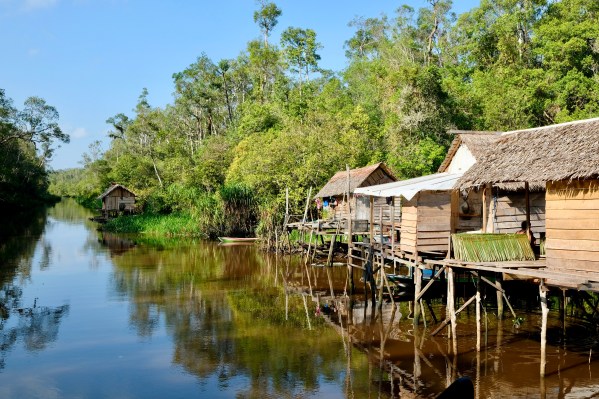
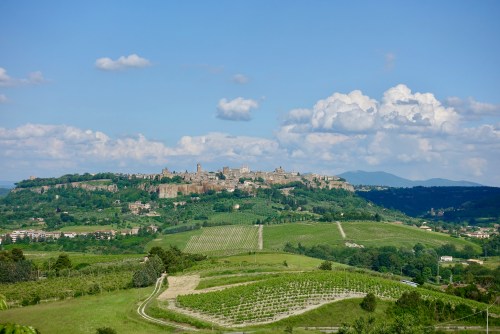
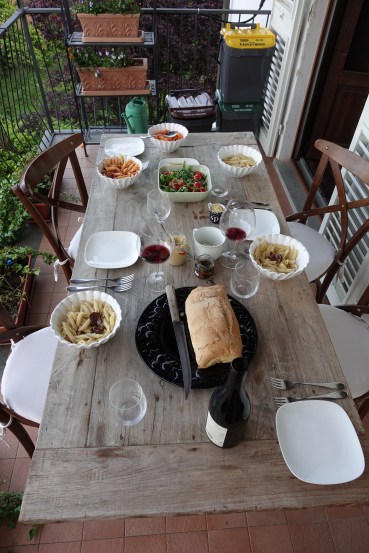
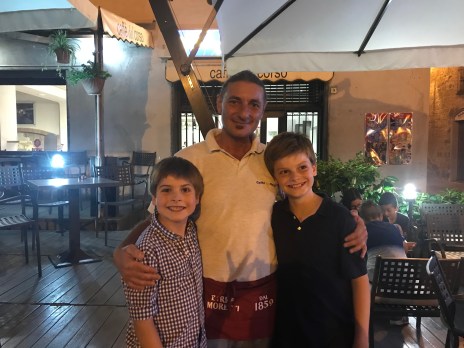
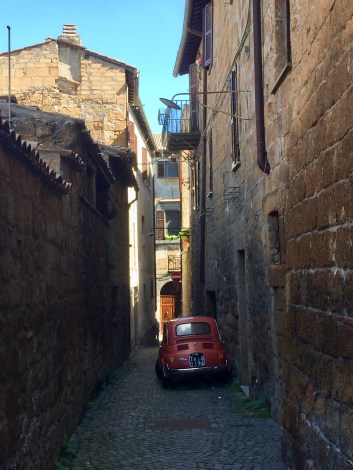
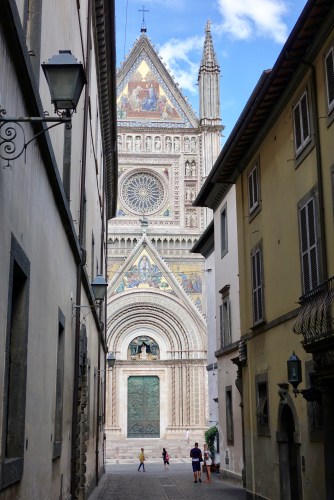
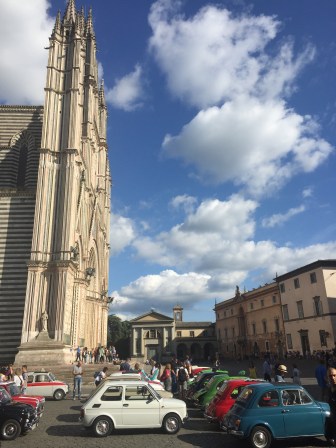
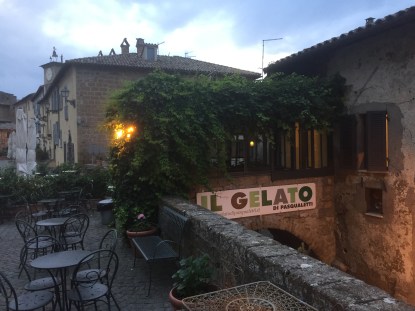


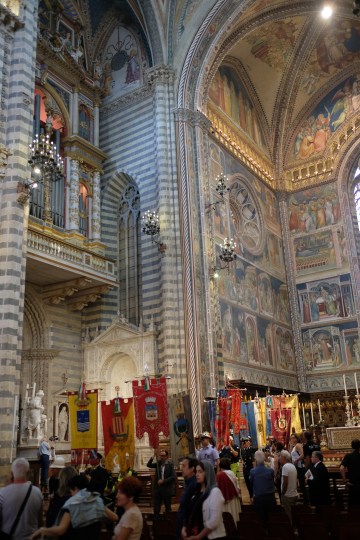
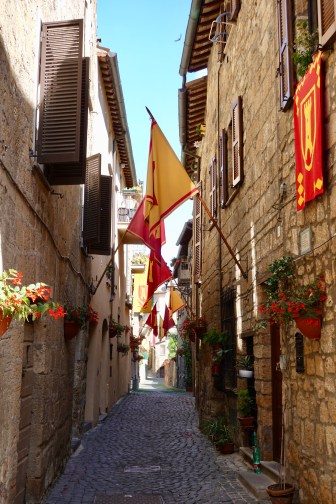
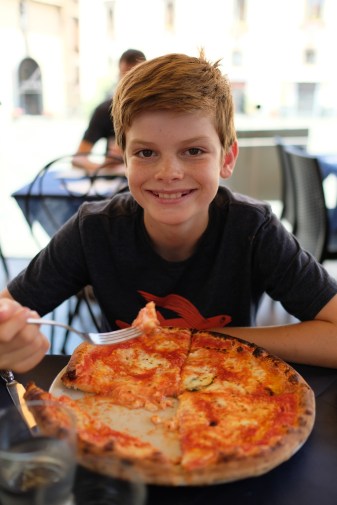
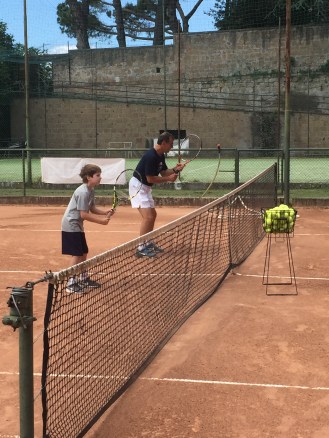


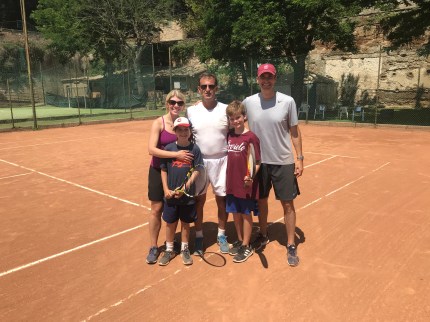


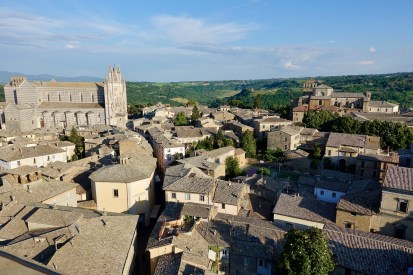
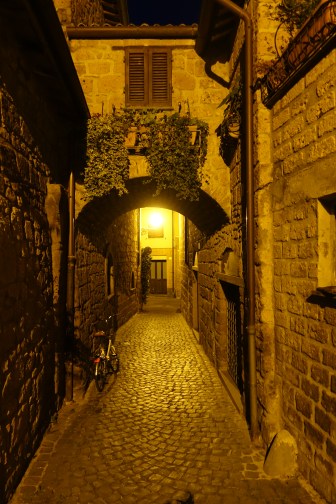
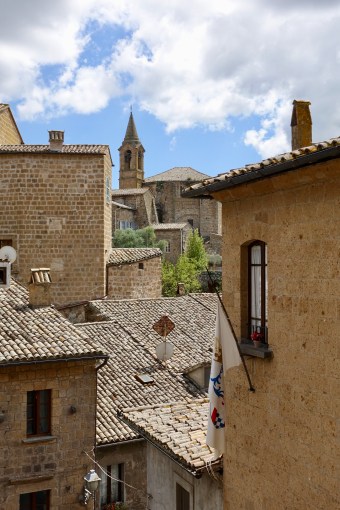
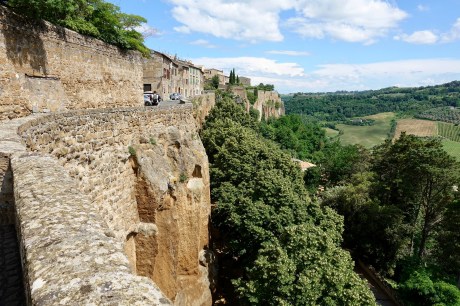
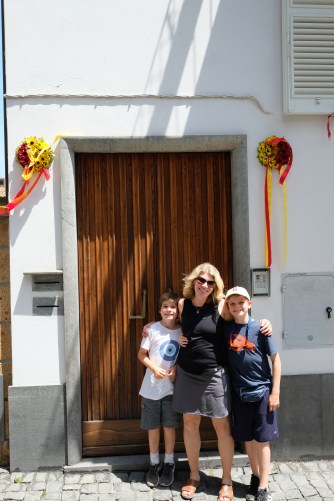


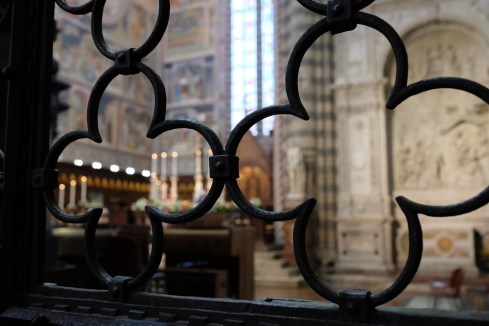
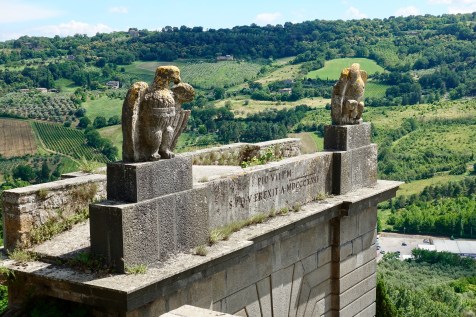

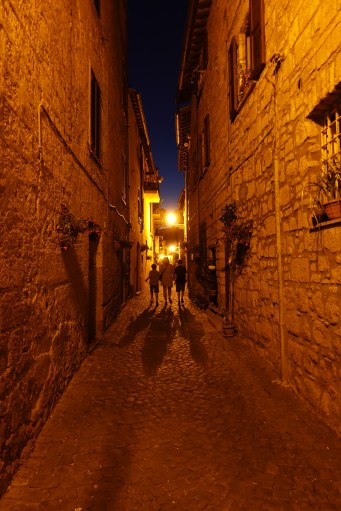


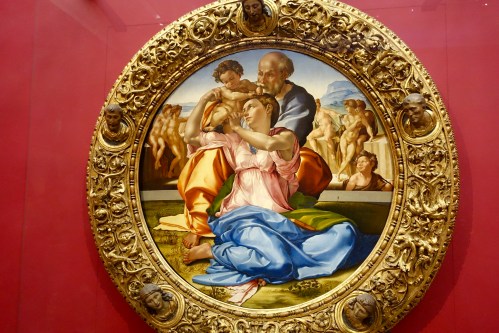

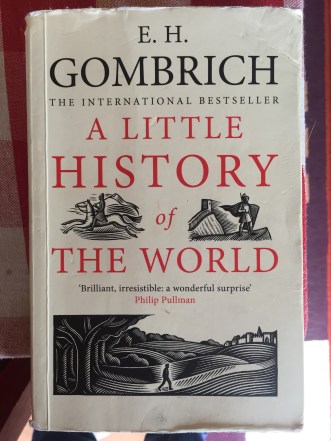

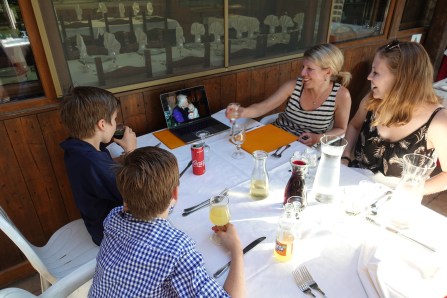

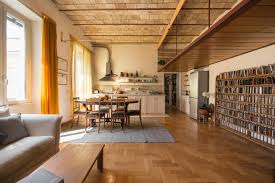
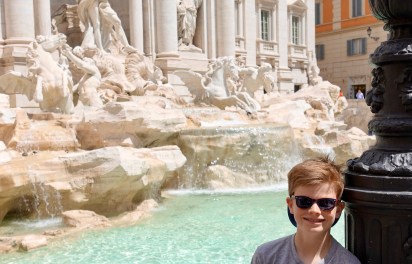


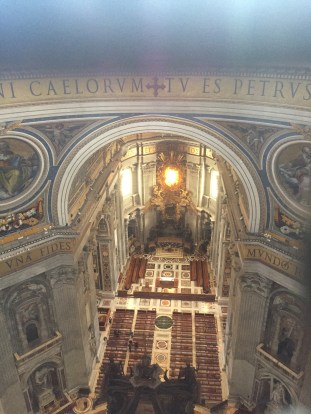
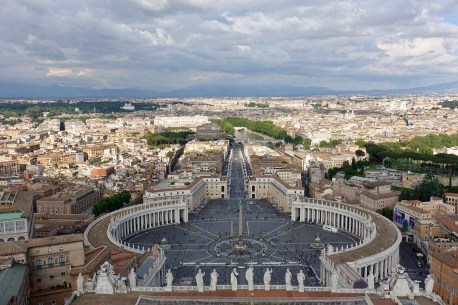


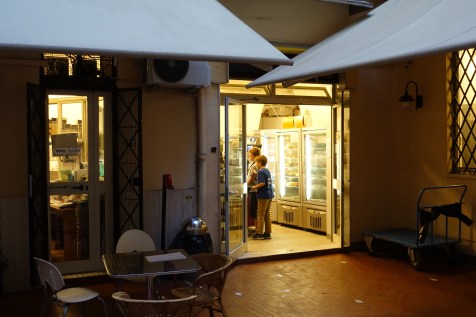


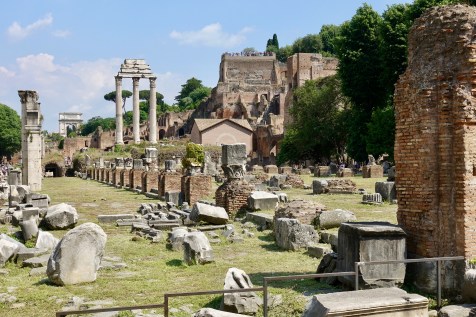


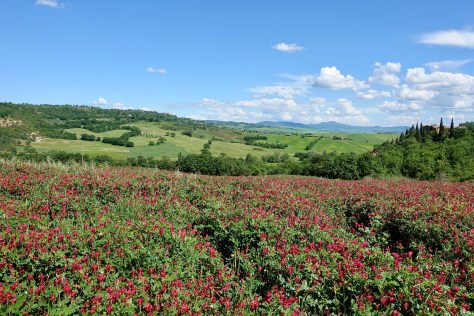


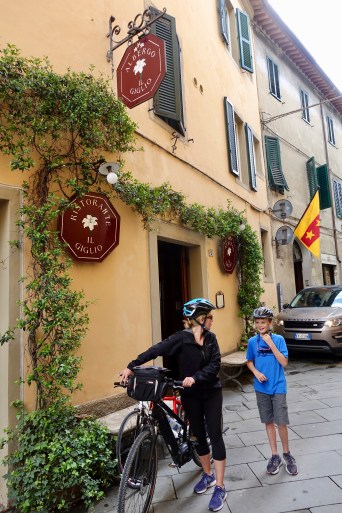


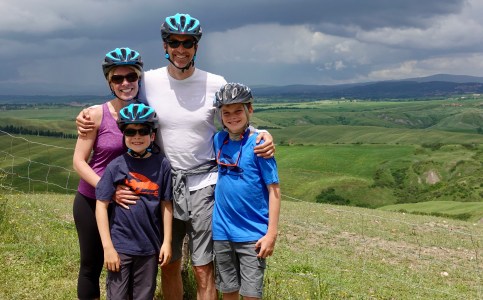
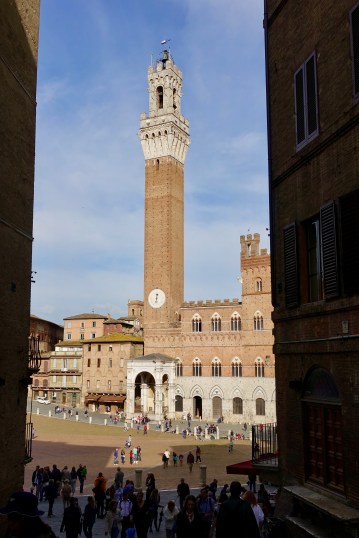


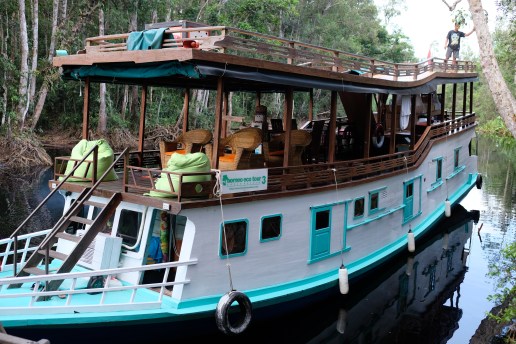
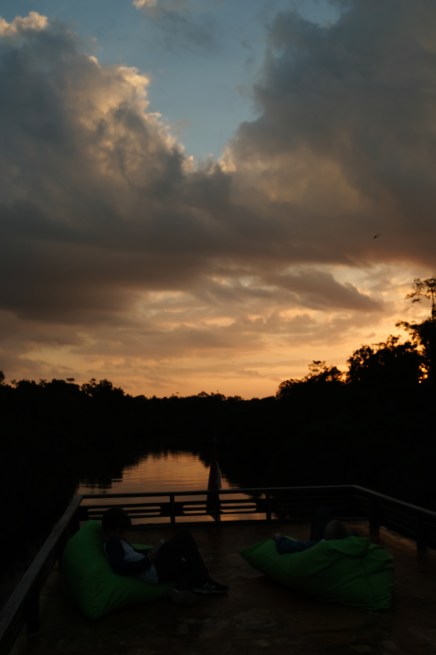


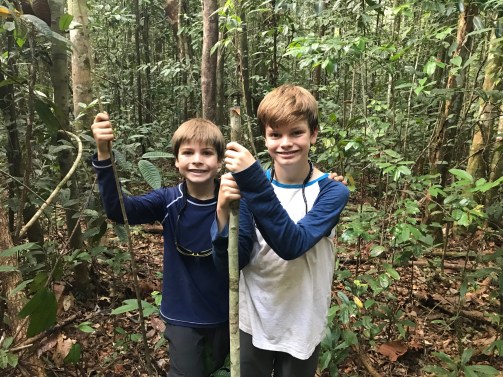
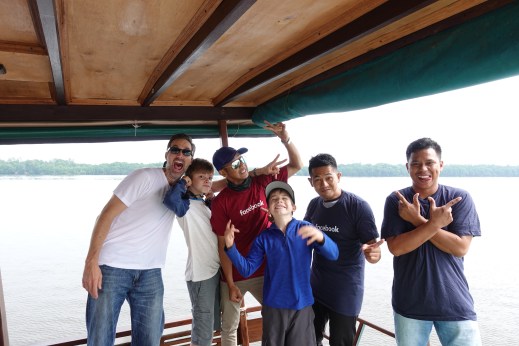
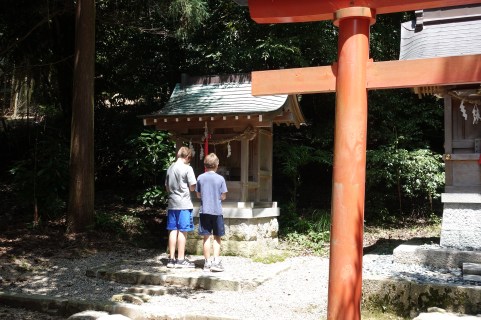

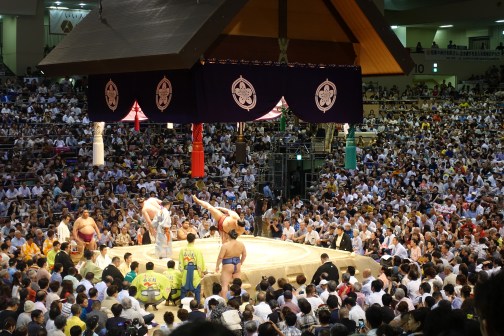
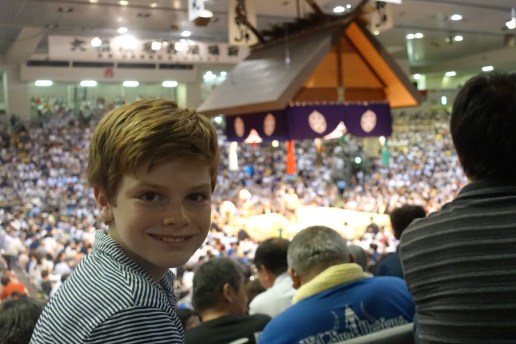


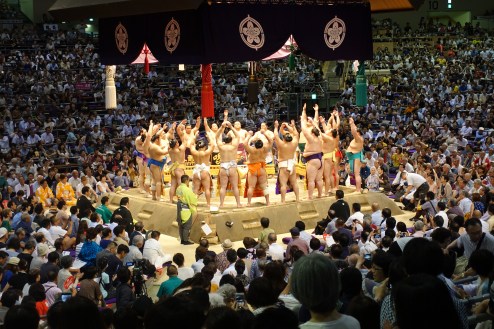
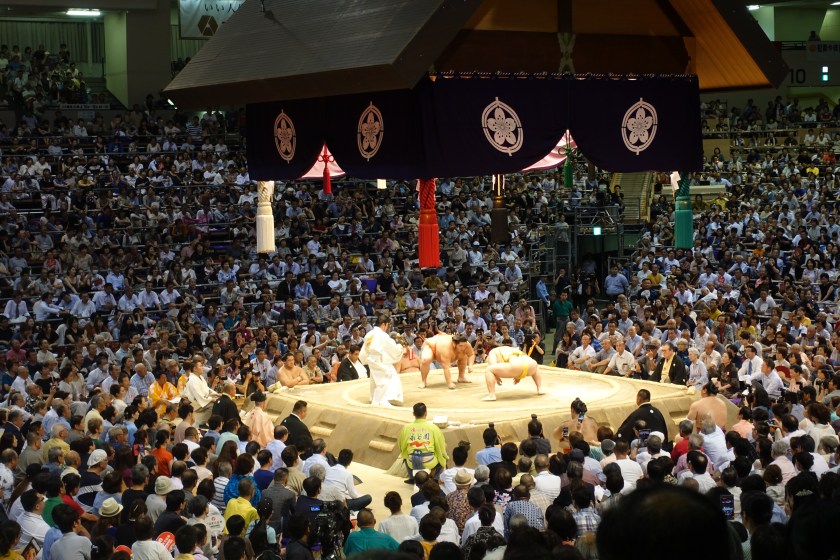
 Fanatical Sabbatical